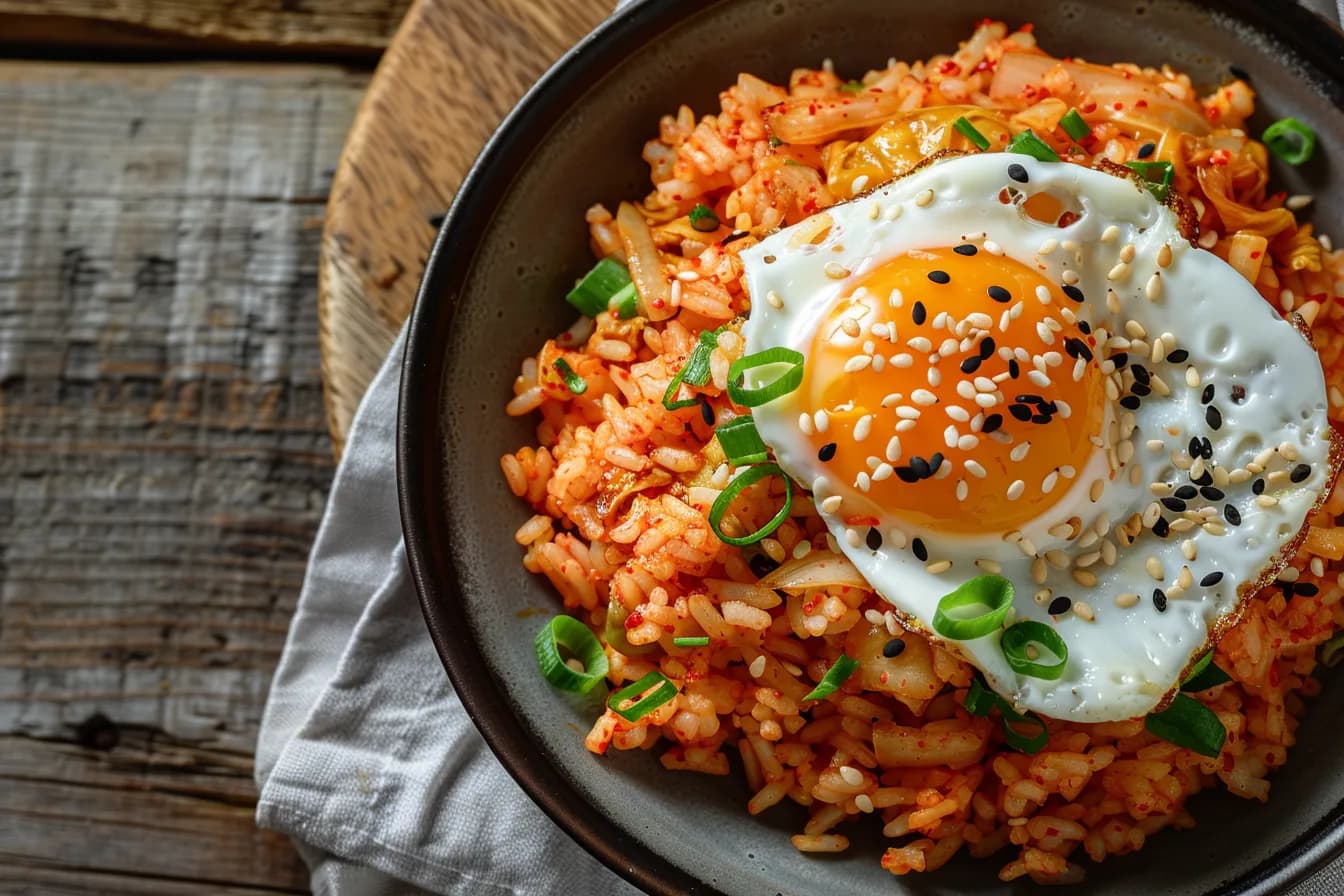
Kimchi Fried Rice
Spicy and sour fried rice made from ripe kimchi, topped with a fried egg with a runny yolk.
- Preparation
- 10 min
- Cook/bake time
- 15 min
- Total
- 25 min
- Difficulty
- Easy
- Calories
- 450 kcal
- Servings
- 3
- Prep
- 10 min
- Cooking & baking
- 15 min
Spicy and sour fried rice made from ripe kimchi, topped with a fried egg with a runny yolk. The older and more sour the kimchi, the better this dish becomes, because its acidity caramelizes during frying and becomes deep and round. A perfect recipe to make good use of an opened jar of kimchi in the fridge.
Why this works
Ripe kimchi has become sour through lactic acid fermentation. In the hot pan, some of this acidity evaporates, and the rest reacts with the sugars from the cabbage and onion to form round, deep roasted flavors. Young kimchi has not yet built up this acidity and tastes mainly of chili after frying. The egg on top is functional: the liquid egg yolk binds the heat and makes every bite creamier.
Step-by-step instructions
- 1
Fry the kimchi
Heat 2 tablespoons of oil in a large pan over medium to high heat and fry the diced onion for two minutes. Then add the roughly chopped kimchi and continue frying for three to four minutes until it browns slightly at the edges and smells significantly more intense. This step takes the edge off the acidity and makes it deep and spicy.
- 2
Season
Stir in the Gochujang, soy sauce, sugar, and kimchi brine and let everything boil down for a minute until a thick, deep red paste forms. The brine is not waste here, but the flavor core of the dish, so do not pour it away when opening the jar.
- 3
Fold in the rice
Crush the cold rice with your fingers, add it to the pan, and fold it in thoroughly until every grain is evenly colored red. Then press the rice flat against the bottom of the pan and leave it unmoved for two minutes so that light roasted spots form at the bottom. Then turn once and repeat.
- 4
Fry the eggs
In a second pan, fry the eggs with the remaining oil over medium heat so that the egg white is firm and crispy at the edge, but the yolk remains liquid. The runny yolk is not a decorative element, but combines with the rice to form a creamy sauce when mixed.
- 5
Serve
Drizzle the sesame oil over the rice and briefly fold it in. Distribute the rice into bowls, place a fried egg on top of each, and sprinkle with scallions and sesame seeds. At the table, everything is mixed vigorously so that the yolk coats the rice.
Our best tips
- The older the kimchi, the better. Fresh, still crunchy kimchi has too little acidity for this dish.
- Be sure to use the kimchi brine, it provides most of the umami.
- Rice from the day before is also mandatory here, fresh rice will become mushy.
Tasty variations
With bacon
Render 100 g of diced bacon at the beginning and fry the kimchi in it, this makes it heartier.
With cheese
Put a handful of grated mozzarella on the hot rice and let it melt briefly covered, very popular in Korea.
Nutrition facts
| Calories | 450 kcal |
|---|---|
| Protein | 14 g |
| Carbohydrates | 53 g |
| – of which sugar | 7 g |
| Fat | 19 g |
| Fiber | 4 g |
Where the 450 kcal come from
per serving
Calculated from the ingredients – how we do it
We add up reference values for every ingredient and divide by the number of servings. These assumptions are baked in:
- Reference values per 100 g – for the raw ingredient, exactly as listed.
- Tinned goods count at drained weight, bone-in meat at purchase weight: you eat about 70 per cent of a chicken thigh and leave the rest.
- Water evaporates as you cook. The energy stays in the pot, the weight does not – so the figure is per serving, not per 100 g of finished dish.
- Anything listed without a quantity – “salt and pepper” – is not counted.
A guide value, not a lab measurement: no two onions weigh the same, and fat content varies from pack to pack.
Frequently asked questions
Is kimchi vegetarian?
Not always. Many varieties contain fish sauce or shrimp paste. Organic and Asian supermarkets offer explicitly vegan variants.
My kimchi is still fresh, what should I do?
Leave the open jar at room temperature for two to three days, then it will ferment further and become more sour. Then put it back in the fridge.
How spicy will the dish be?
That depends on the kimchi. You can control it well via the amount of Gochujang, you can also leave it out completely, then it remains mild.
Comments & ratings(0)
Sign in to rate and comment on this recipe.
You might also like
 Lunch
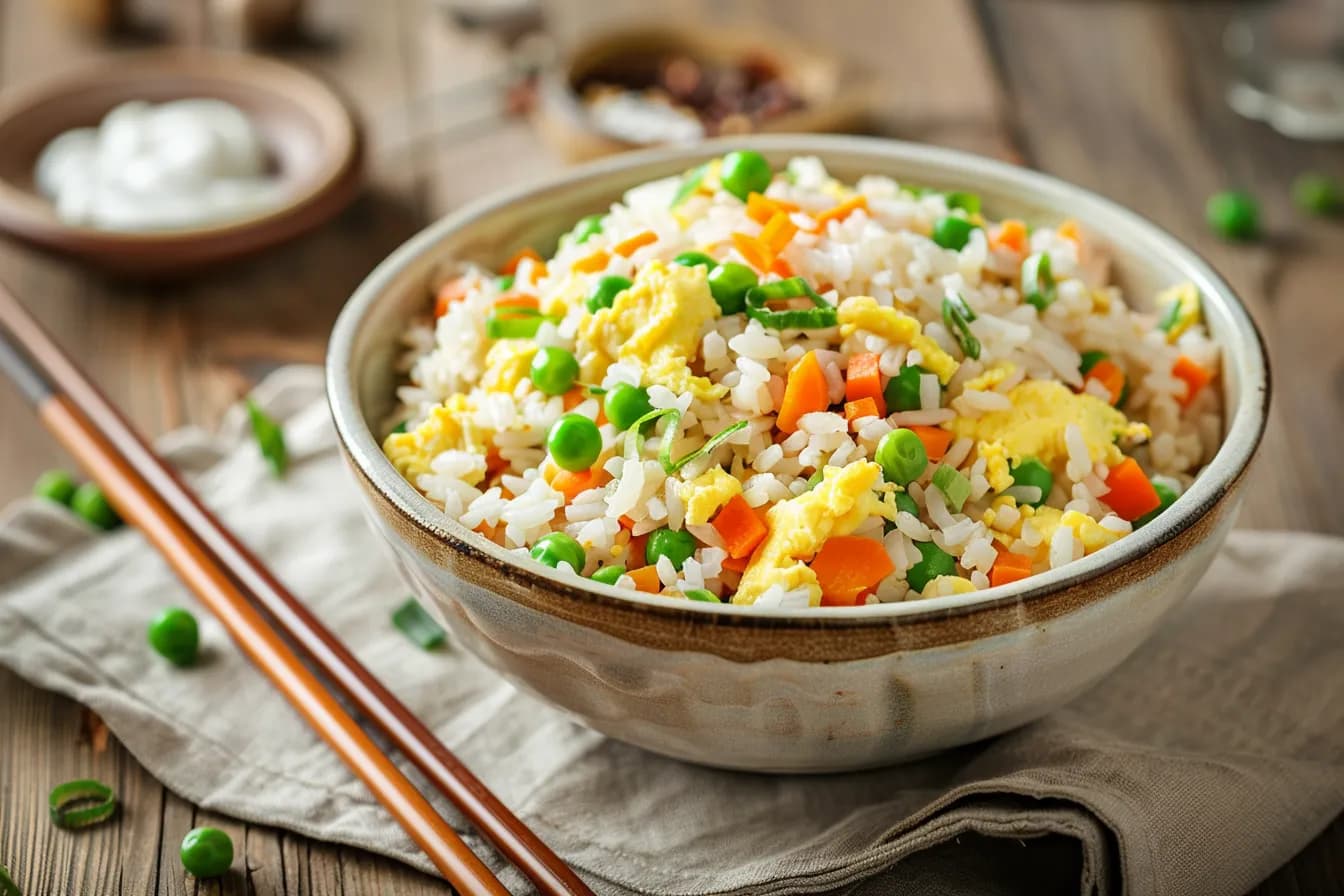
LunchEgg & Vegetable Fried Rice
The wok classic: fluffy rice, silky egg, and crisp vegetables in under 15 minutes.
 Dinner
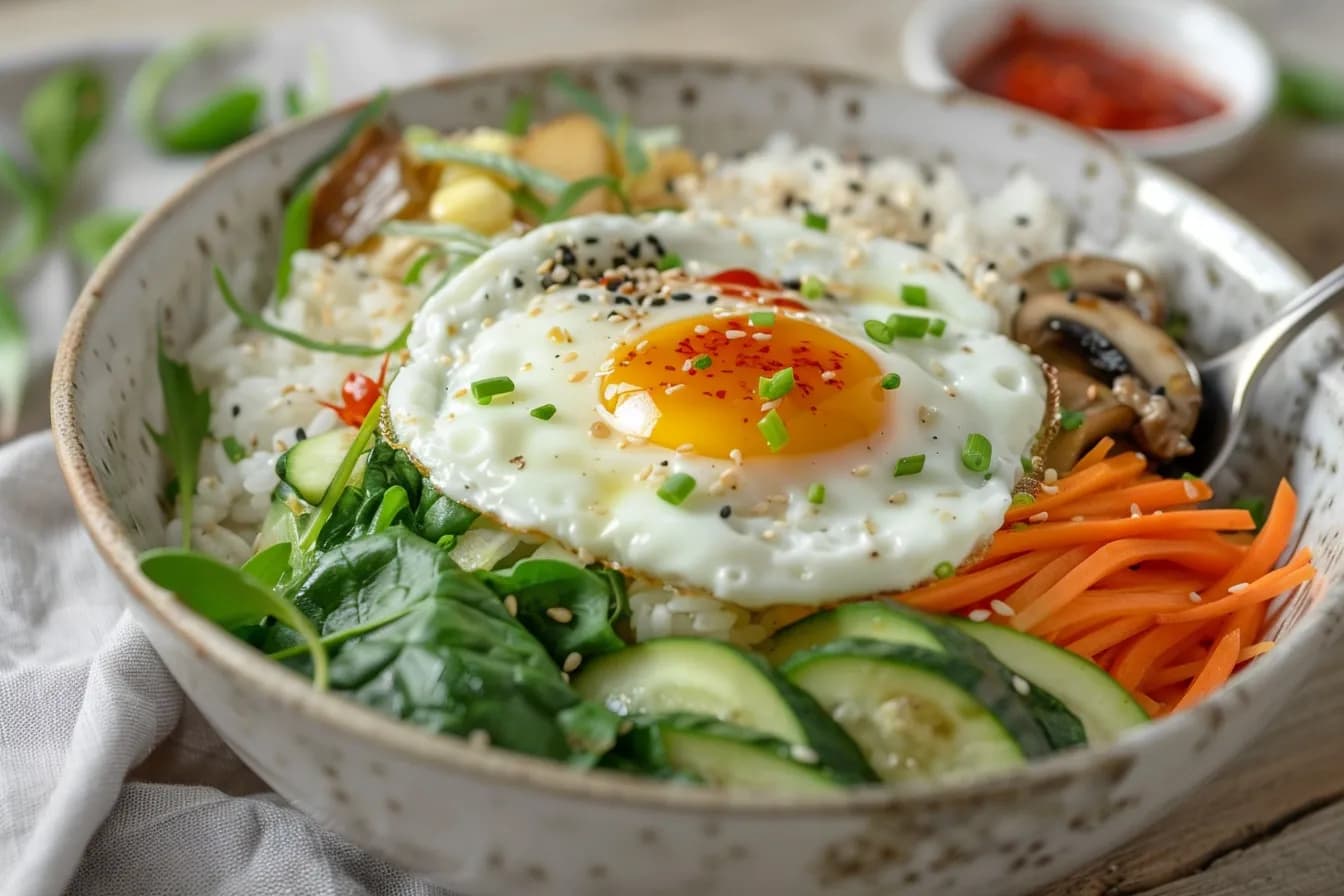
Bibimbap
Korean rice bowl with five individually seasoned vegetables, egg, and gochujang, meaning "mixed rice", and that is meant literally.
 Vegetarian
Crispy Zucchini Fritters
From 800 g zucchini comes a good 200 ml of water, and that is exactly the difference between crispy and mushy.