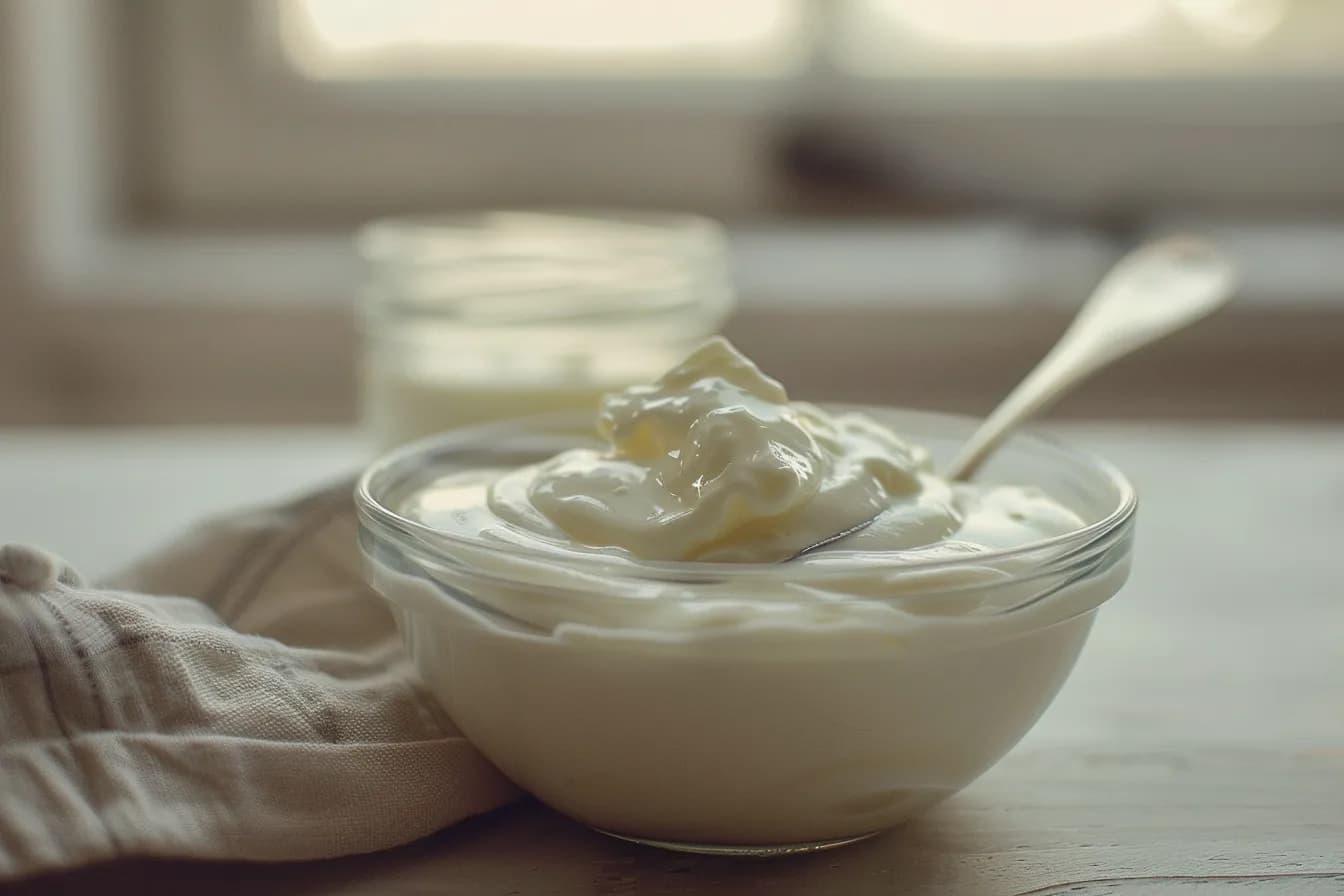
How to Make Greek Yogurt at Home
One liter of milk yields 400 grams of creamy yogurt with double the protein, strained, not thickened.
- Preparation
- 10 min
- Cook/bake time
- 20 min
- Total
- 15 hr 50 min
- Difficulty
- Medium
- Calories
- 49 kcal
- Servings
- 8 servings
- Prep
- 10 min
- Cooking & baking
- 20 min
- Resting
- 15 hr 20 min
Only 30 min of that is hands-on – the rest takes care of itself.
One liter of milk yields 400 grams of creamy yogurt with double the protein, strained, not thickened. The difference compared to regular yogurt is purely mechanical: whey is removed, leaving everything else concentrated behind. This is also the reason why industrial "Greek-style" yogurt with thickeners never achieves the same nutritional values.
Why this works
Yogurt forms because lactic acid bacteria ferment lactose into lactic acid. When the pH drops below 4.6, casein molecules lose their mutual repulsion and bond into a network that traps the liquid, which is the coagulation that turns milk into yogurt. Two temperatures determine success: the milk must first be heated above 80 degrees Celsius so the whey proteins unfold and can integrate into this network, making the yogurt significantly firmer. Then it must cool to 43 degrees Celsius before the cultures are added, as they die above this temperature. The subsequent straining removes whey along with lactose, concentrating protein and fat in the remaining yogurt. Thickeners achieve the same consistency, but never this nutritional value.
Step-by-step instructions
- 1
Heat the milk
Heat the milk to 85 degrees Celsius while stirring and hold it there for ten minutes. This not only kills foreign germs but primarily unfolds the whey proteins so they can later integrate into the casein network, a step that decides between firm or watery.
- 2
Cool to 43 degrees Celsius
Let the milk cool to 43 degrees Celsius, which takes just a few minutes in a cold water bath. This temperature is a hard limit: above it, the cultures die, and the batch will never set. A thermometer is more reliable here than the finger test.
- 3
Stir in the starter
First, stir the plain yogurt smooth with a little of the warm milk, then add this mixture to the rest. This distributes the cultures evenly instead of them sinking as clumps. The starter must contain live cultures, which pasteurized yogurt explicitly does not.
- 4
Let stand warm for eight hours
Pour everything into a pre-warmed container, wrap it in a towel, and place it in a warm spot for eight hours, such as in the turned-off oven with the light on. Do not move it: agitation during gel formation makes the yogurt grainy instead of smooth.
- 5
Let strain
Line a sieve with cheesecloth, add the finished yogurt, and let it strain in the refrigerator for six to eight hours. One liter of milk yields about 400 g of Greek yogurt. The draining whey is rich in protein and can be used for bread or smoothies.
Our best tips
- The starter must not be pasteurized yogurt. Only with live cultures will anything happen at all, making a simple plain yogurt without additives the safest choice.
- Save two tablespoons of the finished yogurt for the next batch. This works for about five to six generations, after which the leavening power diminishes.
- The longer it strains, the firmer it gets. After twelve hours, you have Labneh, a spreadable fresh cheese, using the same technique for a different product.
Tasty variations
Labneh
Let strain for 24 hours, salt, and form into balls to be preserved in olive oil. Lasts for weeks in the refrigerator and is a breakfast classic in Lebanon.
With skim milk
Works, but becomes less creamy because the fat that softens the texture is missing. In return, calories drop by about a third with the same protein content.
Nutrition facts
| Calories | 49 kcal |
|---|---|
| Protein | 5 g |
| Carbohydrates | 2 g |
| – of which sugar | 2 g |
| Fat | 3 g |
| Fiber | 0 g |
Estimated, not calculated – why
Here some of the ingredients never reach the plate: most frying oil stays in the pan, and in a stock the solids are strained off. How much of it ends up in the food cannot be calculated – counting a litre of oil would quintuple the figure, leaving it out would describe a dish baked without fat. So this is an editorial estimate rather than a total that would look dependable without being so.
A guide value, not a lab measurement: no two onions weigh the same, and fat content varies from pack to pack.
Frequently asked questions
How many calories does homemade Greek yogurt have?
About 50 kcal per 50 g serving, with around 5 g of protein, calculated from whole milk. The value is significantly lower than that of the milk used because a large part of the lactose drains away with the whey. With skim milk, it is around 30 kcal.
Why is my yogurt not setting?
Usually, the milk was too hot when the starter was stirred in, as cultures die above 43 degrees Celsius. The second most common reason: heating to 85 degrees Celsius was skipped, meaning the firming effect of the whey proteins is missing.
What is the difference compared to "Greek-style" yogurt?
Authentic Greek yogurt is strained, which concentrates protein and fat. "Greek-style" products are instead thickened with milk powder or starch, offering the same consistency but a significantly different nutritional value.
What do I do with the whey?
Do not pour it away. It contains whey protein, calcium, and lactose, and can be used in bread dough instead of water, blended into smoothies, or used as a cooking liquid for rice.
Comments & ratings(0)
Sign in to rate and comment on this recipe.
You might also like
 Breakfast
Low-Fat Quark Pancakes
Fluffy pancakes with 30 grams of protein per serving, without protein powder, made only from quark, egg, and rolled oats.
 Breakfast
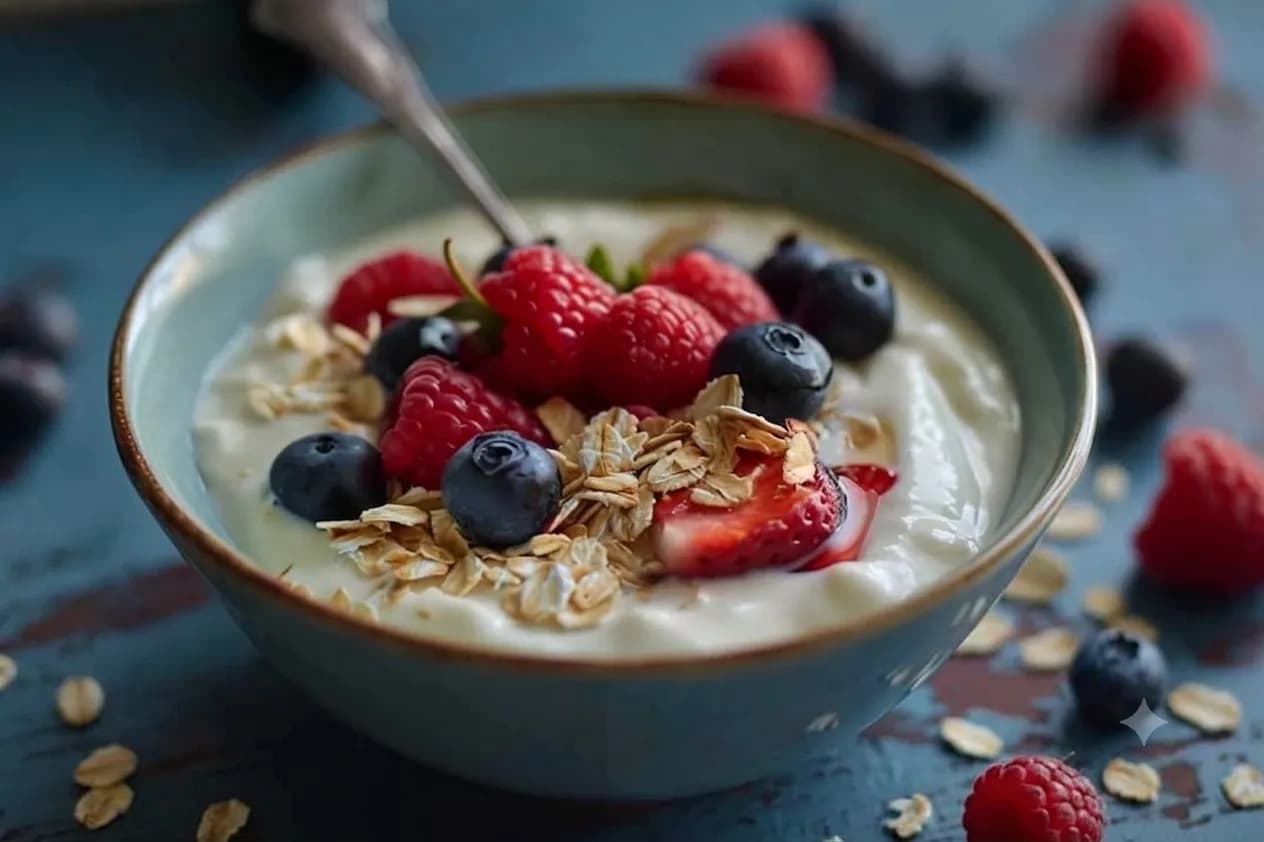
Skyr Bowl
Icelandic Skyr with berries, nuts and honey: 25 grams of protein in a bowl that is ready in four minutes.
 Bread & Rolls
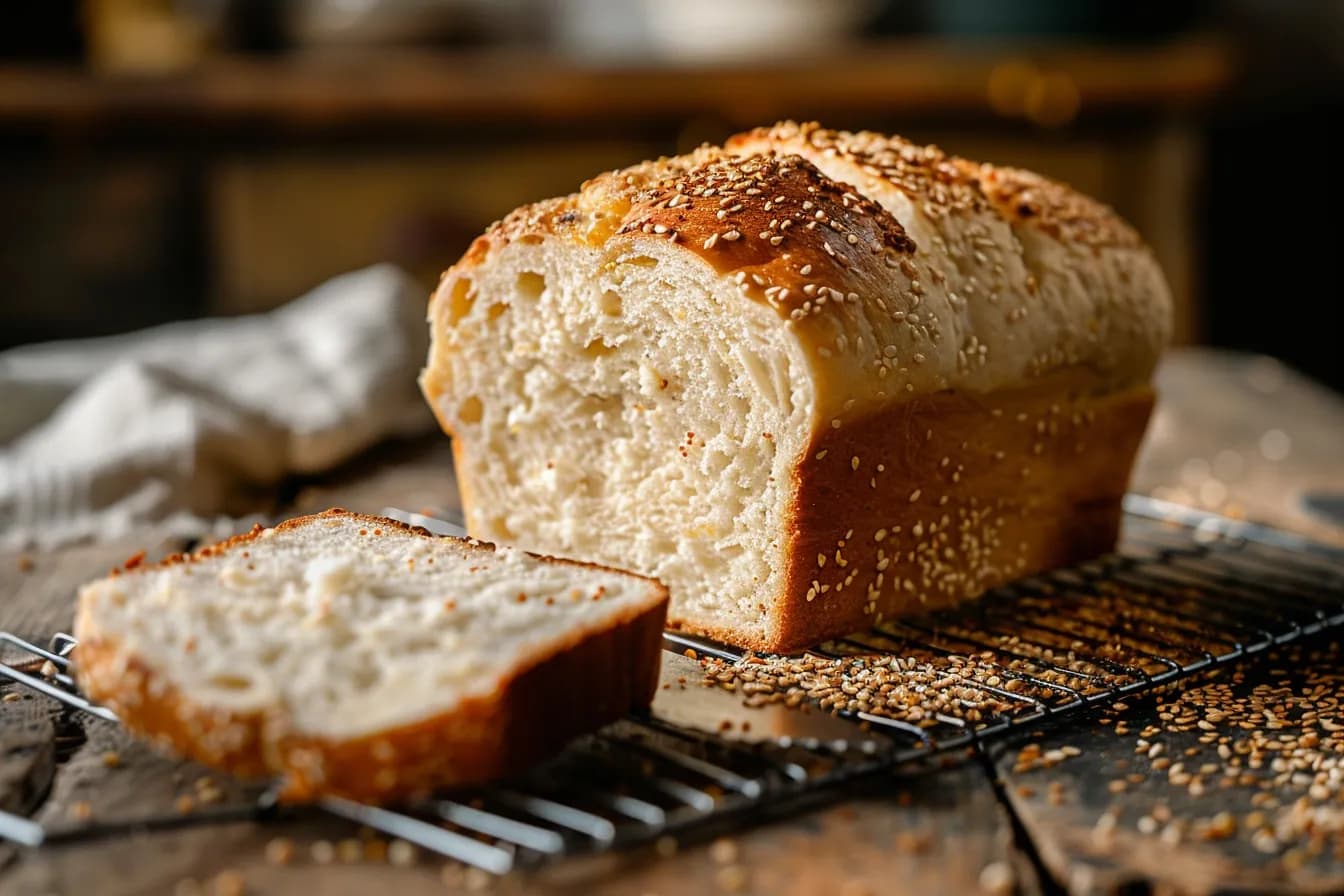
Cottage Cheese Bread
A loaf of bread made from cottage cheese and eggs, without flour. It has 9 grams of protein per slice, and the carbohydrates in it are mostly fiber.