Char Siu
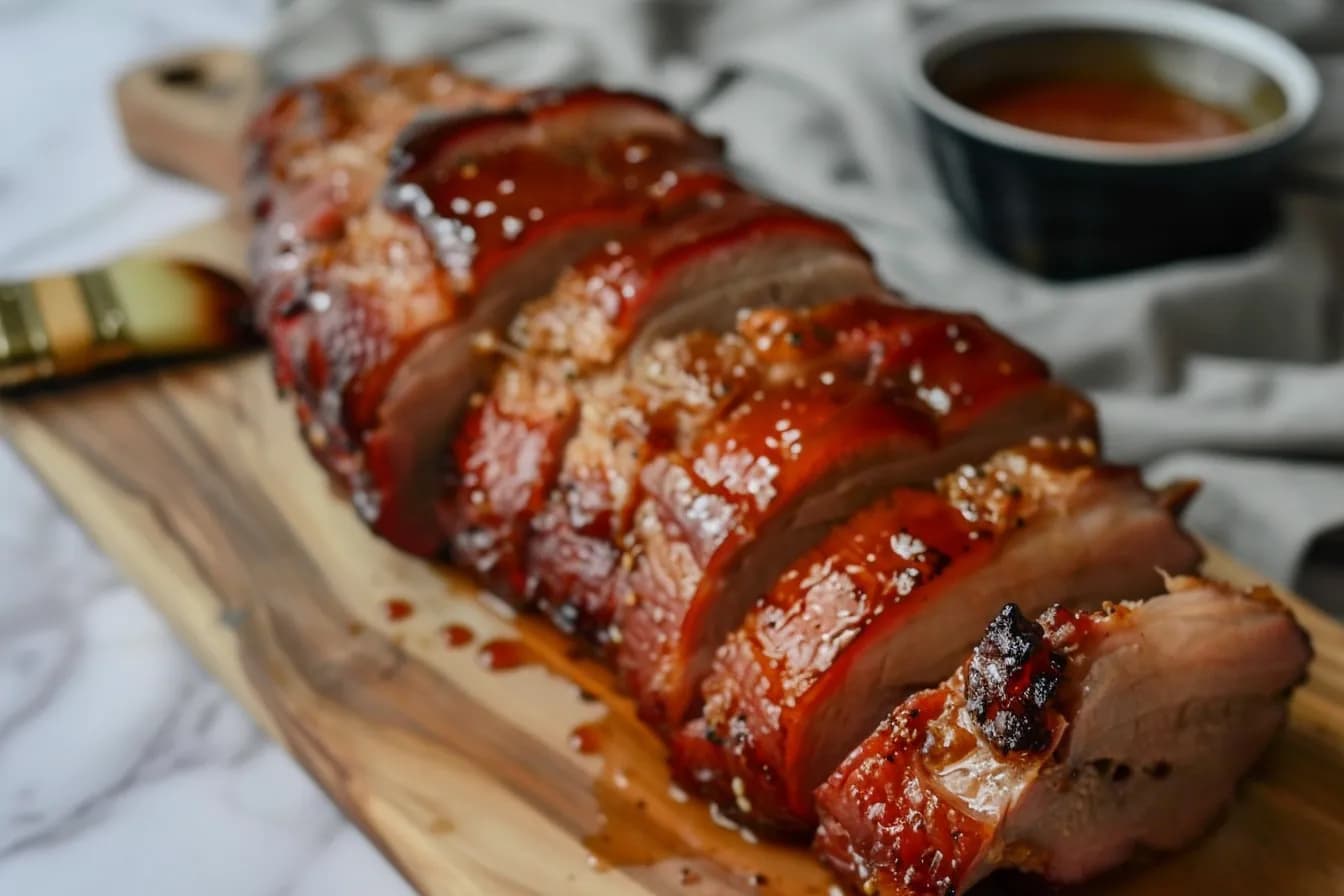
Cantonese roast pork with a glossy red glaze, sweet, sticky, and slightly charred at the edges.
- Preparation
- 20 min
- Cook/bake time
- 50 min
- Total
- 13 hr 10 min
- Difficulty
- Easy
- Calories
- 600 kcal
- Servings
- 6
- Prep
- 20 min
- Cooking & baking
- 50 min
- Resting
- 12 hr
Only 1 hr 10 min of that is hands-on – the rest takes care of itself.
Cantonese roast pork with a glossy red glaze, sweet, sticky, and slightly charred at the edges. The dark spots are not a mistake but the hallmark: "Char Siu" means "fork roast" because the meat used to hang on long forks over an open fire. In a home oven, repeated basting delivers the same result.
Why this works
The sticky, glossy crust is created by caramelizing the sugar in the marinade, and that has a narrow window: sugar caramelizes starting at about 160 degrees and burns starting at about 190. That is why the meat is cooked over moderate heat and the glaze is only applied in several thin layers towards the end. Each layer caramelizes on its own before the next one comes. If you applied the full amount right from the start, it would be black before the meat is cooked through. The water pan under the rack keeps the oven air moist, which makes the surface dry out more slowly and gives the sugar more time to brown before it burns. Pork neck is the right choice because its fat content and connective tissue can withstand the long, dry heat. A lean loin would be bone dry with the same treatment.
Step-by-step instructions
- 1
Mix the marinade
Mix the hoisin sauce, soy sauce, honey, Shaoxing, sesame oil, garlic, ginger, five-spice powder, and brown sugar. Set aside three tablespoons of it and chill them. This reserve will later become the glaze, because the marinade in which raw meat lay must not be used for basting.
- 2
Marinate overnight
Cut the pork neck into strips about five centimeters thick. This gives the marinade more surface area and the meat cooks evenly. Place it in the marinade and chill it for at least twelve hours, preferably twenty-four.
- 3
Oven with water pan
Preheat the oven to 200 °C top/bottom heat, place a baking tray with one centimeter of water on the lowest rack, and place a wire rack over it. The steam keeps the meat surface moist so that the sugar has time to caramelize before it burns.
- 4
Cook and baste four times
Place the meat strips on the wire rack and cook them for 45 minutes. Turn them every fifteen minutes and baste them thinly four times with the reserved marinade starting from the twentieth minute. Each layer should dry slightly before the next one comes. This creates the typical layers.
- 5
Honey glaze and resting
Baste the meat with the diluted honey in the last five minutes and briefly turn on the broiler until the edges get dark spots. Take it out and let it rest for ten minutes before slicing it across the grain.
Our best tips
- The marinade for basting must be set aside before contact with raw meat. This is not a formality but the only safe way to get the same seasoning on the crust.
- Do not omit the water pan. Without it, the surface dries out and the sugar burns before it gets glossy.
- Dark spots on the edges are the goal, not a mistake. Char Siu without charred edges tastes flat, as that is where the contrast to the sweetness lies.
Tasty variations
From the grill
Cook over indirect heat on a kettle grill and pull directly over the coals in the last few minutes. Comes closest to the original preparation over an open fire.
Char Siu Bao filling
Finely dice the finished meat and bind with two tablespoons of hoisin sauce and one teaspoon of cornstarch. Classic filling for steamed yeast buns.
Nutrition facts
| Calories | 600 kcal |
|---|---|
| Protein | 43 g |
| Carbohydrates | 23 g |
| – of which sugar | 20 g |
| Fat | 36 g |
| Fiber | 1 g |
Where the 600 kcal come from
per serving
Calculated from the ingredients – how we do it
We add up reference values for every ingredient and divide by the number of servings. These assumptions are baked in:
- Reference values per 100 g – for the raw ingredient, exactly as listed.
- Tinned goods count at drained weight, bone-in meat at purchase weight: you eat about 70 per cent of a chicken thigh and leave the rest.
- Water evaporates as you cook. The energy stays in the pot, the weight does not – so the figure is per serving, not per 100 g of finished dish.
- Anything listed without a quantity – “salt and pepper” – is not counted.
A guide value, not a lab measurement: no two onions weigh the same, and fat content varies from pack to pack.
Frequently asked questions
What does Char Siu mean?
Literally "fork roast". The meat was traditionally roasted on long forks over an open fire. The name therefore describes the preparation, not the seasoning.
How many calories does Char Siu have?
Around 600 kcal per serving. The pork neck contributes the majority. The glaze adds about 80 kcal per serving but is the reason for the dish.
Why is real Char Siu so red?
In restaurants mostly due to red food coloring or fermented red rice. Neither contributes anything to the taste, which is why it is not in the recipe here. The color will be brownish instead of bright red as a result.
Which meat is the right one?
Pork neck, because of its fat and connective tissue content. Lean loin becomes dry with the same treatment, while pork belly is too fatty to be served in slices.
Comments & ratings(0)
Sign in to rate and comment on this recipe.
You might also like
 Grilling & BBQ
Chicken Marinade for Grilling
Four flavor profiles, one ratio, and chicken that comes off the grill still juicy on the inside.
 Pasta
PastaLentil Bolognese
Vegan Bolognese made from Beluga lentils that even meat eaters will love, with 20 grams of protein per serving.
 Meal Prep
Chicken Meal Prep Boxes
Four boxes for the week in forty minutes, with the trick that prevents chicken from being dry on the third day.