Buddha Bowl
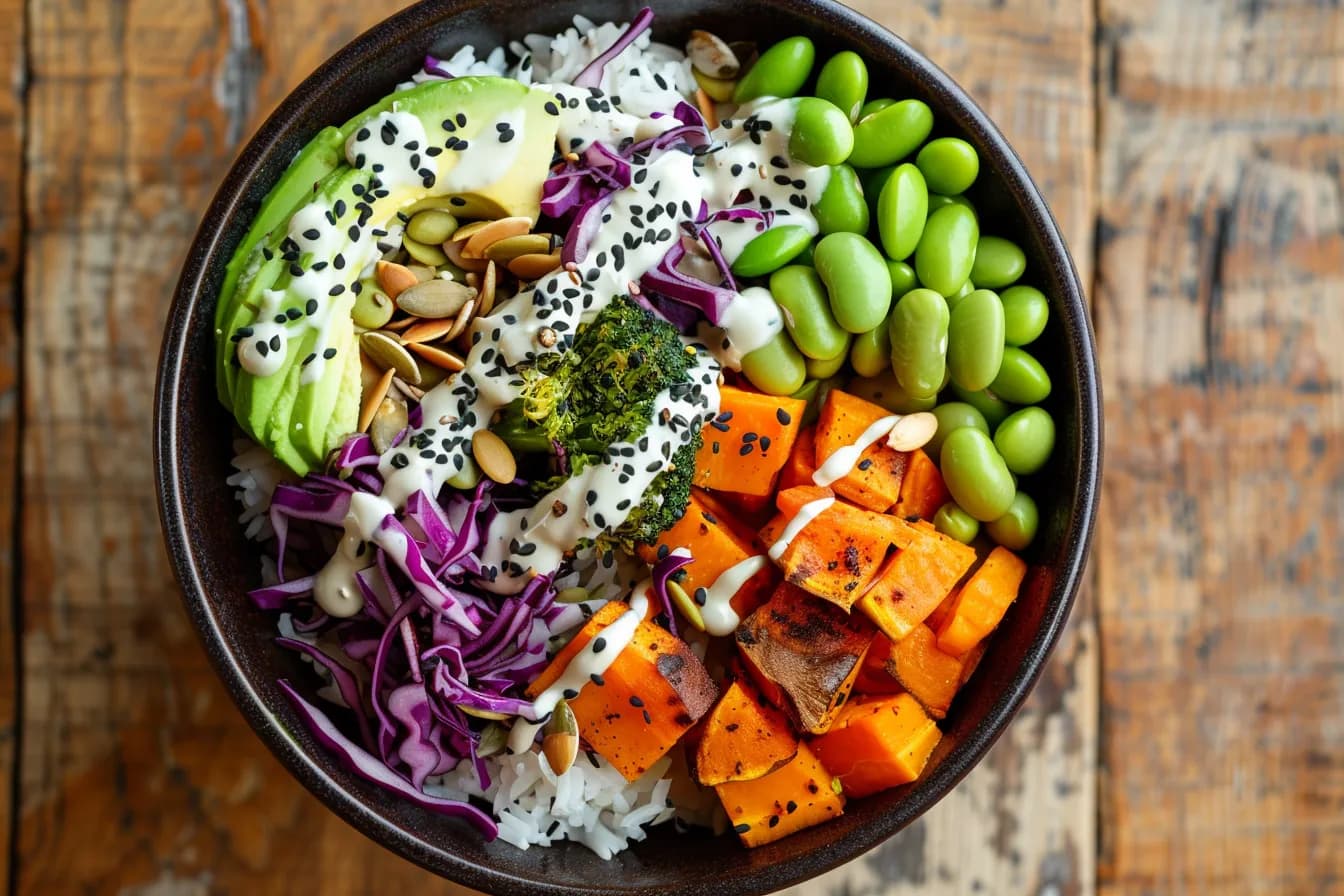
Colorful bowl of rice, roasted vegetables, red cabbage, edamame, and creamy peanut dressing.
- Preparation
- 25 min
- Cook/bake time
- 35 min
- Total
- 1 hr
- Difficulty
- Easy
- Calories
- 736 kcal
- Servings
- 4
- Prep
- 25 min
- Cooking & baking
- 35 min
Colorful bowl of rice, roasted vegetables, red cabbage, edamame, and creamy peanut dressing. The idea behind it is a balanced combination of grains, vegetables, protein, and fat that fills you up without being heavy. The components can be prepared on the weekend and freely combined throughout the week.
Why this works
Raw red cabbage is tough because its cells are plump with water and the cell walls are therefore stiff. Salt and mechanical pressure break this structure open in two minutes: water escapes, the cabbage collapses and becomes pliable, but retains its bite because the cellulose remains intact. The peanut dressing, meanwhile, is an emulsion. The peanut butter provides both fat and the proteins that keep it stable in the citrus and soy phase.
Step-by-step instructions
- 1
Cook the rice
Cook the whole grain rice according to the package instructions in salted water, which takes twenty-five to forty minutes depending on the variety. Then let it steam off covered for five minutes and fluff it with a fork. Whole grain rice has more bite and nutrients than white rice and fits the idea of the bowl better.
- 2
Roast the vegetables
Toss the sweet potato cubes and broccoli florets separately with two tablespoons of olive oil, salt, and pepper each. Spread them on a baking sheet, the sweet potatoes go into the oven immediately and the broccoli is added after fifteen minutes. Roast everything at 220 °C convection until both have browned edges.
- 3
Prepare the red cabbage
Shave the red cabbage as finely as possible and knead it with a pinch of salt and a splash of lime juice for two minutes with your hands. This makes it softer, it loses its hard structure, and it takes on color without you having to cook it.
- 4
Mix the dressing
Whisk together the peanut butter, soy sauce, lime juice, maple syrup, and grated ginger. Then add warm water by the spoonful and stir vigorously until a smooth, pourable dressing forms. Warm water dissolves the peanut butter much better than cold water, which makes it clump immediately.
- 5
Assemble the bowl
Distribute the rice as a base in four bowls and arrange the sweet potatoes, broccoli, red cabbage, edamame, grated carrots, and avocado slices in clearly separated sections on top. This arrangement keeps the components distinct in flavor. Drizzle the peanut dressing over it and sprinkle with sesame seeds.
Our best tips
- Knead the red cabbage with salt. Two minutes make it much more pleasant than raw shaved cabbage.
- Use warm water for the peanut dressing. With cold water, the butter clumps and can hardly be stirred smooth.
- Arrange components in sections instead of mixing them, then each ingredient can be tasted individually.
Tasty variations
With tofu
Dice 300 g of firm tofu, toss in soy sauce and cornstarch, and fry until crispy, then the protein content increases significantly.
Mediterranean
Replace the peanut dressing with lemon tahini and use chickpeas instead of edamame.
Nutrition facts
| Calories | 736 kcal |
|---|---|
| Protein | 21 g |
| Carbohydrates | 96 g |
| – of which sugar | 16 g |
| Fat | 29 g |
| Fiber | 15 g |
Where the 736 kcal come from
per serving
Calculated from the ingredients – how we do it
We add up reference values for every ingredient and divide by the number of servings. These assumptions are baked in:
- Reference values per 100 g – for the raw ingredient, exactly as listed.
- Tinned goods count at drained weight, bone-in meat at purchase weight: you eat about 70 per cent of a chicken thigh and leave the rest.
- Water evaporates as you cook. The energy stays in the pot, the weight does not – so the figure is per serving, not per 100 g of finished dish.
- Anything listed without a quantity – “salt and pepper” – is not counted.
A guide value, not a lab measurement: no two onions weigh the same, and fat content varies from pack to pack.
Frequently asked questions
What makes a Buddha Bowl?
A balanced combination of grains, lots of vegetables, a protein source, healthy fats, and a dressing, all arranged in one bowl.
How long do the components keep?
Stored separately, four days. Add avocado and dressing just before eating, the dressing keeps for a week.
Can I eat the bowl warm?
Yes, lukewarm is actually ideal. Warm rice and roasted vegetables, cold raw components, this creates a pleasant contrast.
Comments & ratings(0)
Sign in to rate and comment on this recipe.
You might also like
 Salads
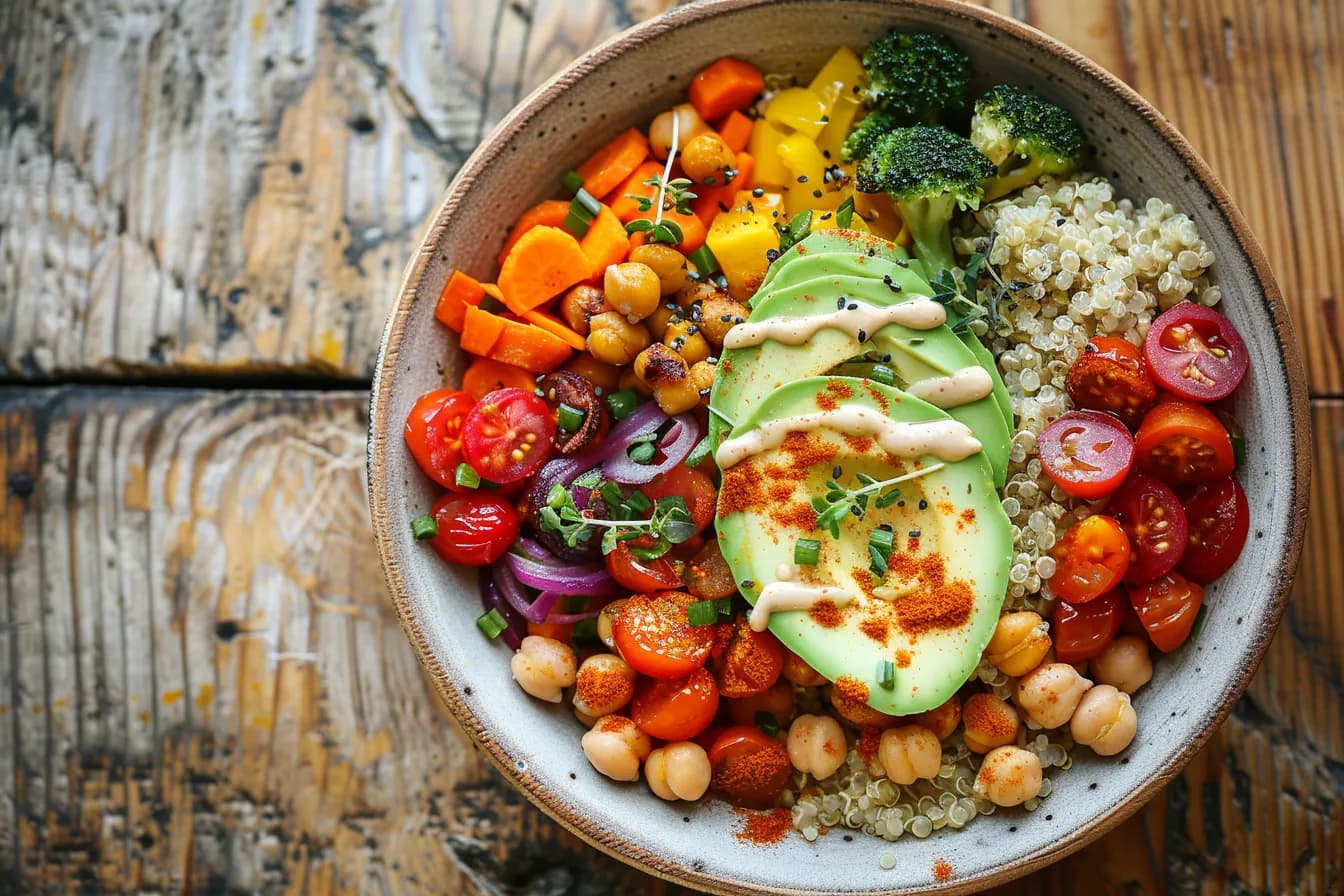
Quinoa Bowl with Roasted Vegetables
Fluffy quinoa with roasted vegetables, chickpeas, and a creamy lemon tahini dressing.
 High Protein
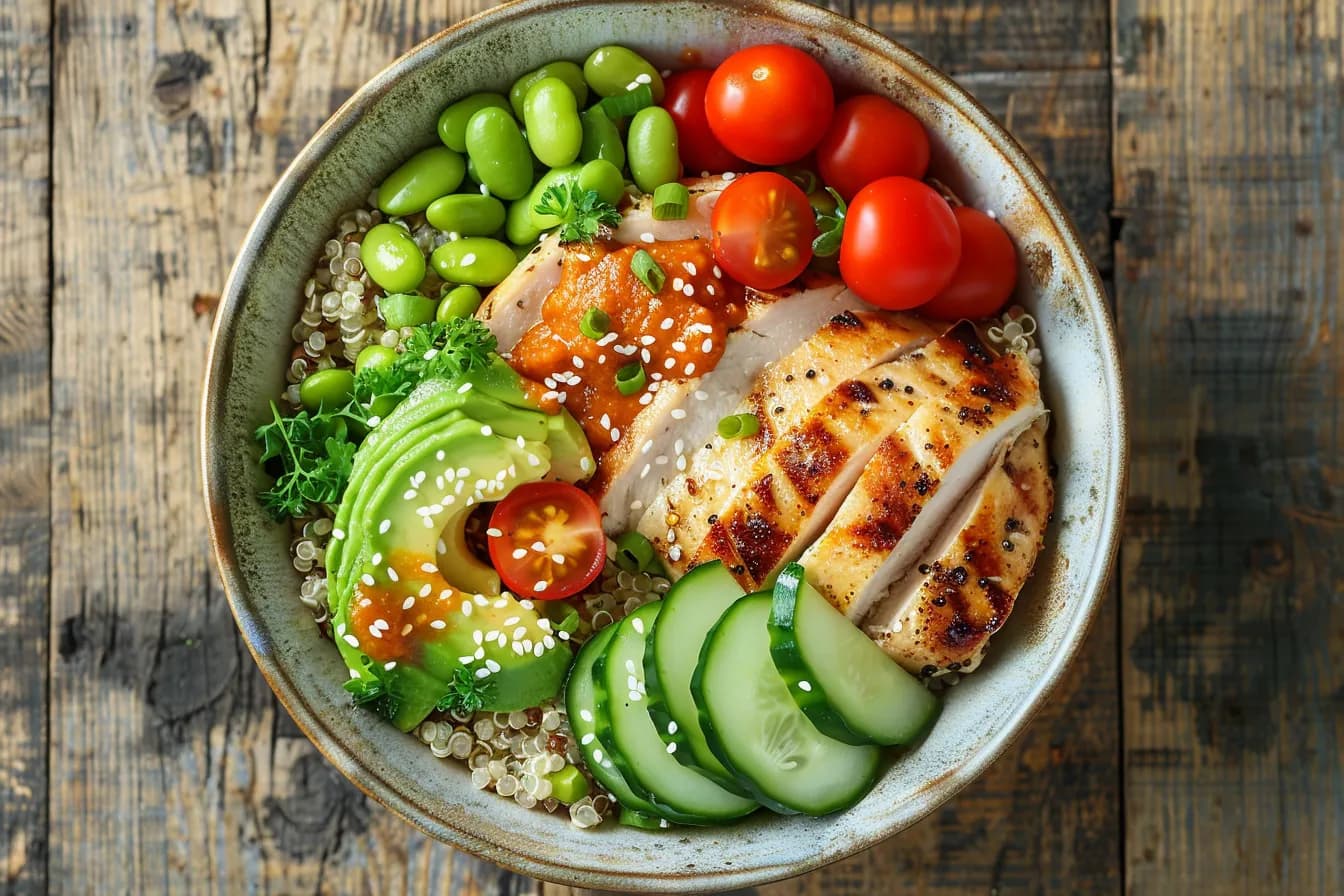
Protein Power Bowl with Chicken and Quinoa
Colorful bowl with quinoa, grilled chicken, edamame, avocado, and tahini dressing, 45 g protein per serving.
 Soups & Stews
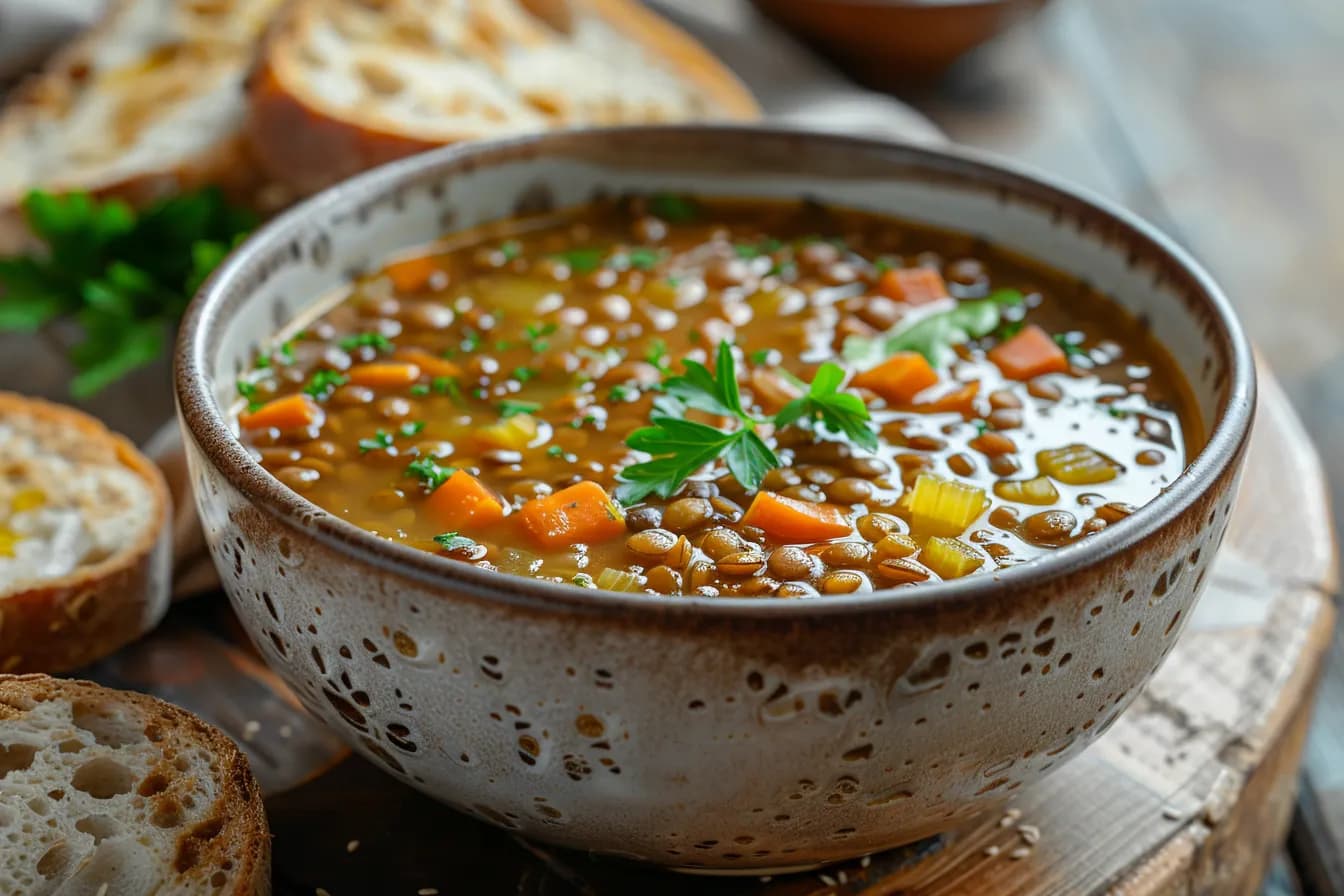
Lentil Soup
Hearty soup made from brown lentils with root vegetables and a splash of vinegar at the end.