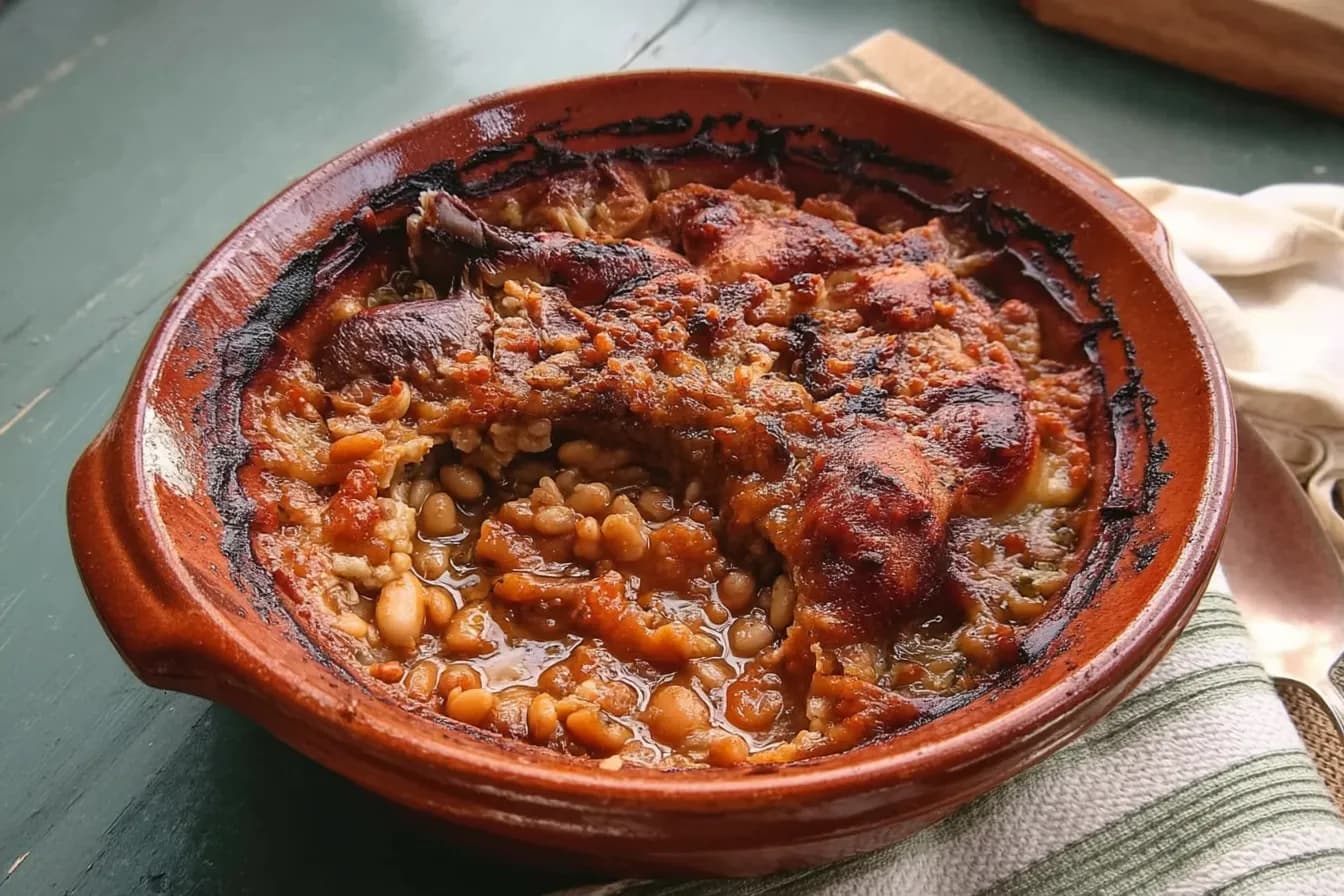
Cassoulet
Bean stew from the Languedoc with duck, sausage, and pork, and the crust that is pushed down seven times.
- Preparation
- 30 min
- Cook/bake time
- 4 hr 5 min
- Total
- 16 hr 55 min
- Difficulty
- Medium
- Calories
- 896 kcal
- Servings
- 8
- Prep
- 30 min
- Cooking & baking
- 4 hr 5 min
- Resting
- 12 hr 20 min
Only 4 hr 35 min of that is hands-on – the rest takes care of itself.
Bean stew from the Languedoc with duck, sausage, and pork, and the crust that is pushed down seven times. Cassoulet is not a dish for weekdays: It requires beans that soak overnight and three hours in the oven. In return, it is arguably the most complete expression of southwestern French cuisine and keeps for days.
Why this works
The famous rule of pushing down the crust seven times is not folklore, but technique. At 150 degrees, the surface of the cassoulet dries out and forms a skin of starch and fat; if you push it under, it returns to the liquid and thickens it, while a new one forms on top. After several repetitions, the broth is so bound by the incorporated bean starch that it becomes creamy without the need for a thickener. Soaking the beans overnight serves another purpose: Dry beans with a cooking time of hours would fall apart in the oven before the center is soft. Soaked, they cook evenly. And salt belongs only at the end, because it firms up the pectins in the bean skins and significantly extends the cooking time if it is there from the beginning.
Step-by-step instructions
- 1
Soak and precook the beans
Soak the beans overnight in plenty of cold water. Pour off the water, put them back on with carrot, onion, celery, and bay leaf, and cook them for 45 minutes, **without salt**. Salt firms up the pectins in the skin and considerably extends the cooking time.
- 2
Sear the meat
Sear the pork belly, sausage, and bacon vigorously all over in batches and set everything aside. The duck legs only need a little color if they are confit. Roast the garlic and tomato paste in the rendered fat for two minutes.
- 3
Layering
Layer the beans and meat alternately in the braising pan, starting and ending with beans. Pour in the stock until everything is just covered, and place the thyme on top. Only now add salt and pepper.
- 4
Three hours at 150 °C
Put the open pot in the oven at 150 °C. Push the resulting crust under with the back of a spoon about every twenty minutes, classically seven times. Each time, starch migrates back into the broth and binds it, while a new crust forms on top.
- 5
Let it rest
Take the cassoulet out of the oven and let it stand for twenty minutes. It is too hot to eat and becomes significantly creamier as it rests. It is better the next day. In the Languedoc, the second day is considered the real one.
Our best tips
- Salt only after precooking the beans. In salted water, bean skins remain tough, and the cooking time doubles in the worst case.
- Confit duck legs from a jar are the practical solution. Making confit yourself takes four hours and is only worthwhile if you are making larger quantities anyway.
- Really mix the crust in, don't just look at it. It is the thickener of this dish. A cassoulet whose crust remains standing is soupy in the end.
Tasty variations
Without duck
Only with pork belly, sausage, and bacon. This is how it is done in Castelnaudary, which claims to have the original. The duck is the version from Toulouse.
Vegetarian
Omit the meat, use smoked tofu, smoked paprika, and double the amount of garlic instead. A different dish, but the bean technique carries it.
Nutrition facts
| Calories | 896 kcal |
|---|---|
| Protein | 52 g |
| Carbohydrates | 20 g |
| – of which sugar | 3 g |
| Fat | 65 g |
| Fiber | 6 g |
Where the 896 kcal come from
per serving
Calculated from the ingredients – how we do it
We add up reference values for every ingredient and divide by the number of servings. These assumptions are baked in:
- Reference values per 100 g – for the raw ingredient, exactly as listed.
- Tinned goods count at drained weight, bone-in meat at purchase weight: you eat about 70 per cent of a chicken thigh and leave the rest.
- Water evaporates as you cook. The energy stays in the pot, the weight does not – so the figure is per serving, not per 100 g of finished dish.
- Anything listed without a quantity – “salt and pepper” – is not counted.
A guide value, not a lab measurement: no two onions weigh the same, and fat content varies from pack to pack.
Frequently asked questions
Why is the crust pushed down?
Because it is the thickener. When mixed in, the starch from the surface returns to the broth and thickens it, while a new crust forms on top. Traditionally, this is repeated seven times.
How many calories does cassoulet have?
Around 895 kcal per portion for eight portions. It is a winter dish from southwestern France and was intended as a daily ration for physical labor. The number is intentional, not an oversight.
Can I use canned beans?
Only to a limited extent. Canned beans are already cooked and fall apart completely in three hours of oven time. If you must, add them only in the last hour, but then the binding from the bean starch is missing.
What is the original?
Castelnaudary, Carcassonne, and Toulouse have been arguing about this for centuries. Castelnaudary uses only pork, Carcassonne adds mutton, Toulouse adds confit duck. This recipe follows the Toulouse version.
Comments & ratings(0)
Sign in to rate and comment on this recipe.
You might also like
 Soups & Stews
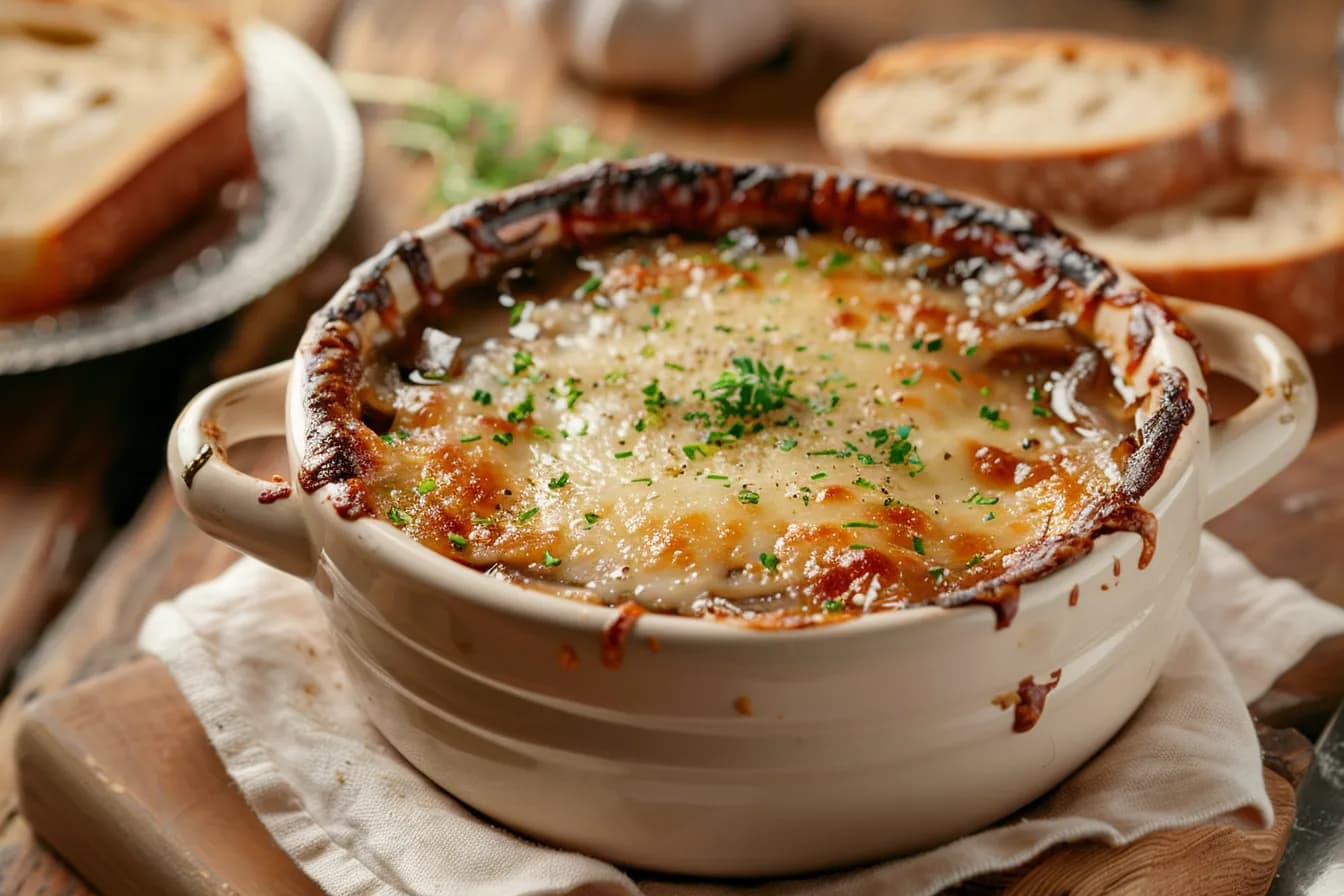
French Onion Soup
Deeply caramelized onions in a rich broth under a crust of bread and cheese.
 Soups & Stews
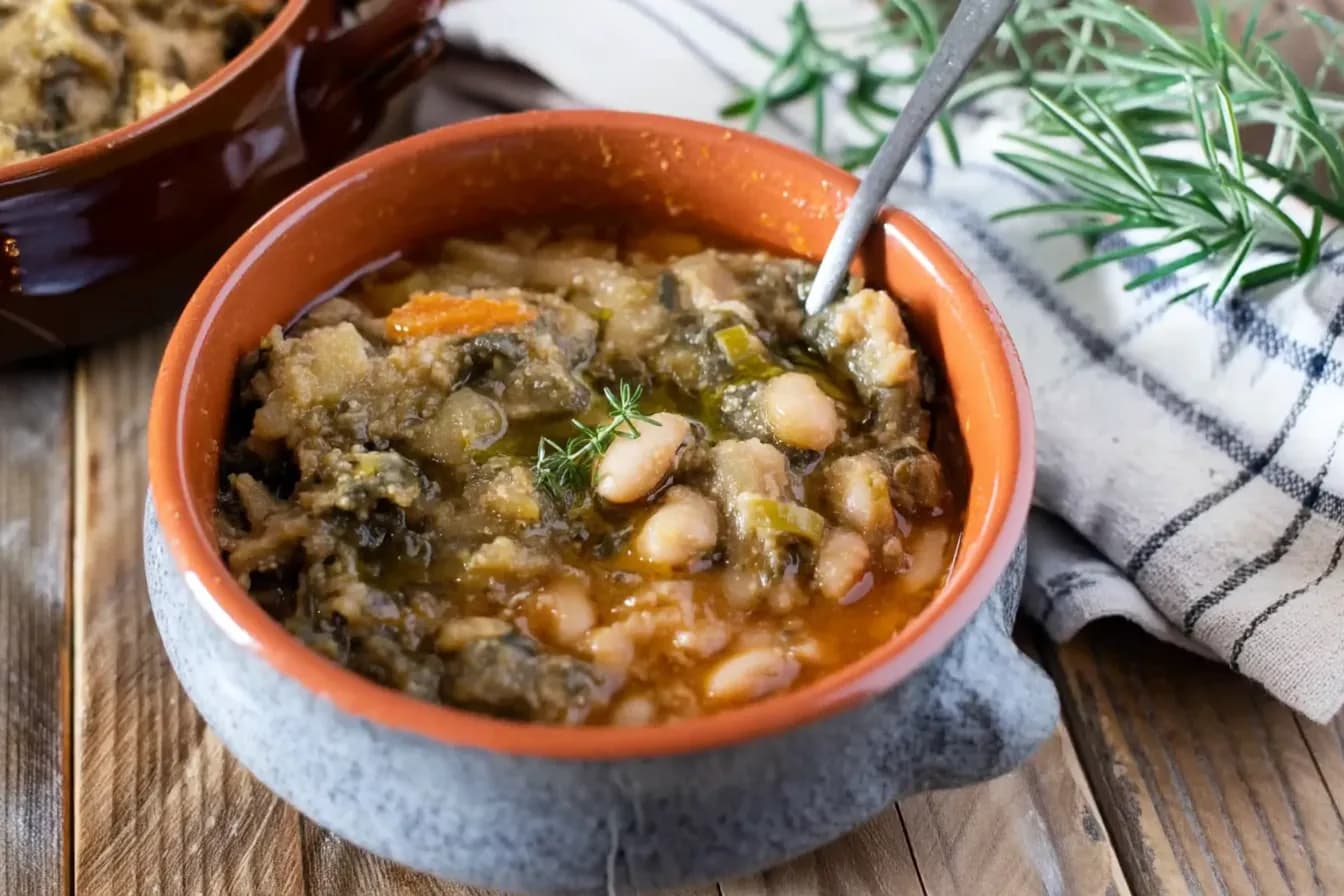
Ribollita
Tuscan bread and bean stew, "reboiled", and that is exactly the point.
 Soups & Stews
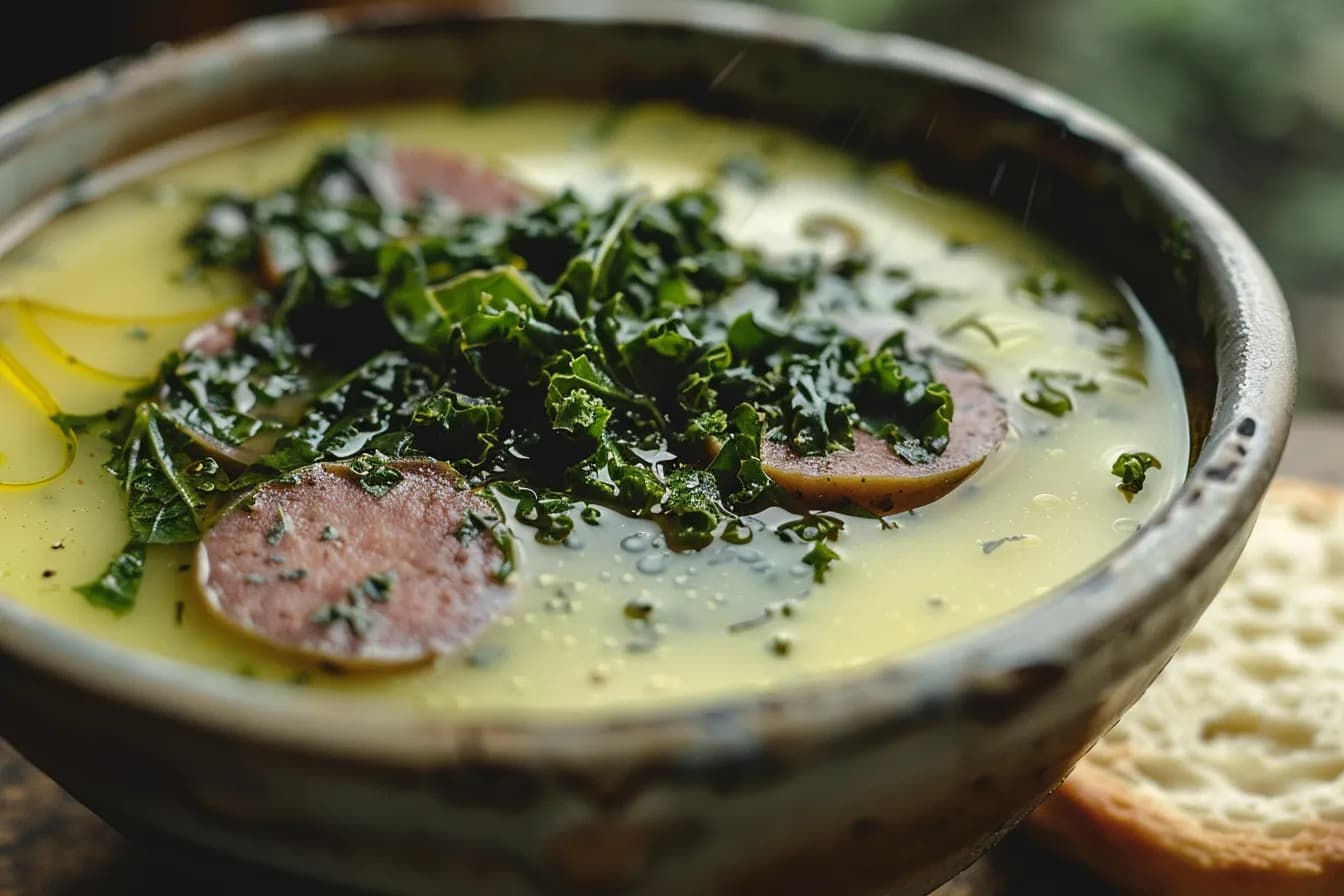
Caldo Verde
Portugal's national soup made of potatoes and paper-thin sliced kale, finished with a slice of Chouriço.