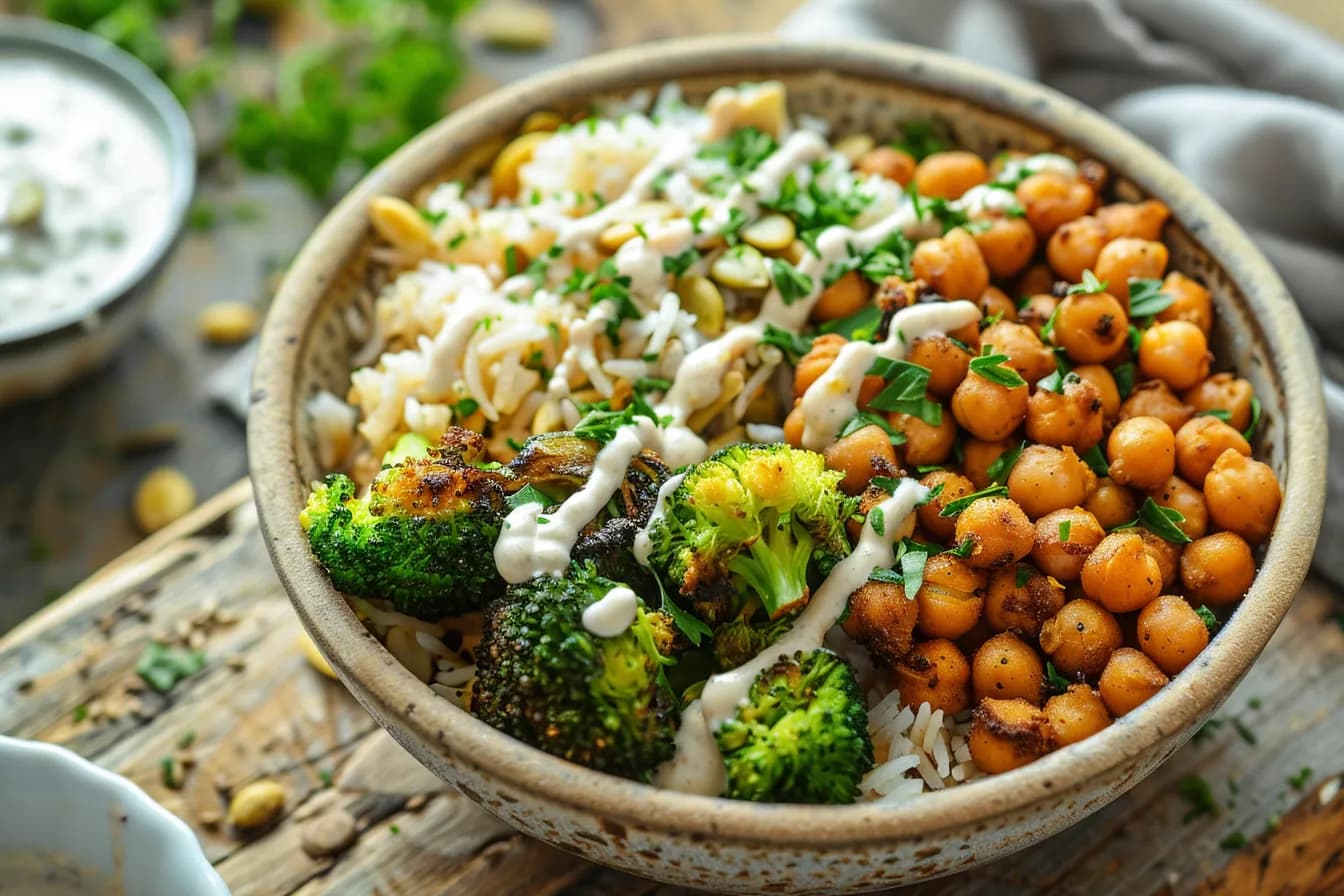
Make Your Own Bowl: The Bowl Formula
Five building blocks, one bowl: base, protein, vegetables, sauce, crunch. Pick whatever you have on hand.
- Preparation
- 20 min
- Cook/bake time
- 20 min
- Total
- 40 min
- Difficulty
- Easy
- Calories
- 890 kcal
- Servings
- 2
- Prep
- 20 min
- Cooking & baking
- 20 min
Five building blocks, one bowl: base, protein, vegetables, sauce, crunch. Pick whatever you have on hand. A good bowl isn't a question of recipes, but a set of instructions: warm and cold, soft and crunchy, creamy and acidic all need to come together. Choose one variation in each row, and the quantities, steps, and grocery list will adjust accordingly.
Why this works
A bowl doesn't taste good because it contains expensive ingredients, but because four contrasts hit the tongue at the same time: warm versus cold, soft versus crunchy, fat versus acid, mild versus salty. If one of these is missing, the bowl becomes boring, and this almost always happens with the acid. That's why every sauce here has a source of acid, and why it's only added at the very end: acid draws water out of salad leaves and softens seeds within minutes. The second lever is the salt in the base. Rice, quinoa, and bulgur only absorb it during cooking; added later, it stays on the surface and tastes like salt instead of grain.
Build your own
Pick one option per row. Ingredients, steps, cook mode and shopping list adapt instantly.
Your pick: Basmati rice · Roasted chickpeas · Broccoli · Tahini-lemon · Roasted pumpkin seeds
Sign in to save your combinations. Sign in
Step-by-step instructions
- 1
Start the base
Start with the base, it takes the longest and waits patiently afterward. While it cooks or swells, you have enough time for everything else. The bowl is a dish where the order of operations cuts the prep time in half.
- 2
Cook the rice
Wash the rice in a bowl until the water stays clear. The washed-off starch is exactly what otherwise makes it sticky. Put it on the stove with the water and salt, bring it to a boil once, and then let it steep covered over the lowest heat for twelve minutes. Then let it stand uncovered for five minutes and fluff it with a fork.
- 3
Prepare the vegetables
Now it's time for the vegetables. Cut everything into pieces that fit on a spoon: you eat a bowl by the spoonful, and half a broccoli floret forces you to use a knife.
- 4
Blanch the broccoli
Divide the broccoli into bite-sized florets and put them in rolling boiling salted water for three minutes. Then immediately rinse with cold water: this stops the cooking and keeps the chlorophyll intact, which is why the broccoli stays bright green instead of turning olive gray.
- 5
Cook the protein
The protein goes into the pan or oven last so that it hits the bowl warm. Warm protein on a cool base is exactly the temperature difference that separates a bowl from a salad.
- 6
Roast the chickpeas
Pat the drained chickpeas really dry, otherwise they will steam instead of roasting. Toss them with oil, cumin, and salt, and give them twenty minutes at 220 °C in the oven or eight minutes in a hot pan. They are done when the first ones burst open and smell nutty.
- 7
Mix the sauce
Mix the sauce in a small bowl or a jar with a lid and season it more strongly than seems right when tasted on its own. It has to season four other ingredients and will automatically become milder in the process.
- 8
Mix the tahini sauce
Mix tahini, lemon juice, and garlic. The mixture will initially become stiff and clumpy, and that is exactly where most people stop. Add the cold water a tablespoon at a time and keep stirring: from the third spoon on, it suddenly becomes light and creamy. Season with salt.
- 9
Assemble
Place the base in the bowl and arrange everything else next to each other on top instead of mixing it in. This isn't about aesthetics, it's about function: this way the crunch stays crispy and every spoonful can be composed differently. Only add the sauce at the table.
- 10
Roast the seeds
Roast the seeds in a dry pan over medium heat for two to three minutes until they start to pop and smell nutty. Immediately pour onto a plate: they will continue to roast in the hot pan and become bitter.
Our best tips
- Salt belongs in the base, not on it. Rice and quinoa only absorb it during cooking; added later, it sits on top and tastes like salt instead of grain.
- It's better to season the sauce too strongly than too mildly. It seasons four other ingredients and loses half of its intensity in the process.
- For meal prep, pack everything separately and put the sauce in a small jar. Mixed together, the crunch gets soggy overnight and the bowl tastes like the fridge on the third day.
Tasty variations
The warm winter bowl
Sweet potato as a base, roasted vegetables, roasted chickpeas, and tahini-lemon. Everything warm, nothing raw. This is the version that works in January when a cold bowl tempts no one.
The 15-minute bowl
Bulgur (only swells), cucumber and tomato (raw chopping), soft-boiled eggs, and herb oil. No oven, one pan of water, done, and none of the four components needs attention.
Nutrition facts
| Calories | 890 kcal |
|---|---|
| Protein | 30.5 g |
| Carbohydrates | 101.3 g |
| – of which sugar | 4.7 g |
| Fat | 40.9 g |
| Fiber | 18.5 g |
Where the 890 kcal come from
per serving
Calculated from the ingredients – how we do it
We add up reference values for every ingredient and divide by the number of servings. These assumptions are baked in:
- Reference values per 100 g – for the raw ingredient, exactly as listed.
- Tinned goods count at drained weight, bone-in meat at purchase weight: you eat about 70 per cent of a chicken thigh and leave the rest.
- Water evaporates as you cook. The energy stays in the pot, the weight does not – so the figure is per serving, not per 100 g of finished dish.
- Anything listed without a quantity – “salt and pepper” – is not counted.
- For build-your-own recipes the figure applies to the default choice. A different combination shifts it, sometimes considerably.
A guide value, not a lab measurement: no two onions weigh the same, and fat content varies from pack to pack.
Frequently asked questions
Which combination do the nutritional values apply to?
For the standard selection, meaning the first option of each axis: basmati rice, roasted chickpeas, broccoli, tahini-lemon, and pumpkin seeds. If you choose salmon instead of chickpeas or sweet potato instead of rice, the values shift significantly. There is no single number that is correct for all combinations at the same time.
Can I choose two options from one row?
Cooking yes, selecting here no. Two proteins mean either double the amount or halved portions, and that is a recipe decision that a selection list cannot make for you. Take one option and add the second ingredient in half the amount, or just build the bowl for four.
Why does my bowl get mushy on the second day?
Almost always the sauce. Acid draws water from leaves and softens seeds within hours. For leftovers, it belongs in its own jar and is only added at the table. Red cabbage is the only component that benefits from it, it gets better overnight.
Comments & ratings(0)
Sign in to rate and comment on this recipe.
You might also like
 Salads
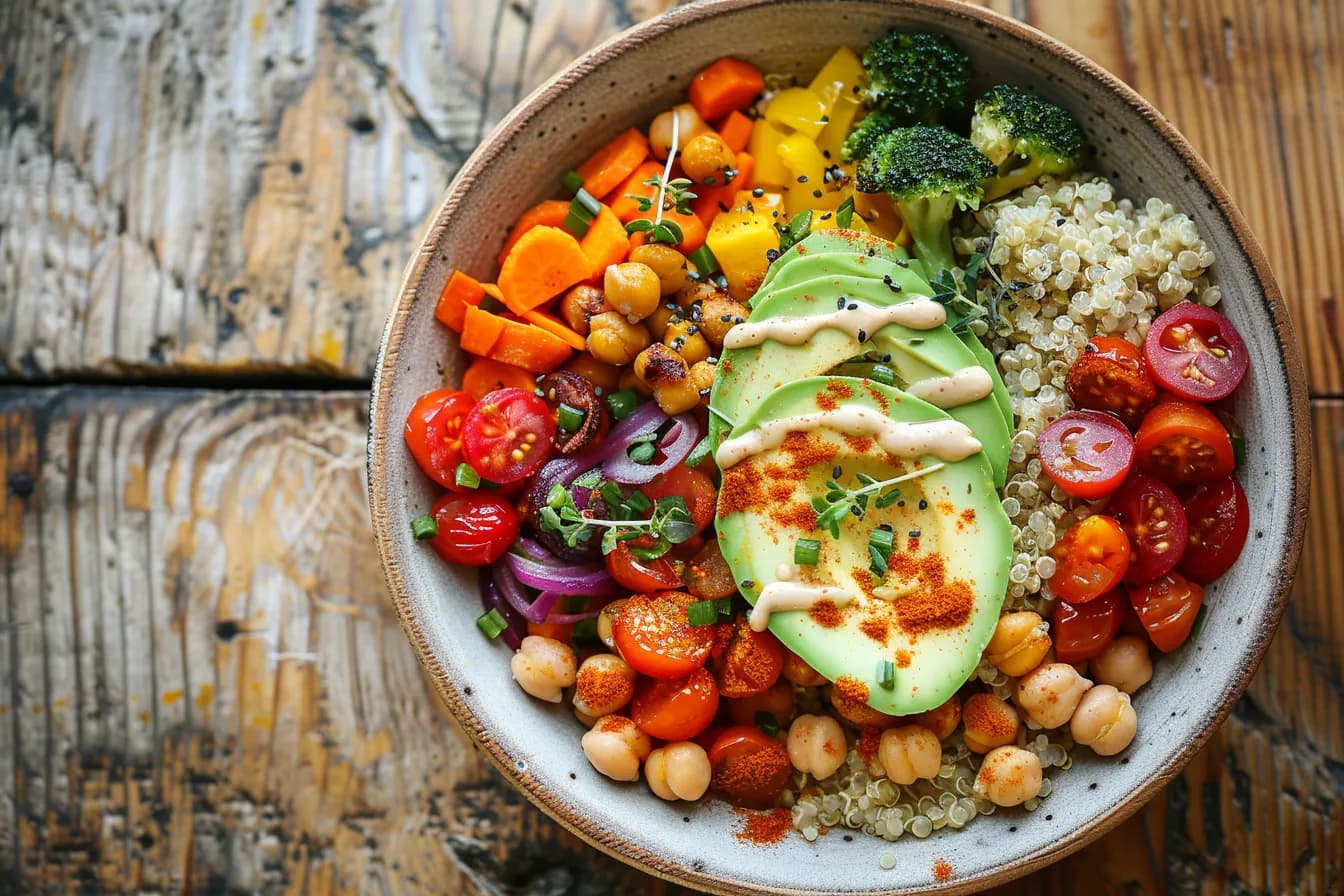
Quinoa Bowl with Roasted Vegetables
Fluffy quinoa with roasted vegetables, chickpeas, and a creamy lemon tahini dressing.
 Salads
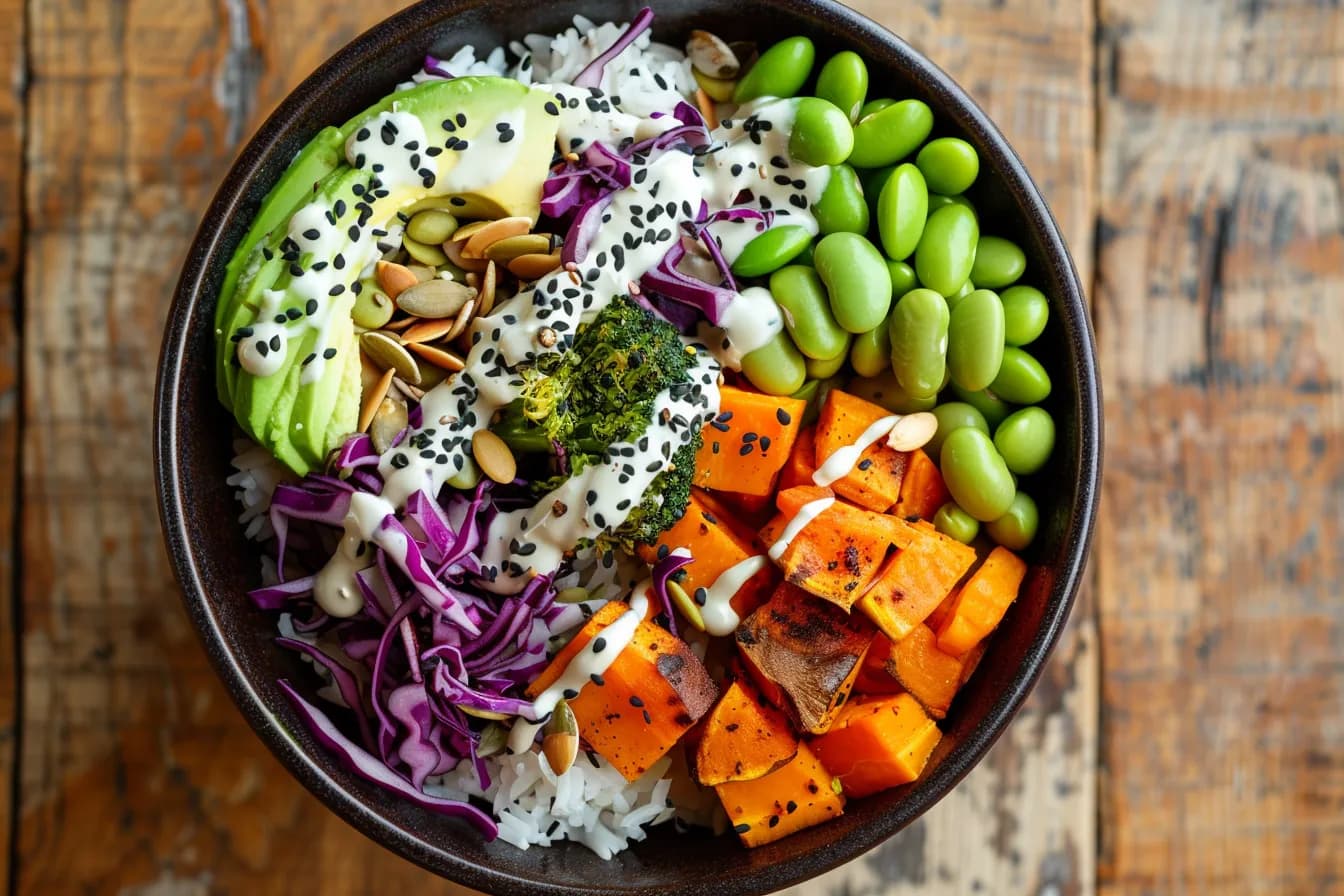
Buddha Bowl
Colorful bowl of rice, roasted vegetables, red cabbage, edamame, and creamy peanut dressing.
 High Protein
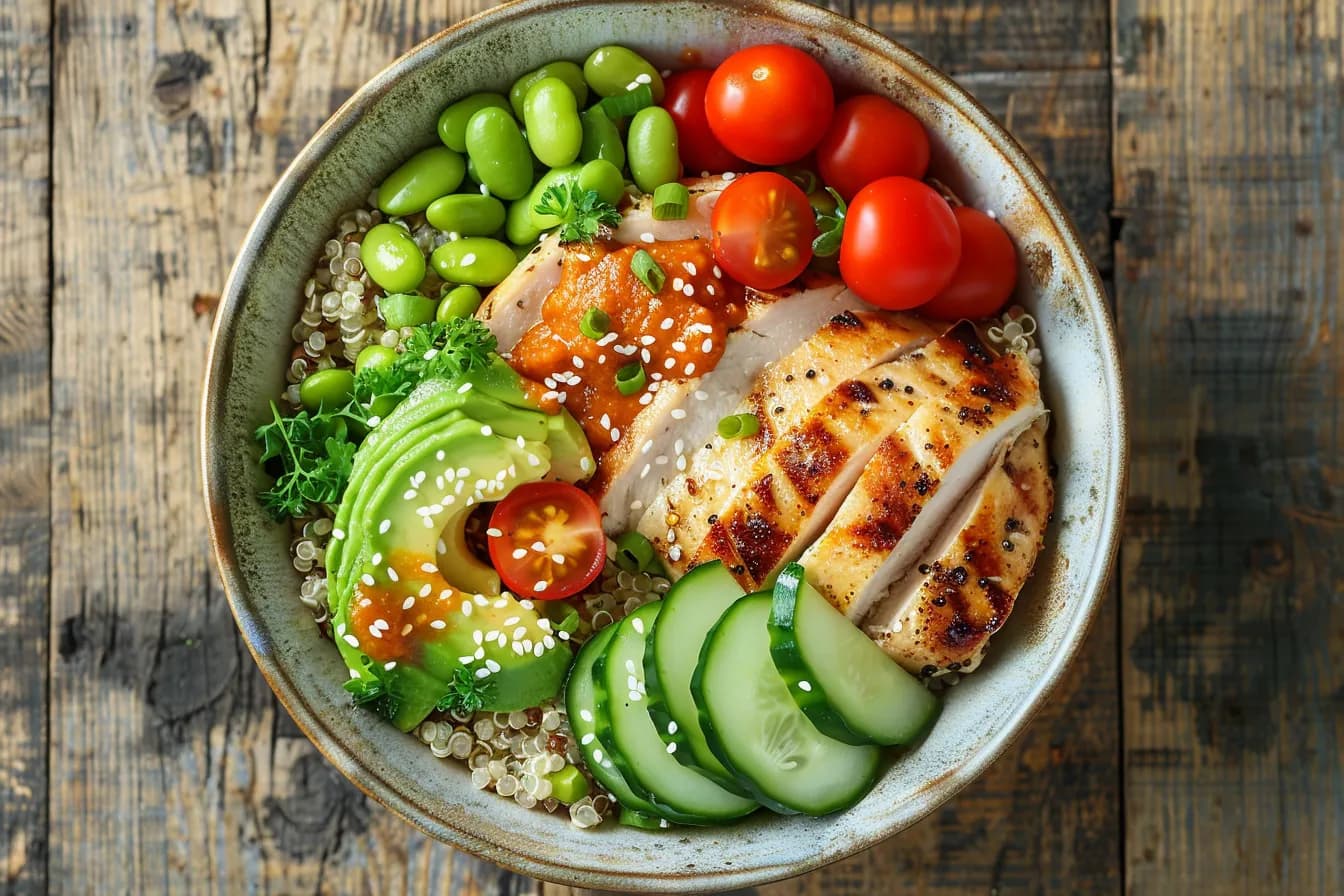
Protein Power Bowl with Chicken and Quinoa
Colorful bowl with quinoa, grilled chicken, edamame, avocado, and tahini dressing, 45 g protein per serving.