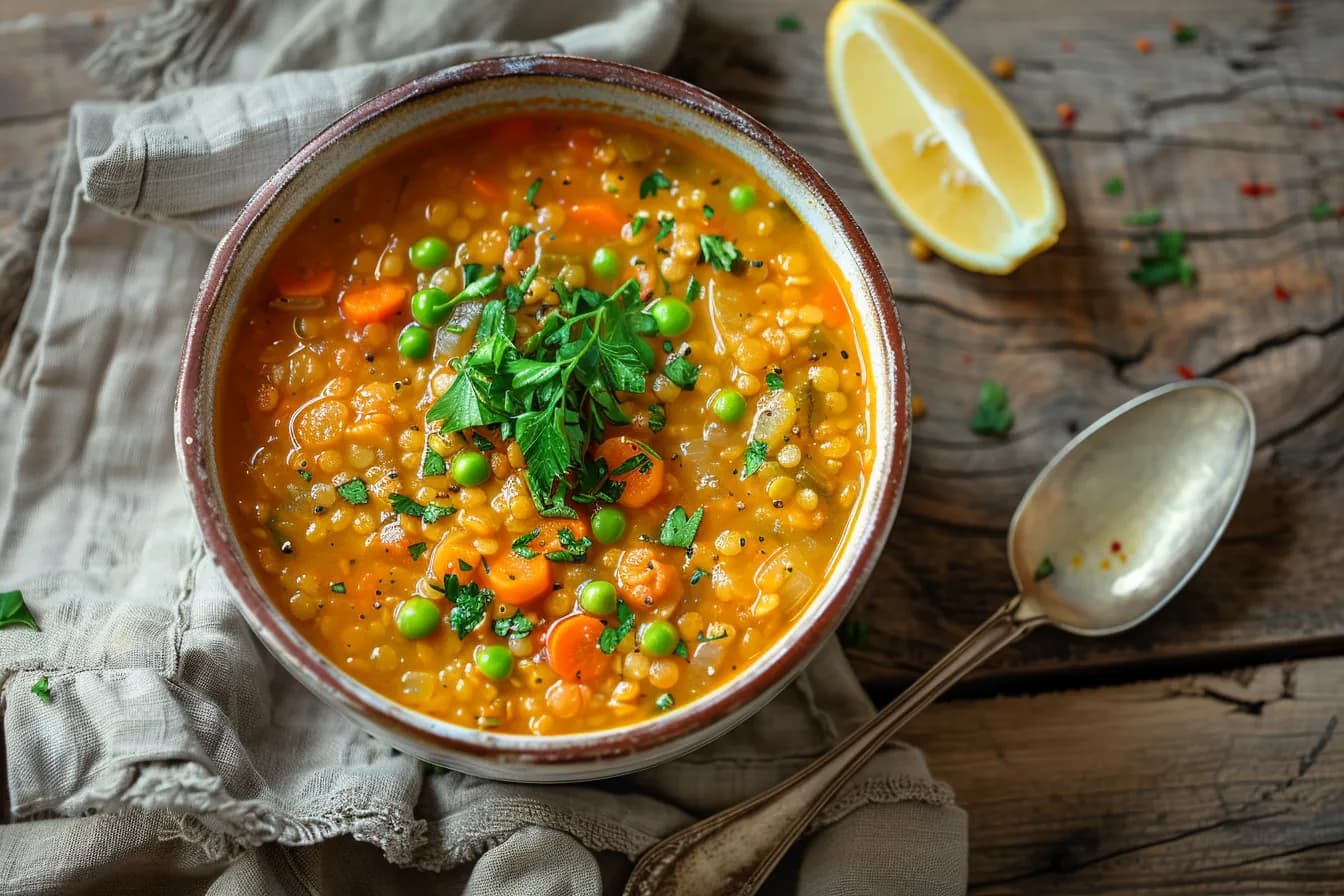
Frozen Vegetable Soup
Frozen vegetables go straight into the pot frozen. Thawing them only costs time and flavor.
- Preparation
- 5 min
- Cook/bake time
- 20 min
- Total
- 25 min
- Difficulty
- Easy
- Calories
- 343 kcal
- Servings
- 2
- Prep
- 5 min
- Cooking & baking
- 20 min
Frozen vegetables go straight into the pot frozen. Thawing them only costs time and flavor. Vegetables are usually flash-frozen within hours of harvesting and often retain more vitamins than fresh produce sitting on the shelf. For a soup on an evening when nothing was planned, it is the better ingredient.
Why this works
During flash-freezing, very small ice crystals form that barely damage the cell walls. If the vegetables thaw slowly, these crystals grow again. They tear the cells apart, and the cell juice leaks out as soon as it gets warm. This is exactly why frozen vegetables go straight into the hot pot: the transition is so fast that the crystals have no time to grow. The second point is the lentils. Red lentils do not need soaking and break down completely in fifteen minutes. Their released starch thickens the soup without the need for flour, cream, or an immersion blender. And the tomato paste is roasted instead of just stirred in: only in hot fat do its sugars lose their sharp acidity and gain depth.
Step-by-step instructions
- 1
Sauté the onion
Sauté the diced onion in oil for four minutes until translucent and add the garlic in the last minute. These are the only fresh ingredients in the recipe, and they are well worth their four minutes. A soup without sautéed onions rarely becomes more than hot broth water.
- 2
Roast the tomato paste
Stir in the tomato paste and cumin and roast both for two minutes until the paste darkens and no longer smells sharp and acidic. Stirred in raw, tomato paste remains sharp, but roasted, it gives the soup depth.
- 3
Lentils, vegetables, broth
Add the lentils and the frozen vegetables without thawing, straight from the package, and pour in the broth. Bring to a boil and let simmer gently for fifteen minutes until the lentils have broken down and the soup thickens on its own.
- 4
Season to taste
Remove the pot from the heat and season to taste with salt, pepper, and the lemon juice. The acidity at the end is especially important for a frozen vegetable soup: it replaces the freshness that fresh vegetables would have brought.
Our best tips
- Never thaw frozen vegetables beforehand. During slow thawing, the ice crystals grow and destroy the cell walls. Then the cell juice ends up in the strainer instead of the vegetables.
- Roast the tomato paste for two minutes. Stirred in raw, it remains sharp and acidic, but roasted, it becomes well-rounded and dark.
- Use red lentils instead of cream for thickening. They break down in fifteen minutes and their starch makes the soup creamy without flour, without milk, and without an immersion blender.
Tasty variations
With coconut milk
Stir in 200 ml of coconut milk at the end and season with lime instead of lemon. This turns the savory soup into a creamy one and pairs better with a cumin-heavy flavor profile.
With frozen spinach
Use 200 g of leaf spinach instead of soup vegetables and add a spoonful of yogurt per plate at the end. This only takes ten minutes because spinach cooks much faster than root vegetables.
Nutrition facts
| Calories | 343 kcal |
|---|---|
| Protein | 17 g |
| Carbohydrates | 50 g |
| – of which sugar | 13 g |
| Fat | 7 g |
| Fiber | 12 g |
Where the 343 kcal come from
per serving
Calculated from the ingredients – how we do it
We add up reference values for every ingredient and divide by the number of servings. These assumptions are baked in:
- Reference values per 100 g – for the raw ingredient, exactly as listed.
- Tinned goods count at drained weight, bone-in meat at purchase weight: you eat about 70 per cent of a chicken thigh and leave the rest.
- Water evaporates as you cook. The energy stays in the pot, the weight does not – so the figure is per serving, not per 100 g of finished dish.
- Anything listed without a quantity – “salt and pepper” – is not counted.
A guide value, not a lab measurement: no two onions weigh the same, and fat content varies from pack to pack.
Frequently asked questions
Are frozen vegetables really just as good?
For a soup, they are often even better. They are usually flash-frozen within a few hours of harvesting, while fresh produce often spends days in transit and on the shelf, losing vitamins in the process. What is missing is the texture, and that hardly matters in a soup.
My soup has become too thick.
Red lentils continue to thicken, even off the stove. Simply thin it out with hot broth or water and season again. Diluting it also causes salt and acidity to be lost. The next day, it is almost always significantly thicker than the evening before.
Can the soup be frozen?
Yes, for three months, and it is one of the few cases where this works without a loss of quality. The vegetables were already frozen once, and the lentils have broken down anyway. Freeze in portions and heat directly from frozen in the pot.
Comments & ratings(0)
Sign in to rate and comment on this recipe.
You might also like
 Dinner
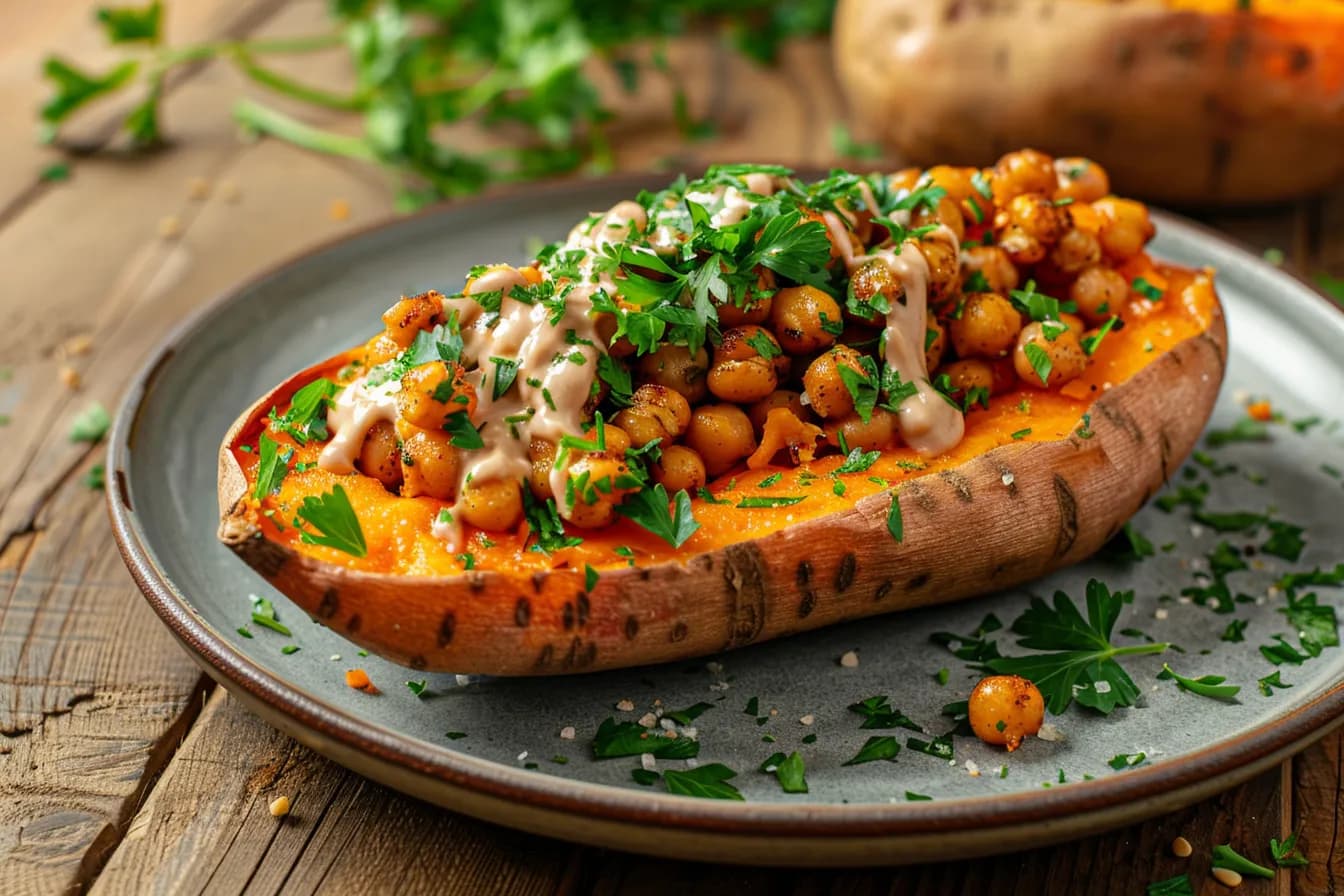
Microwave Sweet Potato
Eight minutes instead of fifty, and with thirty seconds in a pan it still gets roasted flavors.
 Dinner
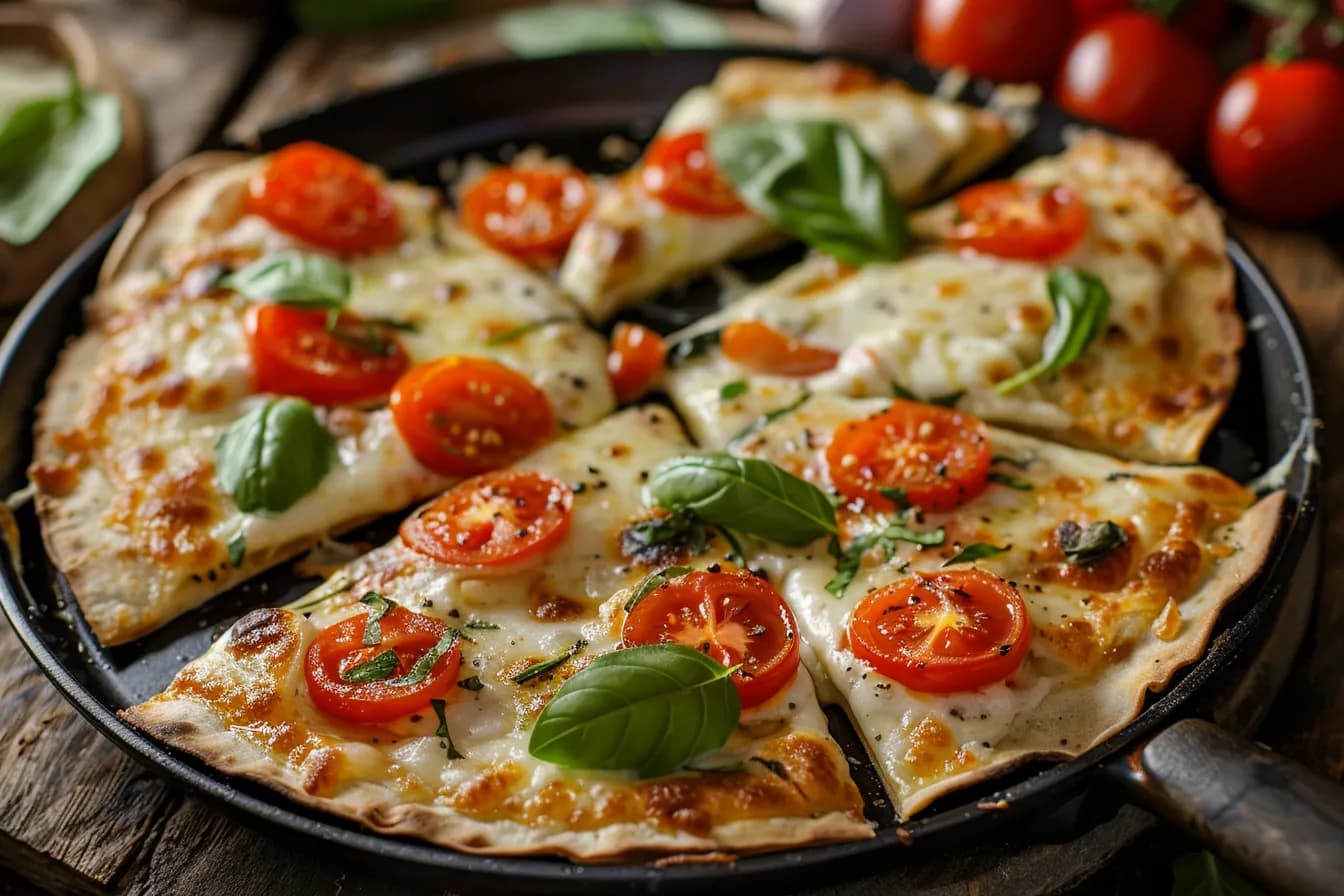
10-Minute Tortilla Pizza
The wheat wrap is the base, cooked in the pan, not in the oven, and therefore truly crispy.
 Breakfast
Savory Toast – The Builder
Bread, fat, topping, crown, four decisions, and a slice becomes dinner.