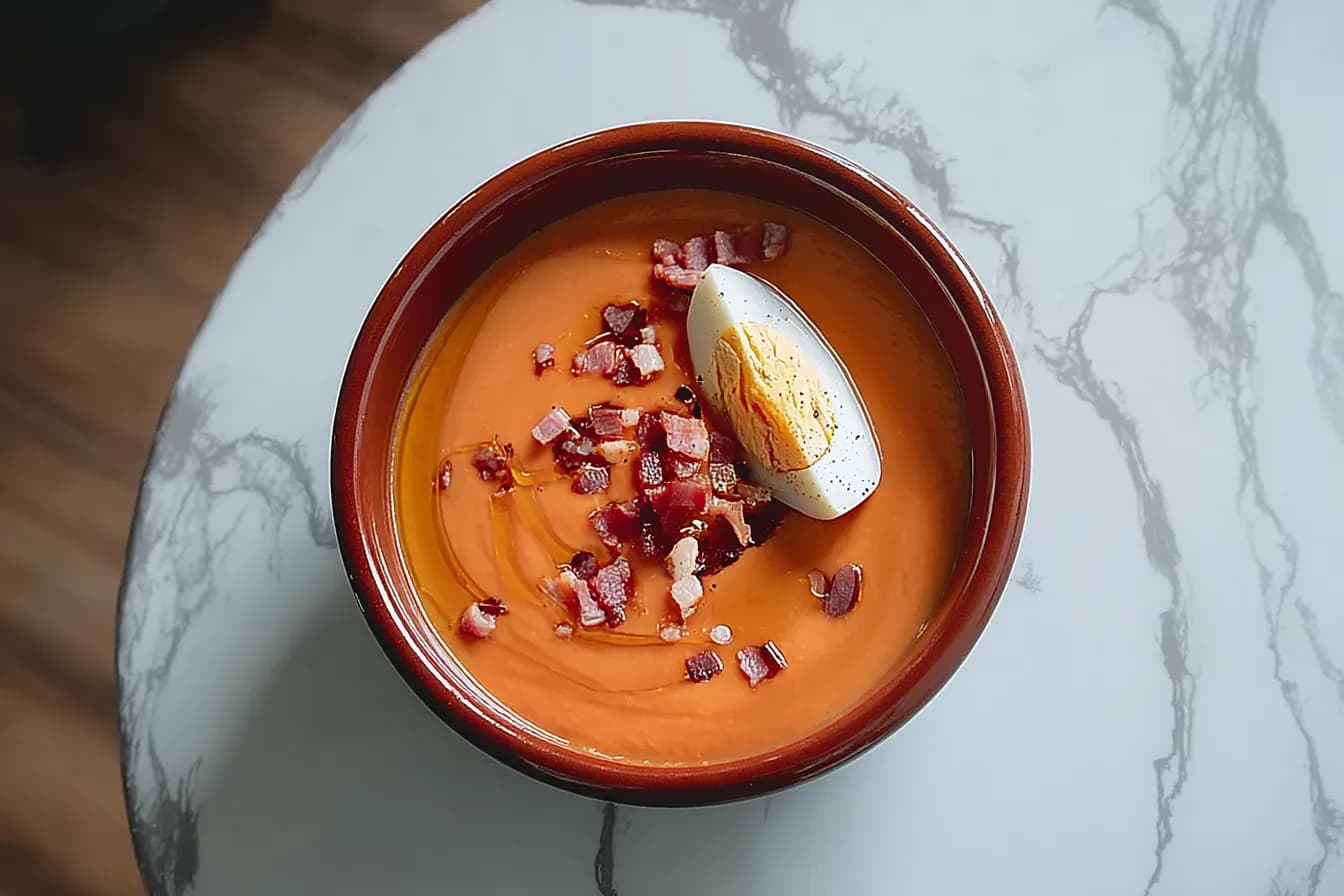
Salmorejo
The thick sister of gazpacho from Córdoba, thickened with bread, without cucumber, and spoonable instead of drinkable.
- Preparation
- 20 min
- Cook/bake time
- –
- Total
- 2 hr 20 min
- Difficulty
- Easy
- Calories
- 573 kcal
- Servings
- 4
- Prep
- 20 min
- Resting
- 2 hr
Only 20 min of that is hands-on – the rest takes care of itself.
The thick sister of gazpacho from Córdoba, thickened with bread, without cucumber, and spoonable instead of drinkable. Where gazpacho is a cold vegetable soup, salmorejo is an emulsion: bread, tomatoes and olive oil are blended until a thick, orange-pink cream forms. It is served with egg and Serrano ham.
Why this works
Salmorejo is not a soup with bread in it, but a true emulsion, and therefore the order in the blender is crucial. First, tomatoes and soaked bread are blended into a smooth base; the starch from the bread and the pectins of the tomato act as emulsifiers. Only then does the olive oil run in in a thin stream while the blender continues to run, and is broken down into the finest droplets that remain suspended in the base. This is exactly where the characteristic orange-pink color comes from: the many small oil droplets scatter light and lighten the tomato color. If you dump everything together into the blender, you do not get an emulsion, but a red soup with an oil film. The two hours of cooling time are not an accessory, as cold salmorejo tastes significantly less sweet, and the ratio of acidity to oil only then sets in properly.
Step-by-step instructions
- 1
Soak the bread
Soak the bread without crust for ten minutes in cold water and squeeze it out slightly, as it should be moist but not dripping. The crust stays out: it colors the cream grayish and cannot be completely crushed.
- 2
Blend the base
Blend tomatoes, bread, garlic, vinegar and salt for two minutes on the highest setting to a completely smooth mass. It must be really smooth before the oil is added, as chunks prevent the emulsion from building up.
- 3
Let the oil run in
Pour the olive oil in a thin stream while the blender is running. The mass visibly lightens and becomes thick and creamy, which is exactly the emulsion. Blended all together, it would remain a red soup with an oil film on top.
- 4
Chill for two hours
Chill the salmorejo for at least two hours. Cold, it tastes significantly less sweet and the ratio of acidity to oil only sets in properly then. Tasted lukewarm, you would season it incorrectly.
- 5
Serve
Pour the salmorejo into shallow bowls and distribute chopped egg and Serrano ham over it. A dash of olive oil on top belongs to it. In Córdoba it is eaten as an appetizer, not drunk, as it is too thick for a glass.
Our best tips
- The oil must run in last and slowly. It is the only difference between an emulsion and a red soup with an oil film.
- Use very ripe tomatoes. Salmorejo has hardly any other ingredients, and with watery winter tomatoes it simply lacks flavor.
- Sherry vinegar instead of wine vinegar. It brings a nutty depth that belongs to the dish in Andalusia, whereas wine vinegar makes it sharp.
Tasty variations
Porra antequerana
With double the amount of bread and some bell pepper. From Antequera, even thicker and almost spreadable, it is served there as a dip.
Vegan
Replace egg and ham with roasted almonds and capers. The salt and umami contrast, which is important for the topping, is preserved.
Nutrition facts
| Calories | 573 kcal |
|---|---|
| Protein | 16 g |
| Carbohydrates | 32 g |
| – of which sugar | 9 g |
| Fat | 42 g |
| Fiber | 4 g |
Where the 573 kcal come from
per serving
Calculated from the ingredients – how we do it
We add up reference values for every ingredient and divide by the number of servings. These assumptions are baked in:
- Reference values per 100 g – for the raw ingredient, exactly as listed.
- Tinned goods count at drained weight, bone-in meat at purchase weight: you eat about 70 per cent of a chicken thigh and leave the rest.
- Water evaporates as you cook. The energy stays in the pot, the weight does not – so the figure is per serving, not per 100 g of finished dish.
- Anything listed without a quantity – “salt and pepper” – is not counted.
A guide value, not a lab measurement: no two onions weigh the same, and fat content varies from pack to pack.
Frequently asked questions
What is the difference to gazpacho?
Salmorejo contains significantly more bread and oil and no cucumber or bell pepper. This makes it thick and spoonable instead of drinkable, and its color is orange-pink instead of red. Gazpacho is a cold soup, salmorejo an emulsion.
How many calories does salmorejo have?
Around 570 kcal per serving for four servings. The olive oil alone contributes about 380 kcal per serving, but it is not an addition, but the component that makes the emulsion possible in the first place.
Why is my cream not getting thick?
The oil came too early or too fast. First blend the base of tomatoes and bread completely smooth, then let the oil run in in a thin stream while the blender is running.
Do I have to peel the tomatoes?
Not with a powerful blender, as it crushes the skins completely. With weaker devices it is worth it, otherwise pieces of skin remain in the cream that you can feel on your tongue.
Comments & ratings(0)
Sign in to rate and comment on this recipe.
You might also like
 Soups & Stews
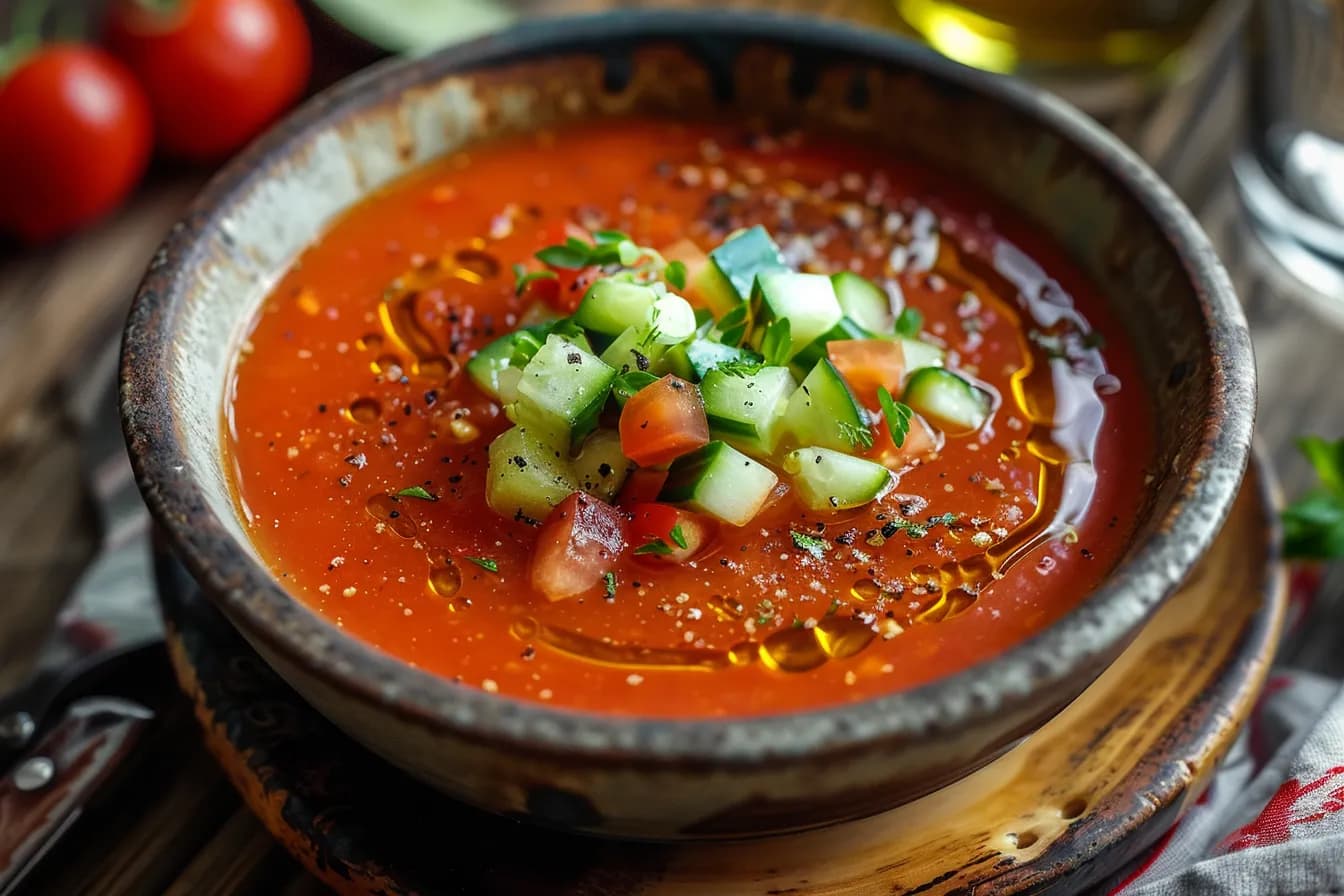
Gazpacho
Ice-cold Spanish vegetable soup made from raw tomatoes, cucumber, and bell pepper, served in a glass.
 Soups & Stews
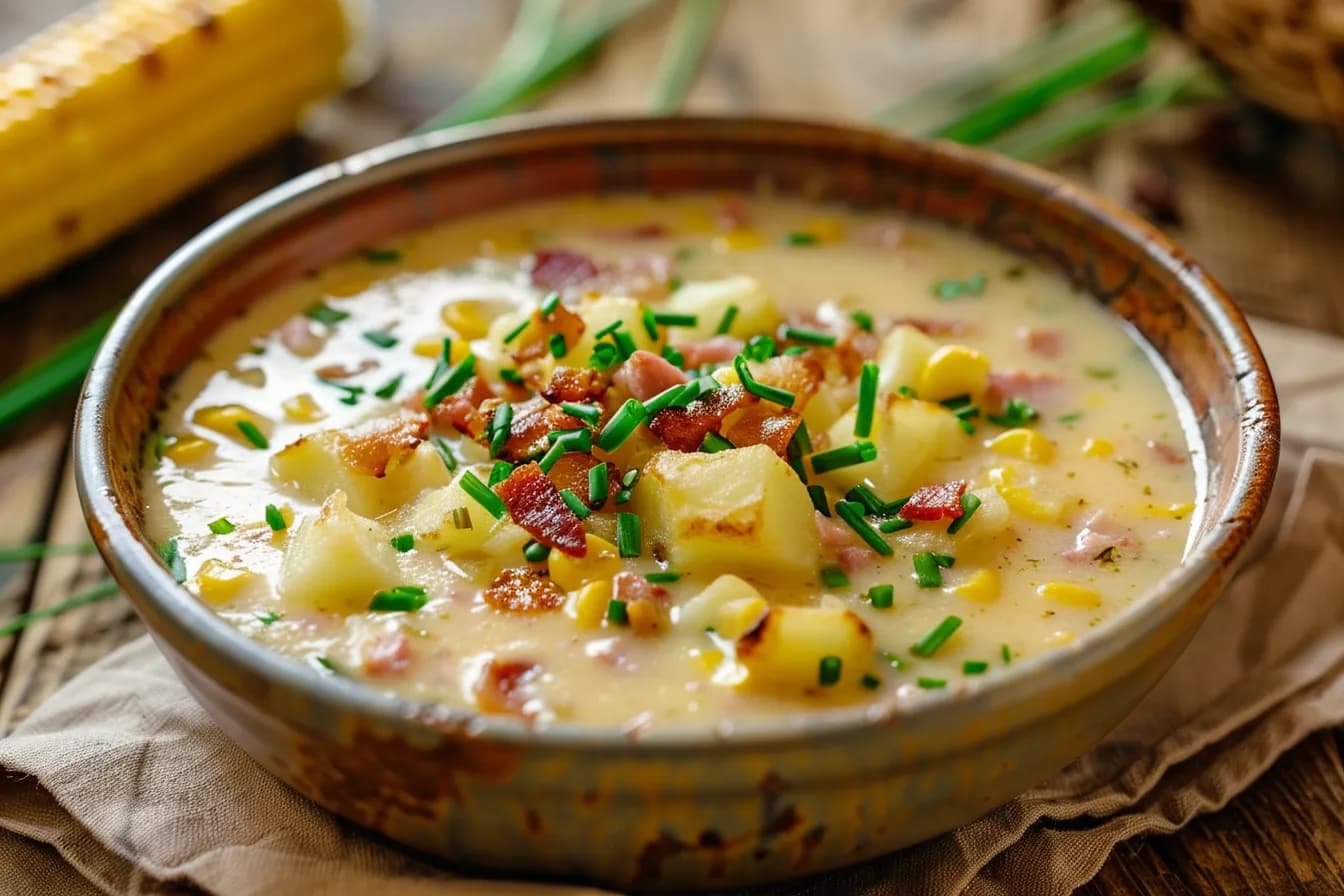
Corn Chowder
Creamy corn chowder with potatoes and crispy bacon, thickened without flour.
 Dinner
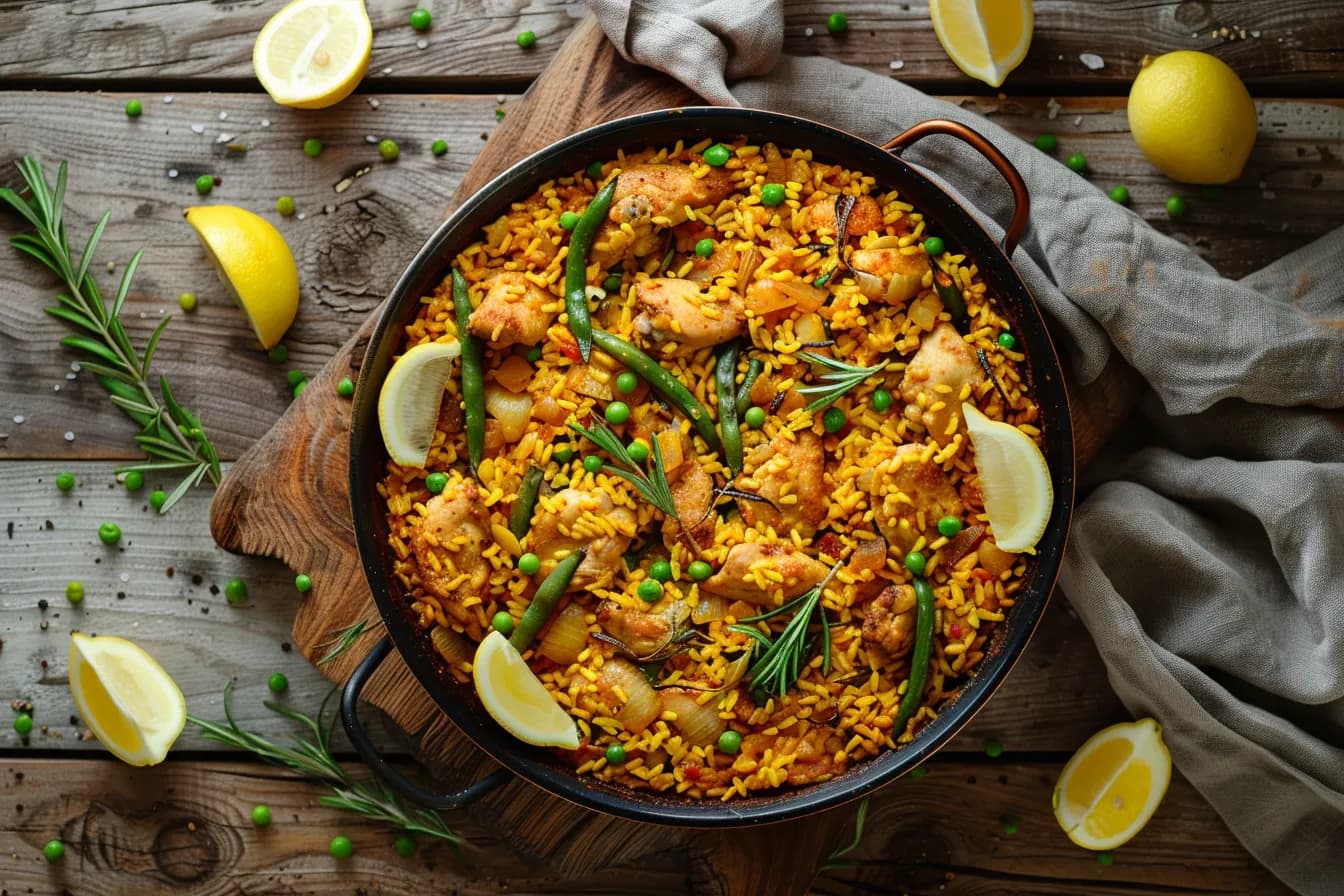
Paella Valenciana
Saffron rice with chicken, green beans and rosemary, with a crispy crust at the bottom of the pan.