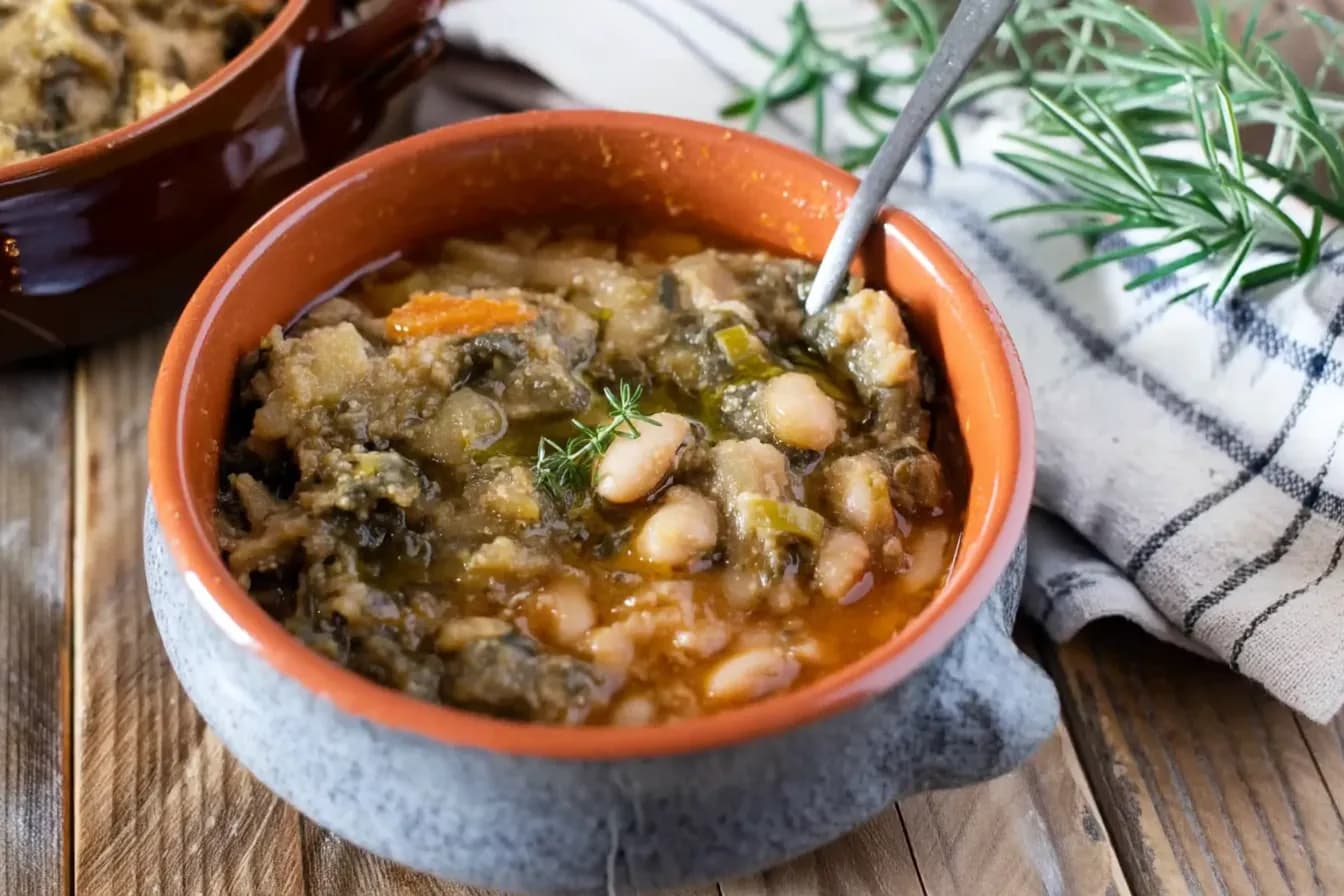
Ribollita
Tuscan bread and bean stew, "reboiled", and that is exactly the point.
- Preparation
- 30 min
- Cook/bake time
- 2 hr
- Total
- 26 hr 30 min
- Difficulty
- Easy
- Calories
- 434 kcal
- Servings
- 6
- Prep
- 30 min
- Cooking & baking
- 2 hr
- Resting
- 24 hr
Only 2 hr 30 min of that is hands-on – the rest takes care of itself.
Tuscan bread and bean stew, "reboiled", and that is exactly the point. Ribollita is by definition a dish from the day before. Only upon the second boiling does the bread break down completely and thicken the soup into the dense mass that bears the name. Freshly cooked, it is a good vegetable soup, but not a Ribollita.
Why this works
Ribollita means "reboiled", and this is not an anecdote, but the preparation instruction. During the first cooking, the stale bread absorbs liquid and swells, but remains recognizable as pieces. Only overnight does the liquid completely penetrate the starch structure, and upon the second heating, the bread breaks down and releases its starch, thereby thickening the soup into the dense, almost spoon-standing mass that defines the dish. Freshly cooked, this step is simply missing. Stale bread is not a matter of thrift, but a prerequisite. Fresh bread with a high water content dissolves into paste without forming structure. The kale, for its part, needs frost or a long cooking time for its tough cell walls to break down, which is why Ribollita is a winter dish and not a summer dish.
Step-by-step instructions
- 1
Cook the beans
Cook the soaked beans in unsalted water for 45 minutes until soft. Puree a third of them with a little cooking water, this puree is the second thickener alongside the bread. Salt only after cooking, otherwise the skins remain tough.
- 2
Start the soffritto
Sweat the onions, carrots and celery in four tablespoons of olive oil for fifteen minutes until soft and add the garlic and rosemary in the last two minutes. This base carries more flavor in a vegetable stew than in any meat dish.
- 3
Cabbage and tomatoes
Add the kale, white cabbage and tomatoes and let everything collapse for ten minutes. Then stir in the broth, whole beans and bean puree and simmer gently for 45 minutes. The kale needs this time, cooked briefly it remains tough and bitter.
- 4
Stir in the bread and let stand overnight
Stir in the coarsely broken stale bread and remove the pot from the heat. Let everything cool completely and stand in the refrigerator overnight. During this time, the liquid completely penetrates the bread structure, without this step it will not be a Ribollita.
- 5
Reboil
Heat the soup slowly the next day and stir vigorously until the bread breaks down completely and the mass is thick and spoon-standing. Season with salt and pepper and pour a generous splash of cold olive oil over each plate to serve, in Tuscany this is mandatory, not a garnish.
Our best tips
- Stale bread is a prerequisite, not thrift. Fresh bread dissolves into paste without giving the soup structure.
- Do not omit the olive oil for serving. Poured cold over the hot plate, it unfolds aromas that are lost when cooked, in Tuscany it is part of the dish.
- Cavolo nero is the right cabbage. Normal kale works, but is coarser, whoever uses it adds ten minutes of cooking time.
Tasty variations
Without overnight stay
Then it is called Zuppa di verdure con pane and is a very good vegetable soup, just not a Ribollita, because the bread remains recognizable as pieces.
With bacon
Render 150 g of Pancetta at the beginning and sweat the soffritto in it. Not the classic peasant version, but common in restaurants.
Nutrition facts
| Calories | 434 kcal |
|---|---|
| Protein | 16 g |
| Carbohydrates | 50 g |
| – of which sugar | 11 g |
| Fat | 17 g |
| Fiber | 12 g |
Where the 434 kcal come from
per serving
Calculated from the ingredients – how we do it
We add up reference values for every ingredient and divide by the number of servings. These assumptions are baked in:
- Reference values per 100 g – for the raw ingredient, exactly as listed.
- Tinned goods count at drained weight, bone-in meat at purchase weight: you eat about 70 per cent of a chicken thigh and leave the rest.
- Water evaporates as you cook. The energy stays in the pot, the weight does not – so the figure is per serving, not per 100 g of finished dish.
- Anything listed without a quantity – “salt and pepper” – is not counted.
A guide value, not a lab measurement: no two onions weigh the same, and fat content varies from pack to pack.
Frequently asked questions
Why does the Ribollita have to stand overnight?
Because the name describes the process: "reboiled". Only overnight does the liquid completely penetrate the bread, and upon the second heating it breaks down and thickens the soup. Freshly cooked, it is a vegetable soup with bread in it.
How many calories does Ribollita have?
Around 435 kcal per portion for six portions. The olive oil contributes significantly with about 120 kcal per portion, however, in Tuscany it is not an addition, but part of the dish.
Which bread is the right one?
Stale sourdough or white bread with a firm crumb, at least two days old. In Tuscany, unsalted Pane toscano is used, which is why the soup is salted more heavily there than necessary here.
Can I use canned beans?
Yes, then around 800 g drained. The taste becomes flatter because the bean cooking water is missing, which gives the soup depth. Puree a third anyway, the thickening needs it.
Comments & ratings(0)
Sign in to rate and comment on this recipe.
You might also like
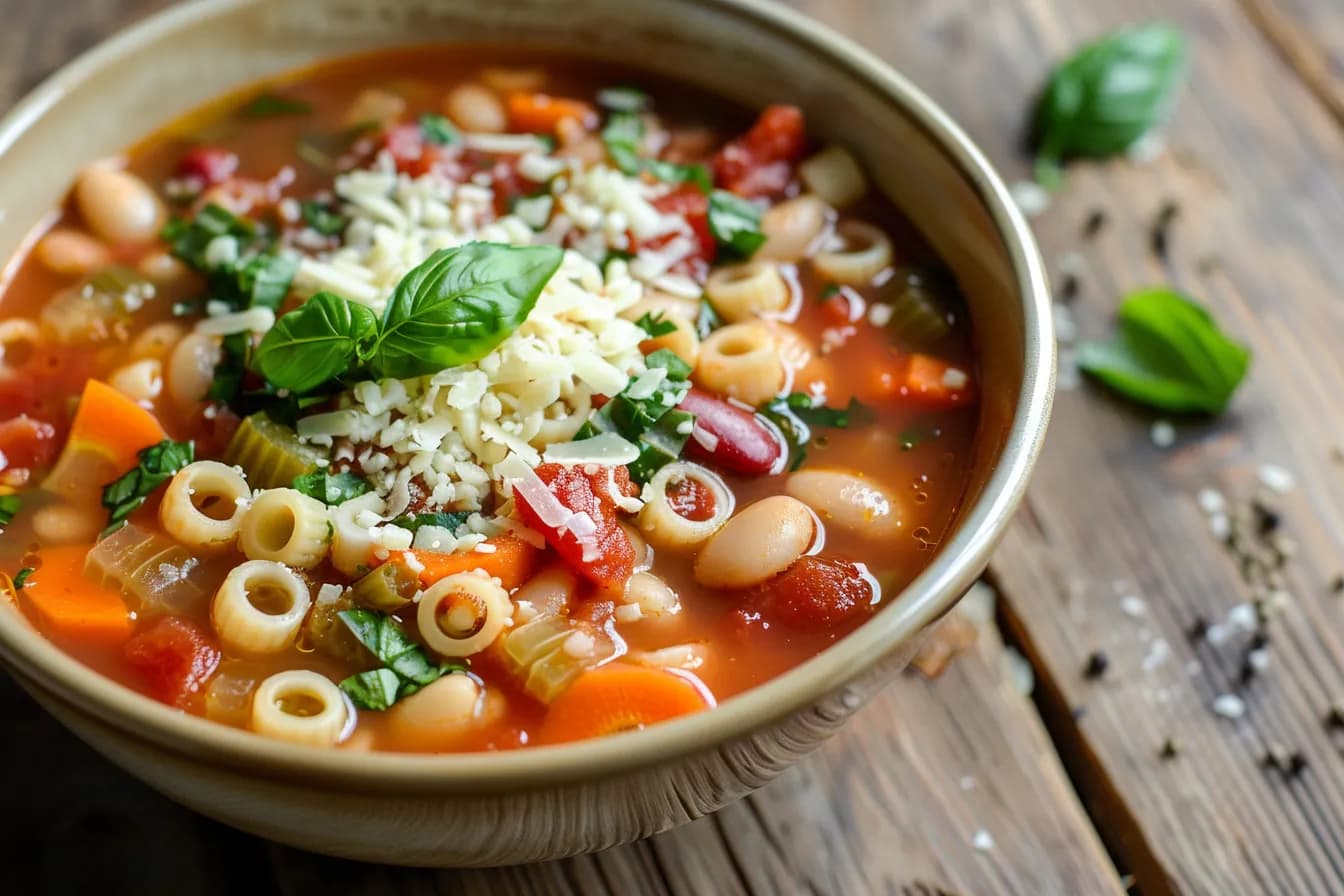 Soups & Stews
Minestrone
Italian vegetable stew with beans and small pasta, simmered with a Parmesan rind.
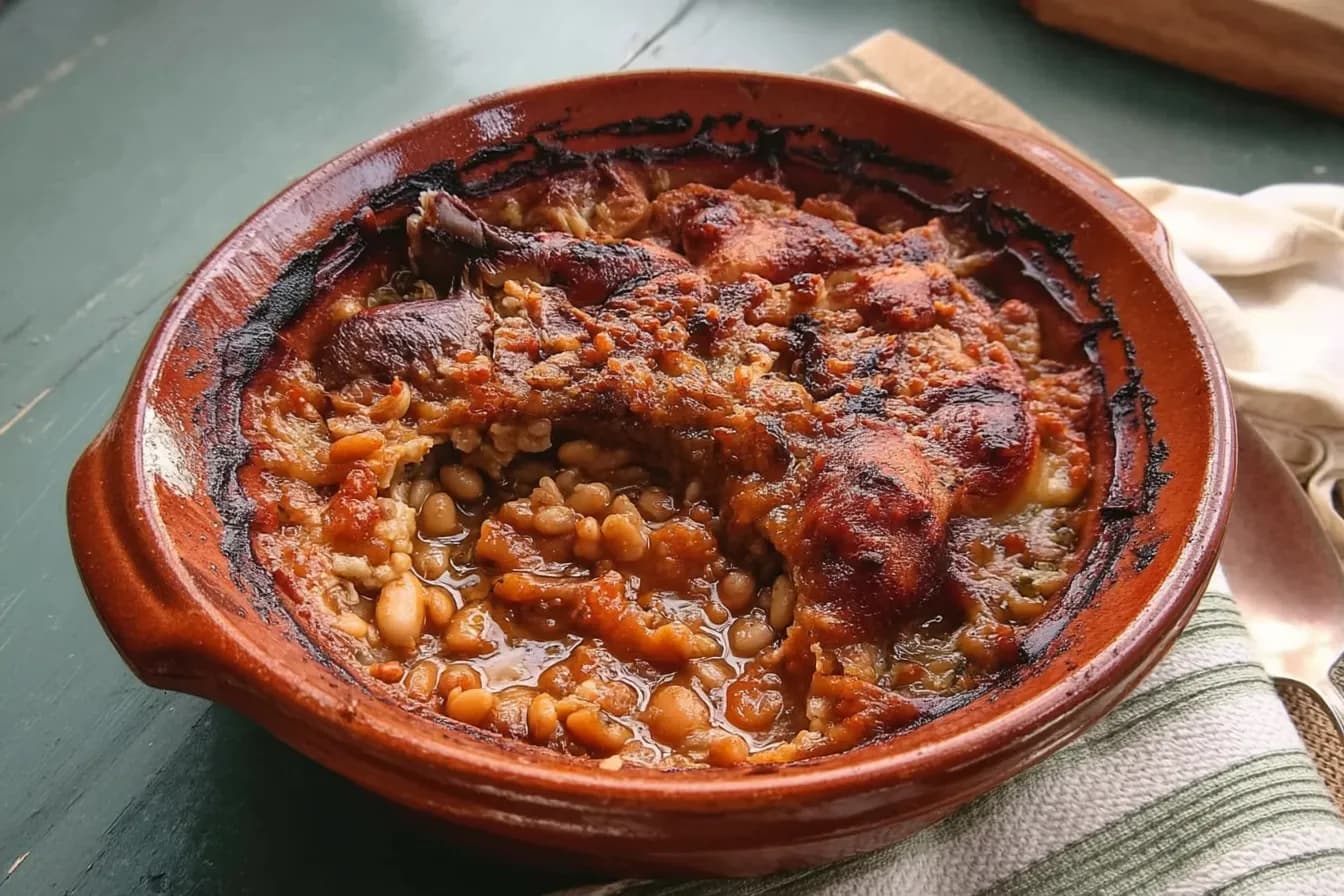 Dinner
Cassoulet
Bean stew from the Languedoc with duck, sausage, and pork, and the crust that is pushed down seven times.
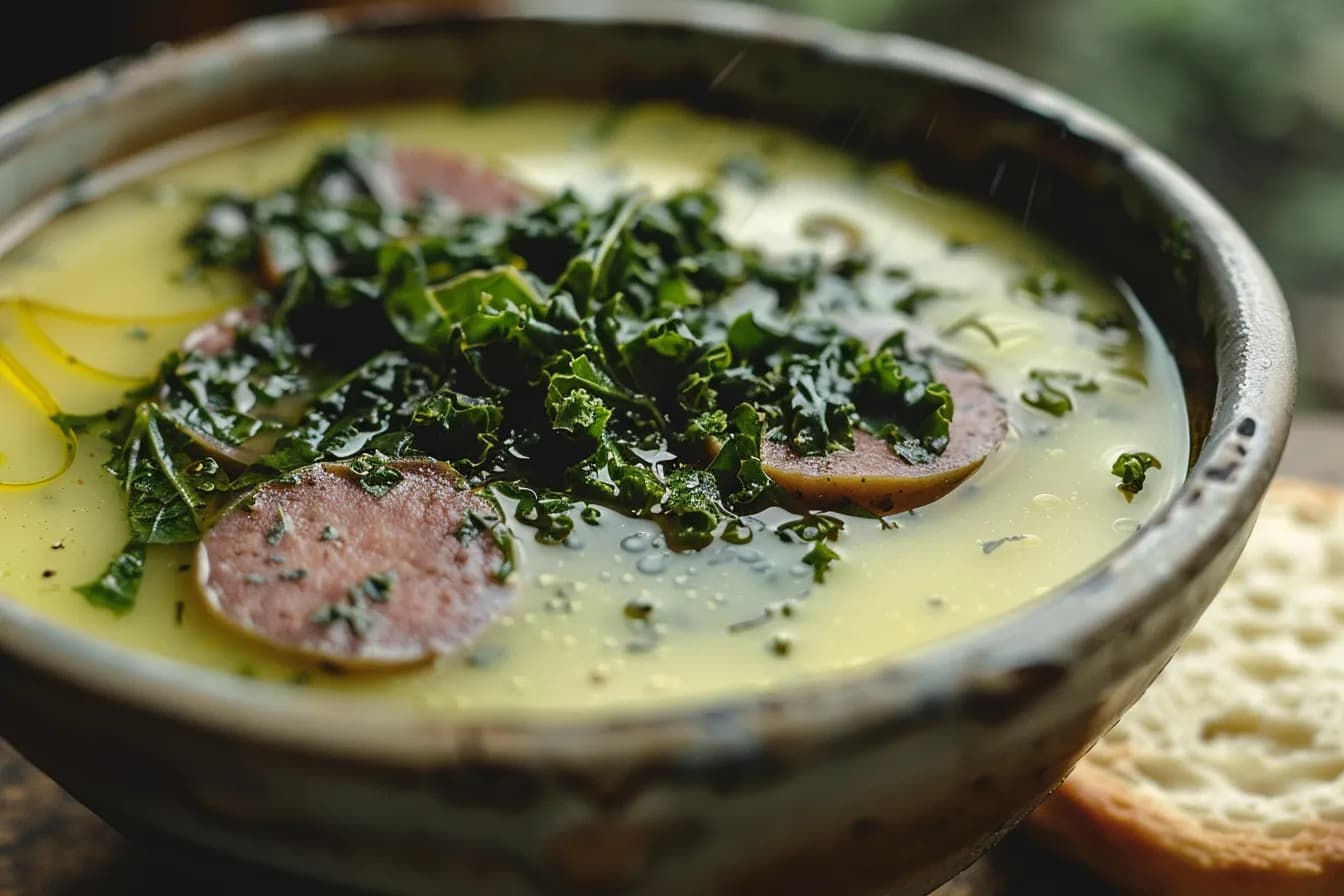 Soups & Stews
Caldo Verde
Portugal's national soup made of potatoes and paper-thin sliced kale, finished with a slice of Chouriço.