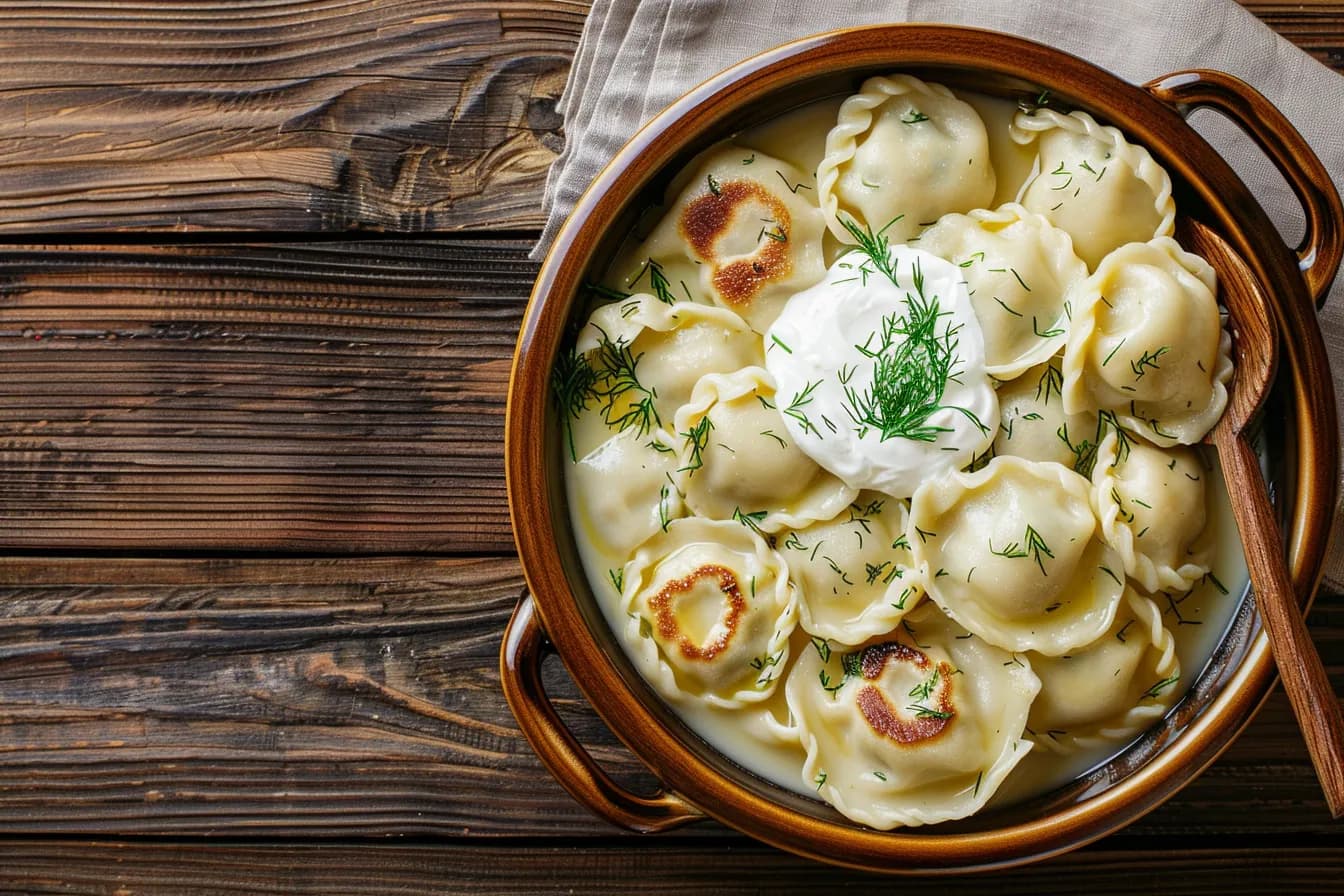
Pelmeni
Small Russian dumplings with a juicy meat filling, tossed in butter and served with sour cream.
- Preparation
- 1 hr
- Cook/bake time
- 15 min
- Total
- 1 hr 45 min
- Difficulty
- Medium
- Calories
- 950 kcal
- Servings
- 4
- Prep
- 1 hr
- Cooking & baking
- 15 min
- Resting
- 30 min
Only 1 hr 15 min of that is hands-on – the rest takes care of itself.
Small Russian dumplings with a juicy meat filling, tossed in butter and served with sour cream. A splash of ice water in the filling ensures that meat juices form during cooking and the dumplings do not become dry inside. Traditionally, they are made in large batches and frozen for later.
Why this works
Cold meat binds water, warm meat does not. When mixed with ice water, muscle proteins dissolve and trap the liquid, which is the same principle used to make scalded sausages. During cooking, this bound water is released again and forms the broth inside the dumpling. If the filling is processed at room temperature instead, the liquid escapes during shaping and the pelmeni remain dry.
Step-by-step instructions
- 1
Knead the dough
Mix the flour and salt, add the egg, lukewarm water, and oil, and knead everything for ten minutes into a smooth, firm dough. It should be significantly firmer than pasta dough and barely yield when pressed. Wrap it in plastic wrap and let it rest for thirty minutes, then it can be rolled out paper-thin.
- 2
Mix the filling
Mix both types of ground meat with the very finely grated onion, garlic, salt, and plenty of pepper. Then work in the ice water spoonful by spoonful and stir vigorously until the mixture has completely absorbed it and becomes slightly sticky. This water turns into meat juice during cooking, keeping the dumplings juicy inside.
- 3
Cut out the dough
Roll out the dough in batches on a floured surface very thinly, about 1 to 2 mm. Use a glass to cut out circles 6 cm in diameter. Cover the cut-out circles with a cloth while you continue working, because dried-out dough can no longer be sealed cleanly.
- 4
Shape the dumplings
Place a scant teaspoon of filling in the center of a circle, fold it into a half-moon, and press the edges firmly together. Then pull the two tips of the half-moon back together and press them against each other to create the typical ear shape. Place the finished pelmeni on a floured board.
- 5
Cook and serve
Cook the pelmeni in batches in plenty of boiling salted water. They will rise to the surface after two to three minutes and then need another two minutes. Take them out with a slotted spoon and toss them in melted butter. Serve them with sour cream and lots of fresh dill.
Our best tips
- The ice water in the filling is the crucial trick for juicy pelmeni.
- The dough must be really thin. Thick dough dominates and makes the dumplings heavy.
- Make a double batch right away and pre-freeze them raw on a baking sheet. Cook directly from frozen, just two minutes longer.
Tasty variations
Vareniki
Instead of meat, use a filling of mashed potatoes with roasted onions or quark.
In broth
Cook the pelmeni directly in strong beef broth and serve as a soup with dill.
Nutrition facts
| Calories | 950 kcal |
|---|---|
| Protein | 37 g |
| Carbohydrates | 76 g |
| – of which sugar | 4 g |
| Fat | 54 g |
| Fiber | 5 g |
Where the 950 kcal come from
per serving
Calculated from the ingredients – how we do it
We add up reference values for every ingredient and divide by the number of servings. These assumptions are baked in:
- Reference values per 100 g – for the raw ingredient, exactly as listed.
- Tinned goods count at drained weight, bone-in meat at purchase weight: you eat about 70 per cent of a chicken thigh and leave the rest.
- Water evaporates as you cook. The energy stays in the pot, the weight does not – so the figure is per serving, not per 100 g of finished dish.
- Anything listed without a quantity – “salt and pepper” – is not counted.
A guide value, not a lab measurement: no two onions weigh the same, and fat content varies from pack to pack.
Frequently asked questions
Why do my pelmeni burst open?
Either the edges were not sealed cleanly or there was too much filling inside. A scant teaspoon is enough, and the edges must be free of flour.
Can I freeze them?
Yes, that is actually the tradition. Pre-freeze them raw individually on a baking sheet, then transfer to a bag. This way they keep for three months and do not stick together.
What is the difference to vareniki?
Pelmeni are small and filled with raw meat, vareniki are larger and mostly filled with cooked fillings like potatoes, quark, or cherries.
Comments & ratings(0)
Sign in to rate and comment on this recipe.
You might also like
 Soups & Stews
Chili con Carne
Hearty stew made of ground beef, beans, and tomatoes, slowly simmered and deeply flavorful.
 Lunch
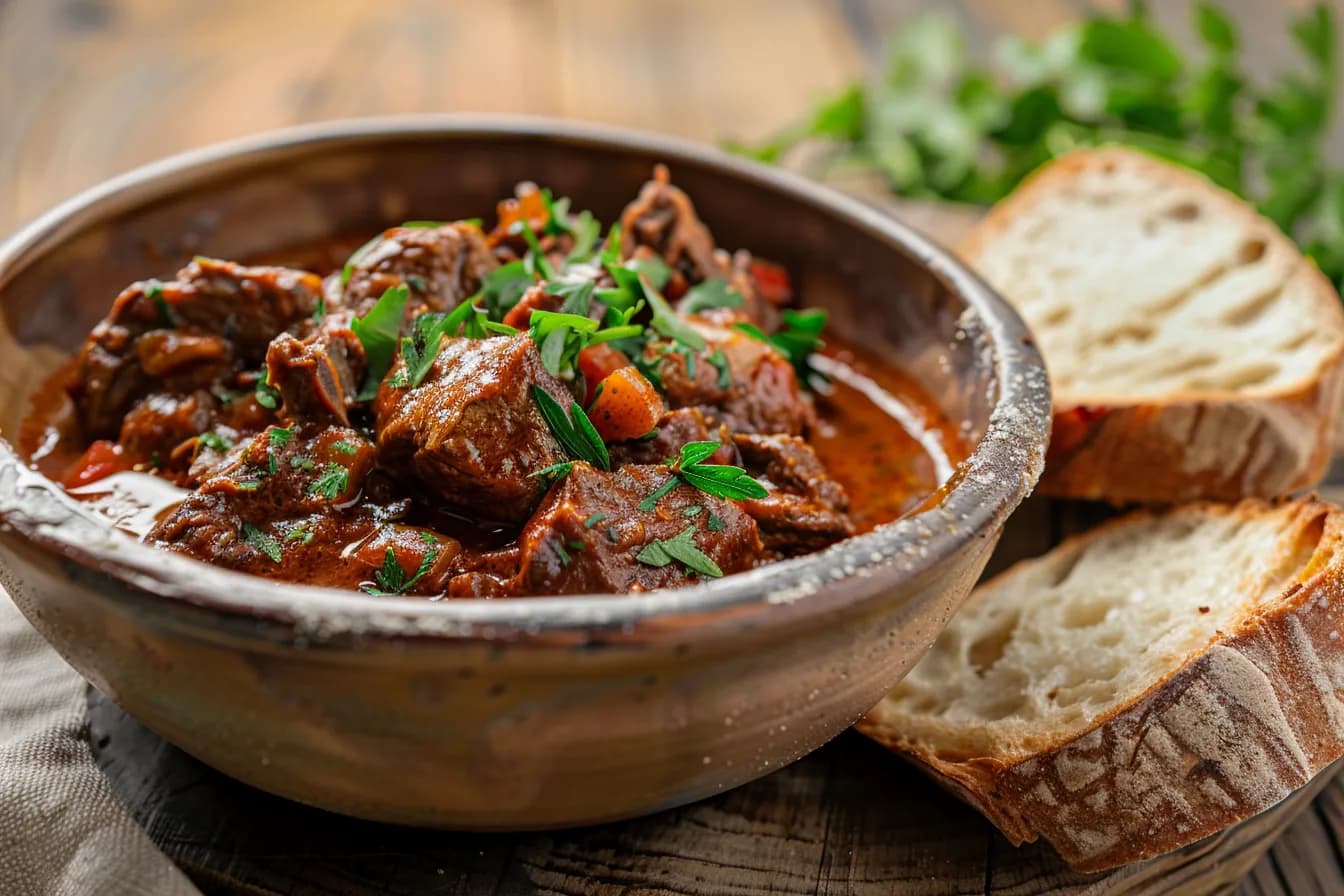
LunchAuthentic Beef Goulash
Melt-in-your-mouth beef in a dark onion sauce, patiently braised until it falls apart.
 Dinner
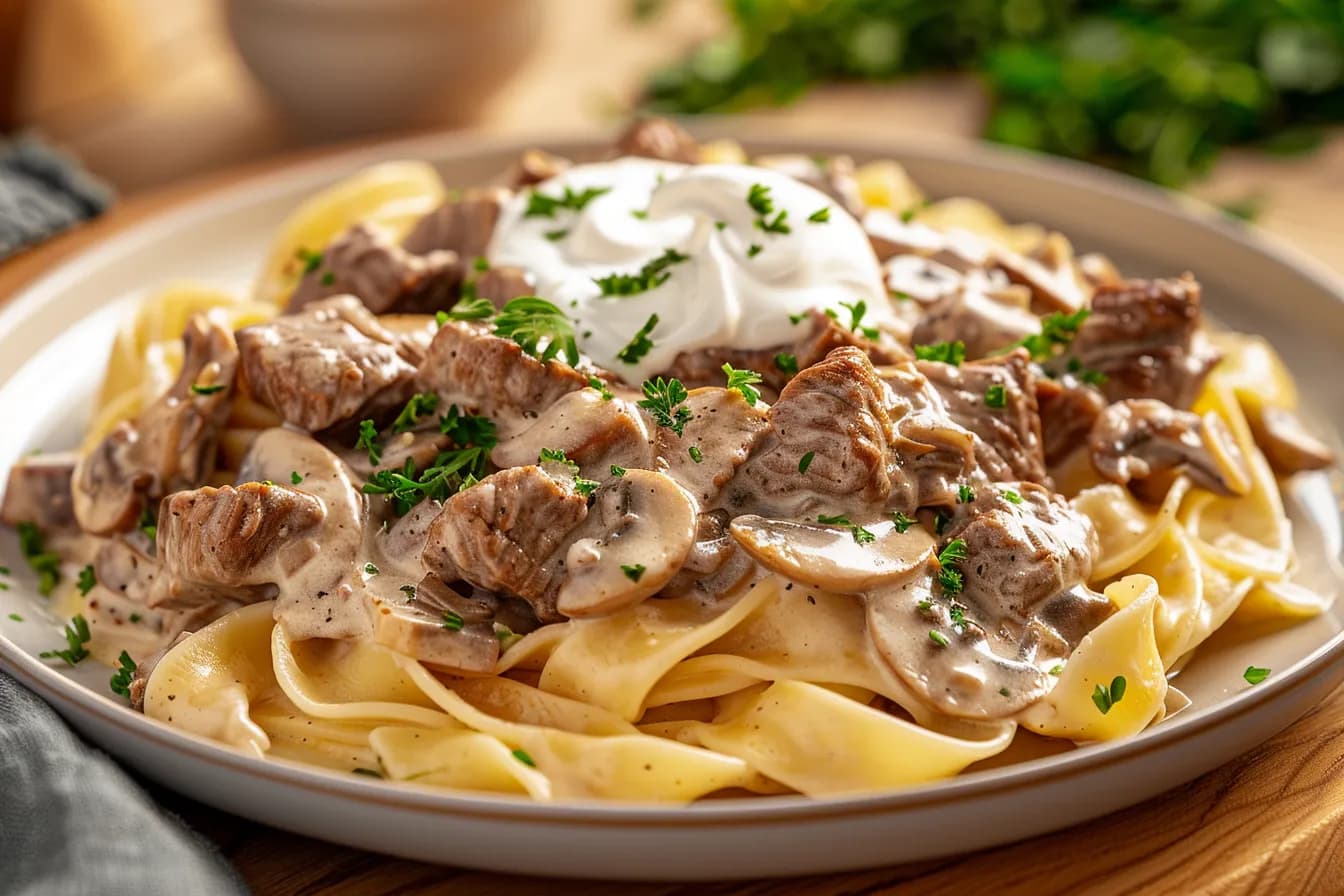
Beef Stroganoff
Tender beef strips with mushrooms in a creamy mustard and sour cream sauce, ready in twenty minutes.