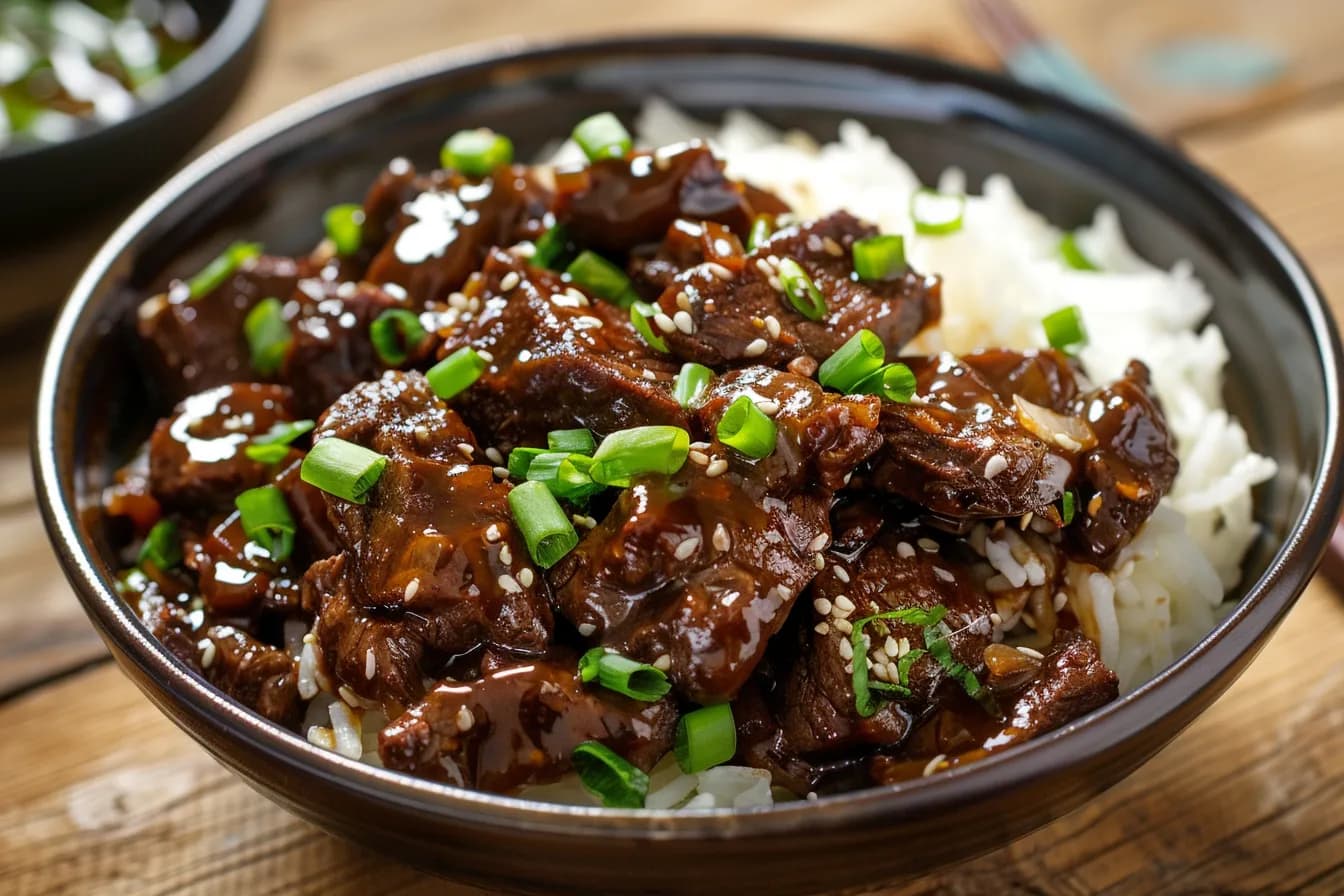
Mongolian Beef
Tender beef strips in a dark, glossy soy sauce with plenty of scallions.
- Preparation
- 15 min
- Cook/bake time
- 12 min
- Total
- 27 min
- Difficulty
- Easy
- Calories
- 526 kcal
- Servings
- 4
- Prep
- 15 min
- Cooking & baking
- 12 min
Tender beef strips in a dark, glossy soy sauce with plenty of scallions. Despite the name, the dish does not originate from Mongolia, but from Taiwanese-American restaurant cuisine, and has spread from there all over the world. Ready in twenty minutes and a sure hit for beef fans.
Why this works
Beef consists of long muscle fiber bundles enclosed by connective tissue. If you cut lengthwise, these fibers remain intact over the entire length of the strip and you have to tear them when chewing. Cut crosswise, they are only a few millimeters long and fall apart on their own. For briefly fried meat, this is the most important lever of all, more important than marinade or meat quality.
Step-by-step instructions
- 1
Coat the meat
Cut the beef across the grain into strips about 5 mm thin, which makes it significantly more tender. Thoroughly mix the strips with the cornstarch until each piece is evenly and dryly powdered. Let them rest for ten minutes. The starch layer forms a fine crust during frying, to which the sauce will adhere wonderfully later.
- 2
Mix the sauce
Stir the light and dark soy sauce, brown sugar, and water in a bowl until the sugar has dissolved. The dark soy sauce provides the deep, almost black color, while the light one provides the saltiness. Place the bowl next to the stove, because from now on things move quickly.
- 3
Sear the meat
Heat the oil in a wok over high heat until it shimmers slightly, and fry the meat in two batches for about two minutes each. Leave the strips unmoved for the first minute so they take on color. Remove the meat as soon as it is browned on the outside and still slightly pink on the inside, as it will continue to cook in the sauce.
- 4
Reduce the sauce
Pour off all but one tablespoon of the oil and fry the garlic, ginger, and, if desired, the chili flakes for thirty seconds until intensely fragrant. Pour in the sauce and let it boil vigorously for two to three minutes until it becomes visibly thick and bubbly. The starch from the meat will bind it additionally later.
- 5
Combine
Return the meat to the wok and toss it in the sauce for one minute until everything is dark and glossy. Finally, fold in the scallion pieces and remove the wok directly from the heat, as they should still be crisp and retain their fresh aroma. Serve immediately with rice.
Our best tips
- Always cut across the grain. For beef, this is the most important lever for tenderness.
- The wok must be really hot and the meat must be fried in two batches, otherwise it will boil in its own juices.
- The scallions are not a decorative element here, but a main ingredient. Six pieces really means six pieces.
Tasty variations
With broccoli
Blanch 300 g of broccoli florets for two minutes and fold them in with the meat at the end.
Milder and sweeter
Omit the chili flakes and add an extra tablespoon of honey to the sauce, then children will like it too.
Nutrition facts
| Calories | 526 kcal |
|---|---|
| Protein | 34 g |
| Carbohydrates | 25 g |
| – of which sugar | 13 g |
| Fat | 33 g |
| Fiber | 1 g |
Where the 526 kcal come from
per serving
Calculated from the ingredients – how we do it
We add up reference values for every ingredient and divide by the number of servings. These assumptions are baked in:
- Reference values per 100 g – for the raw ingredient, exactly as listed.
- Tinned goods count at drained weight, bone-in meat at purchase weight: you eat about 70 per cent of a chicken thigh and leave the rest.
- Water evaporates as you cook. The energy stays in the pot, the weight does not – so the figure is per serving, not per 100 g of finished dish.
- Anything listed without a quantity – “salt and pepper” – is not counted.
A guide value, not a lab measurement: no two onions weigh the same, and fat content varies from pack to pack.
Frequently asked questions
Does the dish come from Mongolia?
No. It originated in Taiwanese restaurants and has nothing to do with Mongolian cuisine. The name is pure restaurant marketing.
Which beef should I use?
Tenderloin is the most tender, but sirloin or roast beef work just as well and are cheaper. More important than the cut is the thin slice across the grain.
Won't the sauce be too sweet?
Four tablespoons of sugar sounds like a lot, but it is balanced by the soy sauce. If it is too sweet for you, reduce it to three tablespoons next time.
Comments & ratings(0)
Sign in to rate and comment on this recipe.
You might also like
 Lunch
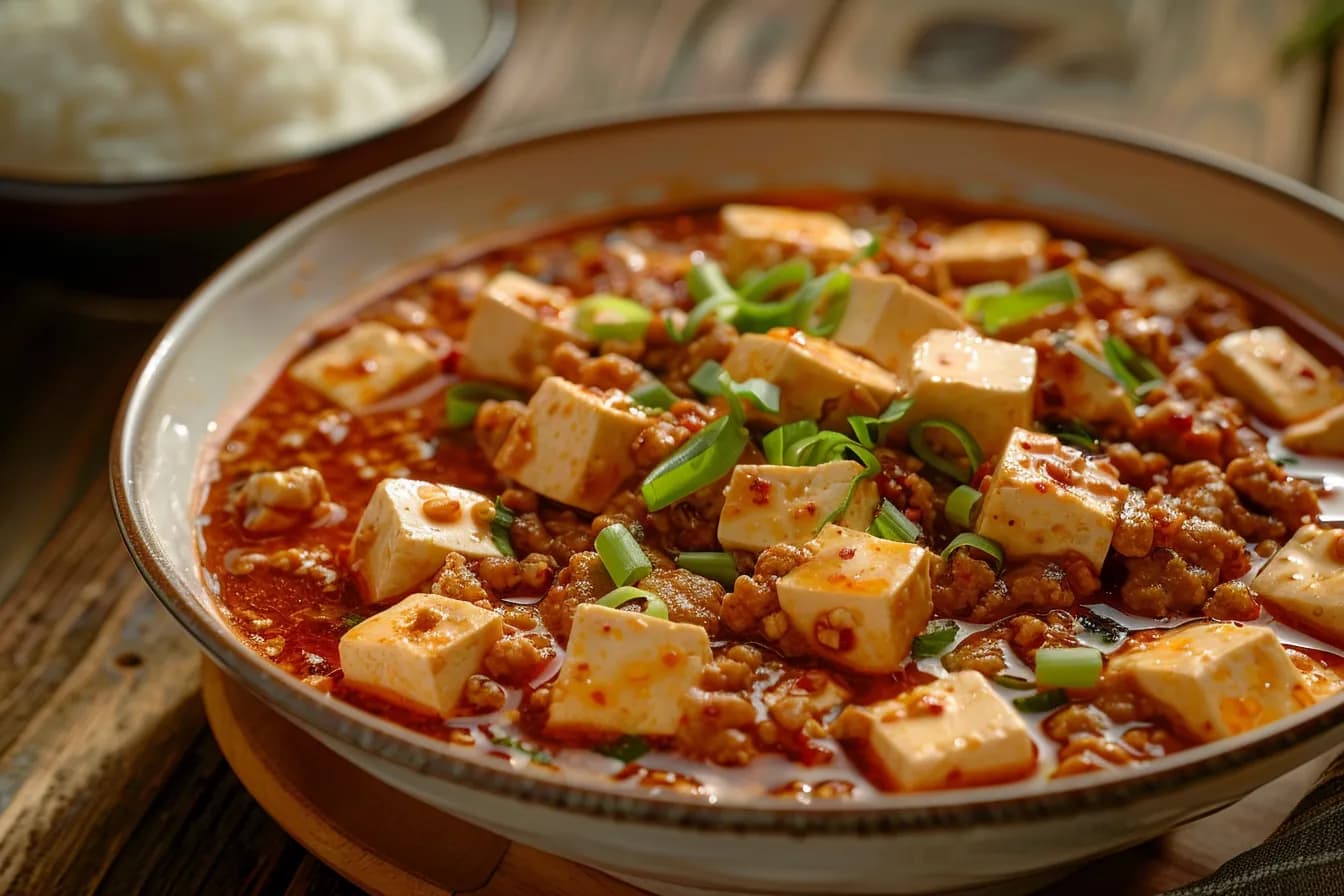
LunchMapo Tofu
Silken tofu in a spicy and savory Sichuan sauce with the typical tingling pepper kick.
 Meal Prep
Chicken Meal Prep Boxes
Four boxes for the week in forty minutes, with the trick that prevents chicken from being dry on the third day.
 Lunch
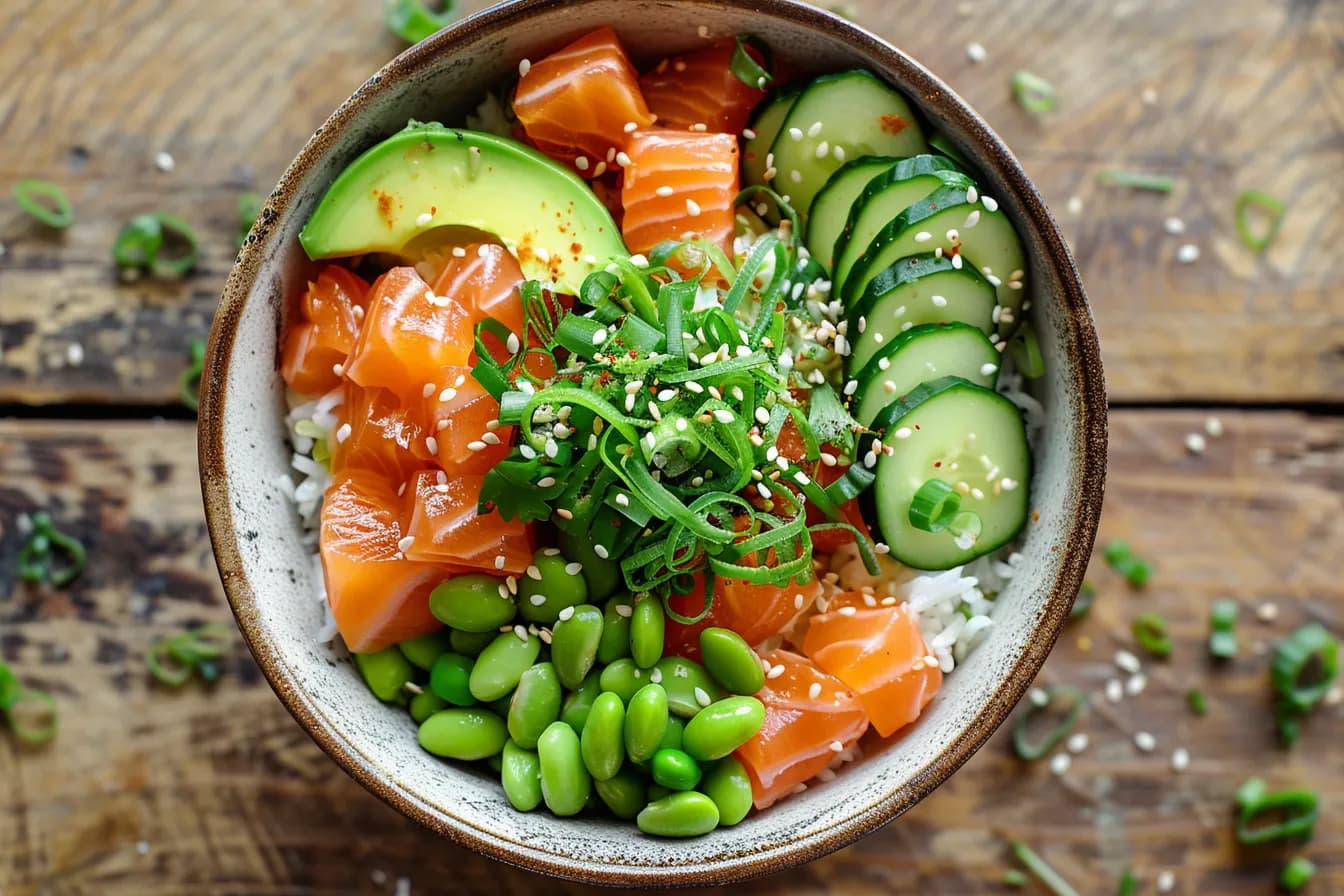
LunchSalmon Sushi Bowl
All the flavors of sushi in a bowl, without rolling and without practice, ready in 25 minutes.