Kaiserschmarrn
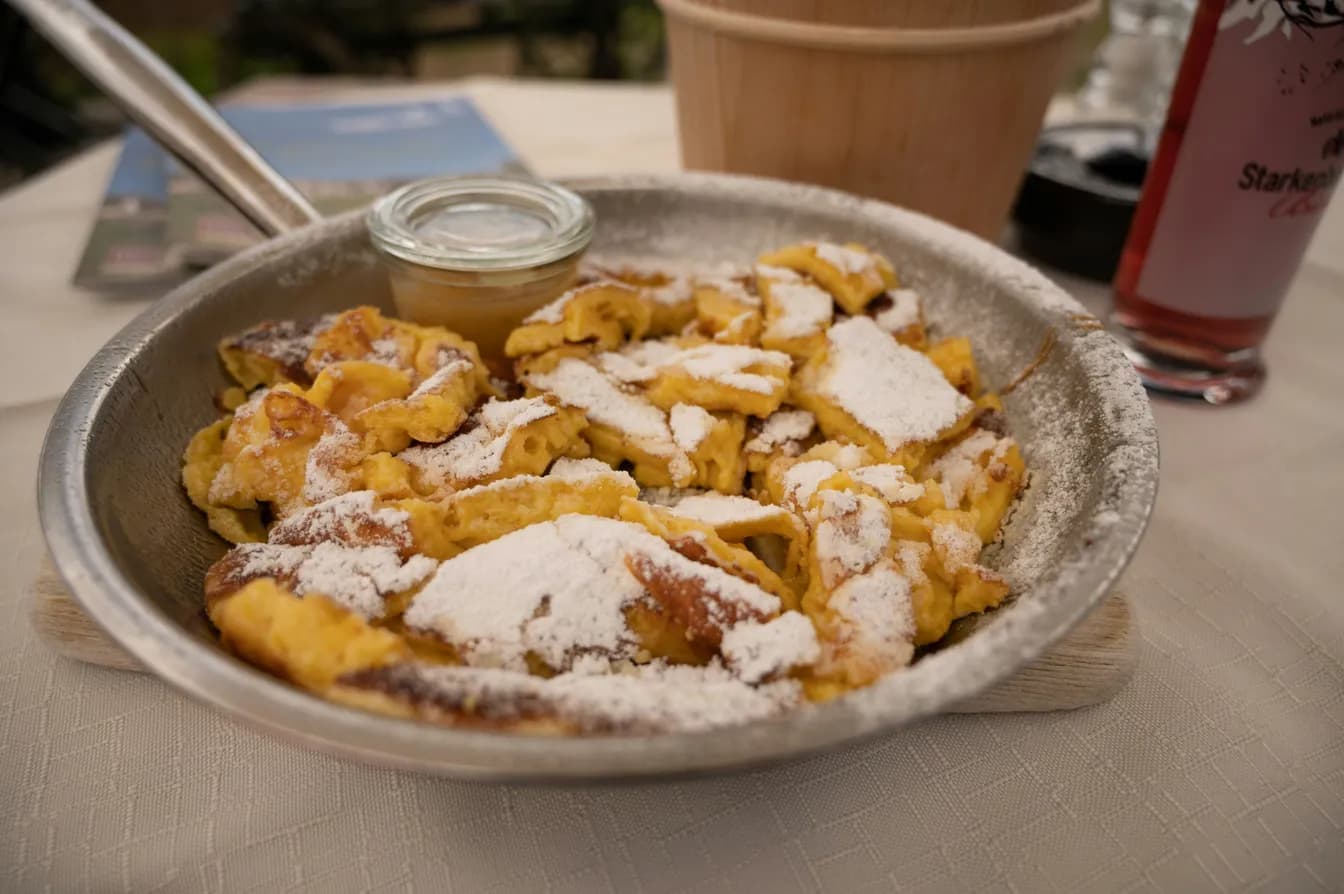
Torn pancake with raisins and powdered sugar, and the egg whites are beaten separately.
- Preparation
- 20 min
- Cook/bake time
- 15 min
- Total
- 45 min
- Difficulty
- Medium
- Calories
- 592 kcal
- Servings
- 4
- Prep
- 20 min
- Cooking & baking
- 15 min
- Resting
- 10 min
Only 35 min of that is hands-on – the rest takes care of itself.
Torn pancake with raisins and powdered sugar, and the egg whites are beaten separately. Without them, the Kaiserschmarrn becomes a thick pancake; with them, it is airy and falls into loose pieces when torn. The caramel edge is only created at the end when sugar is sprinkled over the torn pieces.
Why this works
The difference between Kaiserschmarrn and a thick pancake is the separately beaten egg whites. Their proteins form a network of fine air bubbles when beaten, which expands when heated and loosens the mixture. Stirred-in egg whites, on the other hand, denature without a foam structure and make the dough dense. That is why they are only folded in and not stirred in: every circular movement destroys the bubbles. The second point is the order of caramelization. The sugar is only added over the already torn pieces because it then caramelizes on many small cut surfaces simultaneously and forms a crust everywhere. In the dough from the beginning, it would only brown on the bottom of the pan, and quickly burn there before the middle is cooked.
Step-by-step instructions
- 1
Mix the basic dough
Mix the flour, milk, egg yolks, dough sugar, salt, and vanilla into a smooth dough and let it sit for ten minutes. During this time, the starch granules swell, and the Schmarrn becomes more even.
- 2
Beat and fold in the egg whites
Beat the egg whites until stiff and fold them into the dough in two portions with a spatula. Cut from bottom to top, do not stir. A few white streaks can remain. This is the step that distinguishes Kaiserschmarrn from pancakes.
- 3
Let it set in the pan
Melt half of the butter in a large pan, pour in the dough, sprinkle the drained raisins over it, and let everything set over medium heat for five minutes until the underside is golden brown. Do not stir.
- 4
Turn and tear
Turn the Schmarrn in quarters. It does not have to stay intact, quite the opposite. Then tear it into bite-sized pieces with two forks or a spatula. "Schmarrn" means something like a mess, and that is the goal.
- 5
Caramelize
Add the remaining butter, sprinkle the sugar over the torn pieces, and toss everything for two to three minutes until the sugar caramelizes and the edges become crispy. Serve immediately dusted with powdered sugar, classically with plum compote or applesauce.
Our best tips
- The beaten egg whites are non-negotiable. Without them, you get a thick pancake, which is good, but not Kaiserschmarrn.
- The sugar is only added over the torn pieces. In the dough, it would only brown at the bottom and burn there before the middle is cooked.
- Use a large pan. In a pan that is too small, the dough is too thick, and the middle remains raw while the underside is already dark.
Tasty variations
With almonds
Toast 40 g of sliced almonds while caramelizing. Common in Salzburg and a good balance to the sweetness.
Without raisins
They are the most common point of contention at the table. Without them, the recipe works unchanged, or you can serve them separately.
Nutrition facts
| Calories | 592 kcal |
|---|---|
| Protein | 17 g |
| Carbohydrates | 81 g |
| – of which sugar | 42 g |
| Fat | 22 g |
| Fiber | 2 g |
Where the 592 kcal come from
per serving
Calculated from the ingredients – how we do it
We add up reference values for every ingredient and divide by the number of servings. These assumptions are baked in:
- Reference values per 100 g – for the raw ingredient, exactly as listed.
- Tinned goods count at drained weight, bone-in meat at purchase weight: you eat about 70 per cent of a chicken thigh and leave the rest.
- Water evaporates as you cook. The energy stays in the pot, the weight does not – so the figure is per serving, not per 100 g of finished dish.
- Anything listed without a quantity – “salt and pepper” – is not counted.
A guide value, not a lab measurement: no two onions weigh the same, and fat content varies from pack to pack.
Frequently asked questions
Why is my Kaiserschmarrn not fluffy?
The beaten egg whites were stirred in instead of folded in, or left out entirely. Their air bubbles are the leavening agent; every circular movement with the spoon destroys them.
How many calories does Kaiserschmarrn have?
Around 590 kcal per portion for four portions, without applesauce. Butter and sugar together make up about half of that. As a main course, this is appropriate; in Austria, it is considered lunch.
Why is it called Kaiserschmarrn?
According to legend, it was a favorite dish of Emperor Franz Joseph I. This is not proven; "Schmarrn" simply means a mess in Austrian and describes the torn shape.
Can I finish it in the oven?
Yes, this is common for large quantities: after setting, put the pan in the oven at 180 °C for ten minutes, then tear and caramelize. This cooks the middle more reliably.
Comments & ratings(0)
Sign in to rate and comment on this recipe.
You might also like
 Cakes & Pastries
Sachertorte
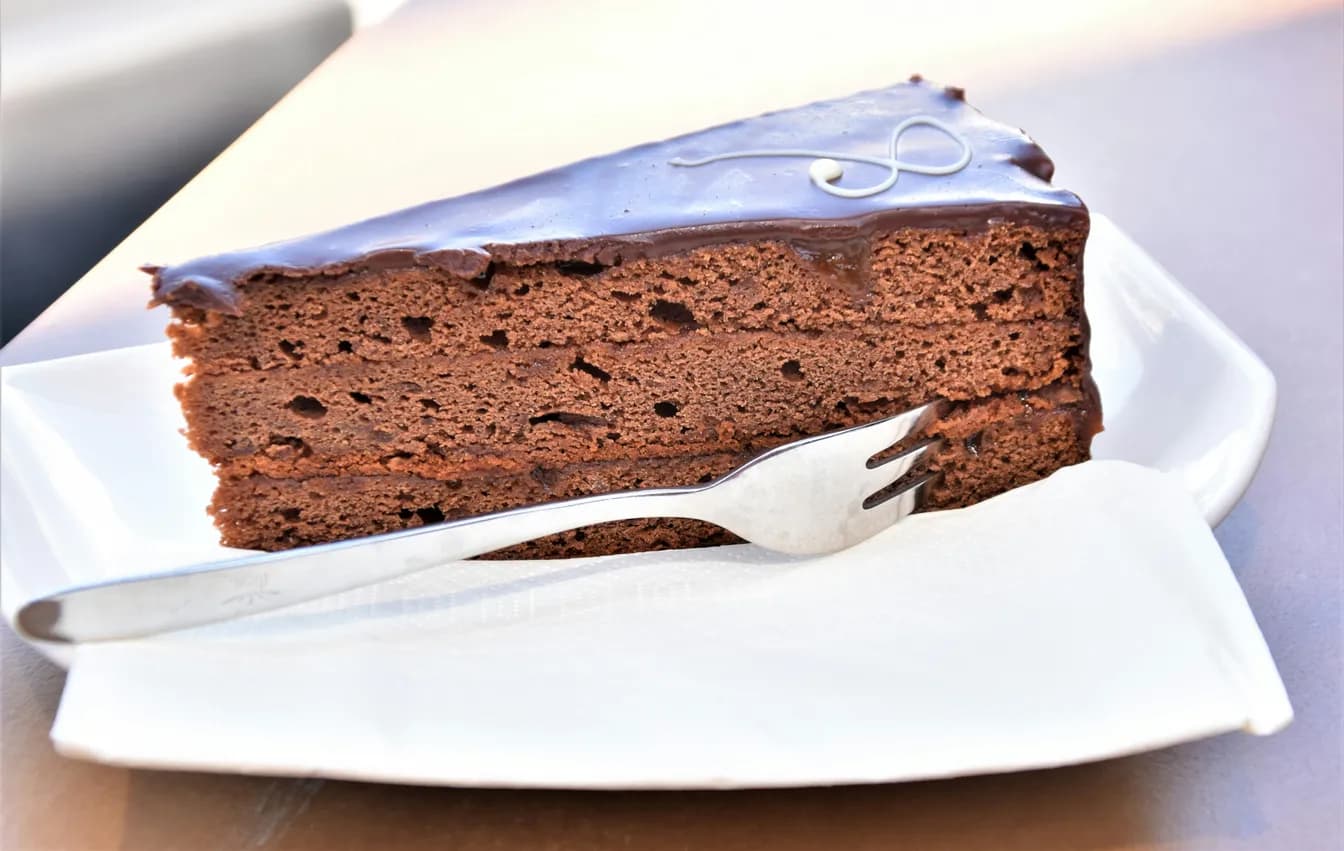
Viennese chocolate cake with apricot jam and glaze, and the glaze must cool to 40 degrees.
 Cakes & Pastries
Chocolate Muffins
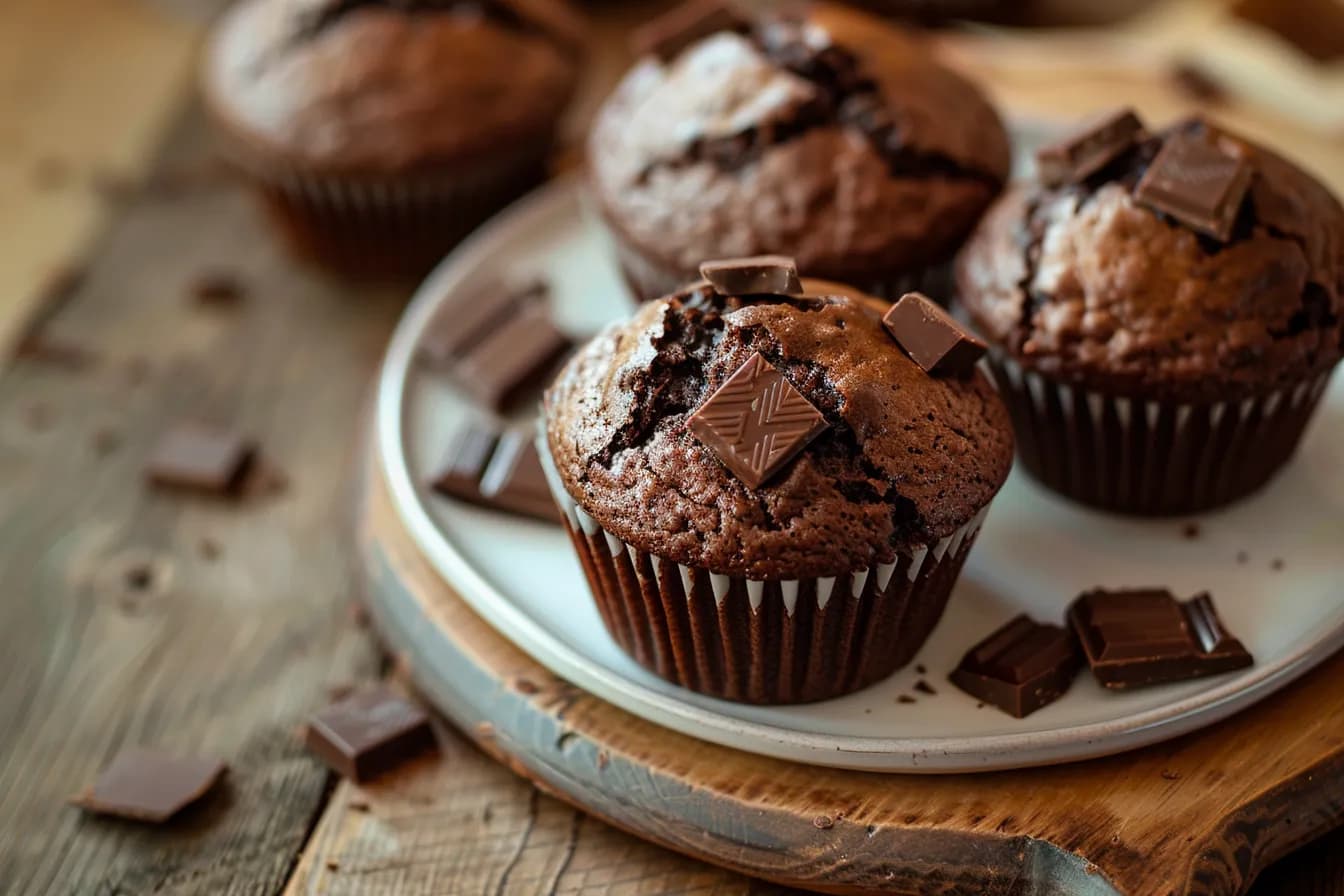
Dark, moist muffins with a domed top and melted chocolate chunks.
 Cakes & Pastries
Zucchini Brownies
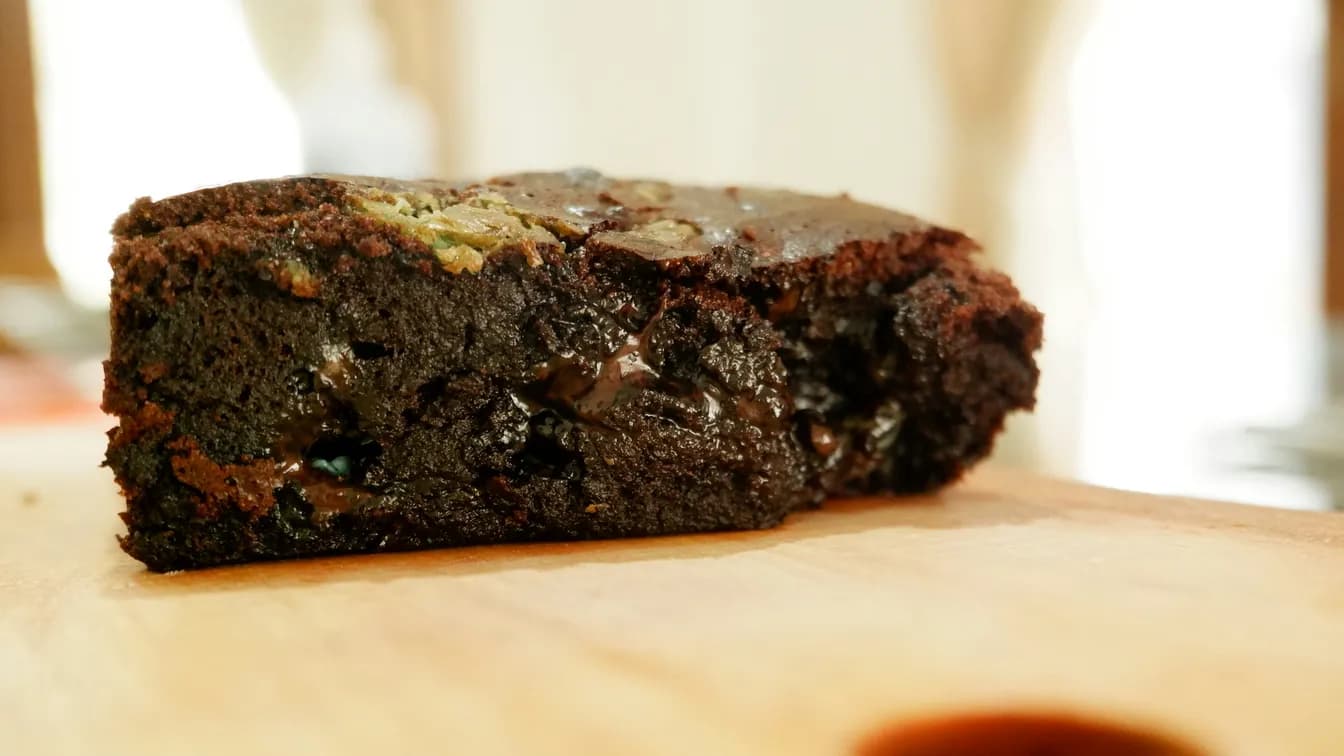
A whole zucchini in the batter, and nobody notices it: instead, they stay moist for three days.