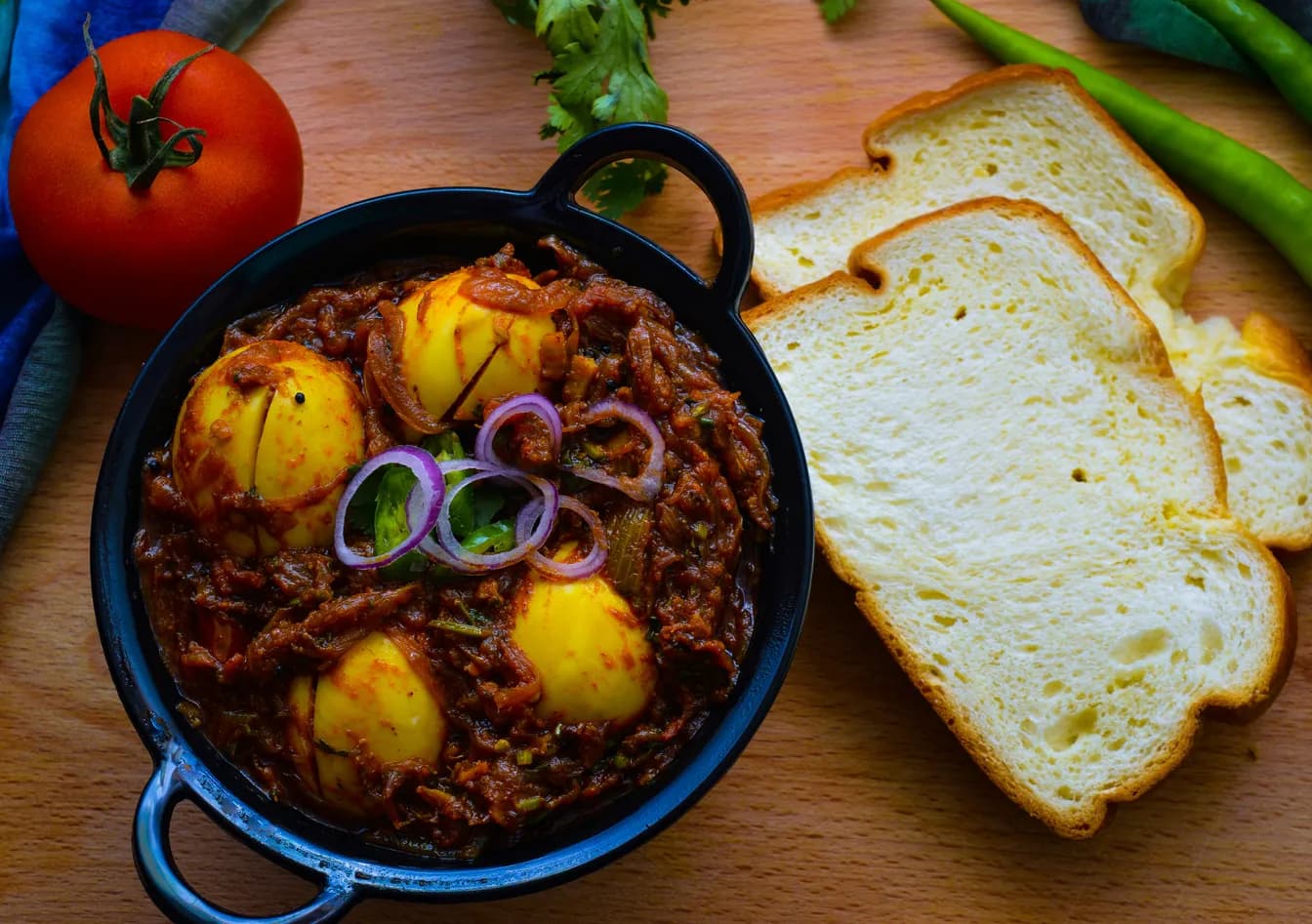
Hungarian Goulash
Gulyás just like in Hungary, with twice as many onions as meat and paprika that must never boil.
- Preparation
- 30 min
- Cook/bake time
- 3 hr 5 min
- Total
- 3 hr 35 min
- Difficulty
- Easy
- Calories
- 542 kcal
- Servings
- 6
- Prep
- 30 min
- Cooking & baking
- 3 hr 5 min
Gulyás just like in Hungary, with twice as many onions as meat and paprika that must never boil. Two rules distinguish the Hungarian original from German goulash: The onion ratio is significantly higher, and the paprika powder is added to the pot off the heat. Under heat, it turns bitter within seconds.
Why this works
Paprika powder contains carotenoids as colorants and sugar from the dried fruit. Both are sensitive to heat: From about 130 degrees, the sugar caramelizes and burns within seconds, while the carotenoids break down, resulting in a bitter and grayish-brown outcome instead of sweet and deep red. That is why the pot is taken off the heat before the paprika powder is added, and immediately deglazed with liquid. The large amount of onions has another reason: It acts as the thickener. Over two and a half hours, the onions break down completely and their pectins and fructans thicken the broth into a creamy sauce, which is why a true gulyás needs neither flour nor starch. A ratio of about one to one between onions and meat seems absurd when chopping and is exactly right.
Step-by-step instructions
- 1
Slowly braise the onions until soft
Sweat the onions in lard over low heat for twenty minutes until they are completely soft and golden yellow. They should not brown. This amount seems absurd and is the reason why Hungarian goulash thickens without flour.
- 2
Stir in paprika off the heat
**Take the pot off the heat**, stir in both paprika powders and the caraway seeds, and immediately pour in a ladle of stock. Paprika powder burns under direct heat in seconds and turns bitter, and this one step distinguishes a good goulash from a ruined one.
- 3
Add the meat
Add the raw beef without searing it, and stir it into the onion and paprika mixture. In the Hungarian original, it is not seared, as the roasted flavors would come from the onions, and seared meat would remain tougher.
- 4
Braise for two and a half hours
Pour in the remaining stock, add garlic and tomatoes, and let everything braise covered over the lowest heat for two and a half hours. The bell pepper strips are added in the last half hour so they do not fall apart.
- 5
Season to taste
Season to taste with salt and pepper. The sauce should be creamy and coat the back of a spoon. If it is too thin, remove the lid and let it reduce uncovered for twenty minutes. Flour does not belong in it.
Our best tips
- The pot must be off the heat before the paprika goes in. It is the one step where Hungarian goulash fails, and it cannot be fixed.
- Use Hungarian paprika powder, not Spanish. Hungarian sweet paprika is significantly more aromatic and less smoky, and smoked paprika powder does not fit here at all.
- No flour. The onions thicken the broth if you give them the time. Whoever thickens it either used too few onions or braised it for too short a time.
Tasty variations
Gulyásleves
With double the amount of stock and diced potatoes as a soup. In Hungary, "Gulyás" is originally the soup, and what is called goulash here is Pörkölt there.
With Nokedli
Instead of potatoes, small egg dough dumplings as a side dish, as is common in Hungary. They absorb the sauce significantly better than potatoes.
Nutrition facts
| Calories | 542 kcal |
|---|---|
| Protein | 40 g |
| Carbohydrates | 17 g |
| – of which sugar | 11 g |
| Fat | 35 g |
| Fiber | 6 g |
Where the 542 kcal come from
per serving
Calculated from the ingredients – how we do it
We add up reference values for every ingredient and divide by the number of servings. These assumptions are baked in:
- Reference values per 100 g – for the raw ingredient, exactly as listed.
- Tinned goods count at drained weight, bone-in meat at purchase weight: you eat about 70 per cent of a chicken thigh and leave the rest.
- Water evaporates as you cook. The energy stays in the pot, the weight does not – so the figure is per serving, not per 100 g of finished dish.
- Anything listed without a quantity – “salt and pepper” – is not counted.
A guide value, not a lab measurement: no two onions weigh the same, and fat content varies from pack to pack.
Frequently asked questions
Why must paprika powder not boil?
It contains sugar and carotenoids that burn or break down from about 130 degrees. The result is bitter and grayish-brown. That is why it is added to the pot off the heat and immediately deglazed with liquid.
How many calories does Hungarian goulash have?
Around 540 kcal per serving for six servings, without a side dish. The lard contributes about 90 kcal per serving, and with oil instead of lard, the value hardly changes, but the taste certainly does.
What is the difference to German goulash?
The onion ratio and the thickening. Hungarian goulash contains almost as many onions as meat and thickens solely through that, while German goulash uses fewer onions and thickens with flour or starch.
Do I not have to sear the meat?
Not in the Hungarian original. The roasted flavors come from the slowly braised onions, and unseared meat becomes more tender over the long cooking time. Searing does not hurt, but it is not classic.
Comments & ratings(0)
Sign in to rate and comment on this recipe.
You might also like
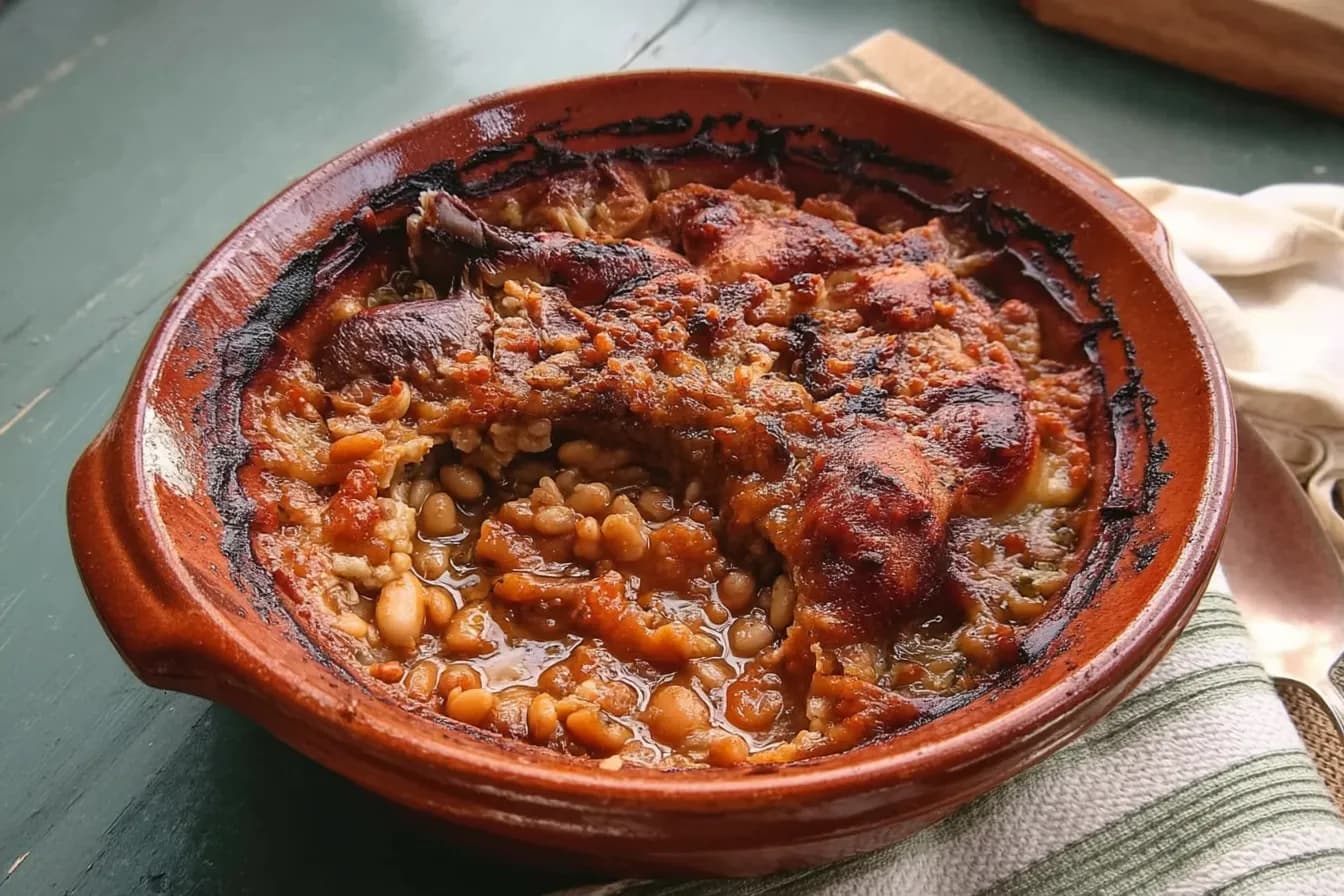 Dinner
Cassoulet
Bean stew from the Languedoc with duck, sausage, and pork, and the crust that is pushed down seven times.
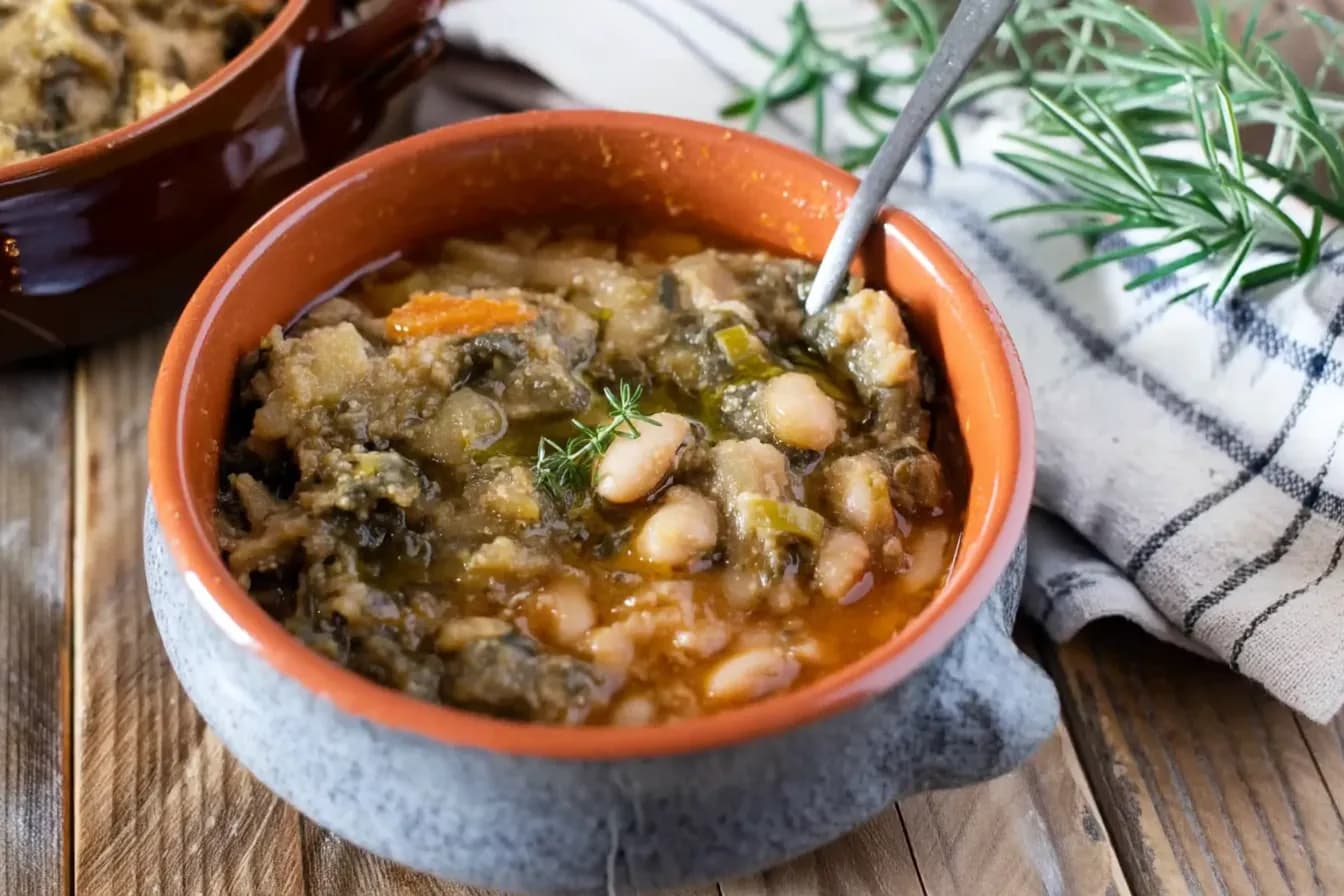 Soups & Stews
Ribollita
Tuscan bread and bean stew, "reboiled", and that is exactly the point.
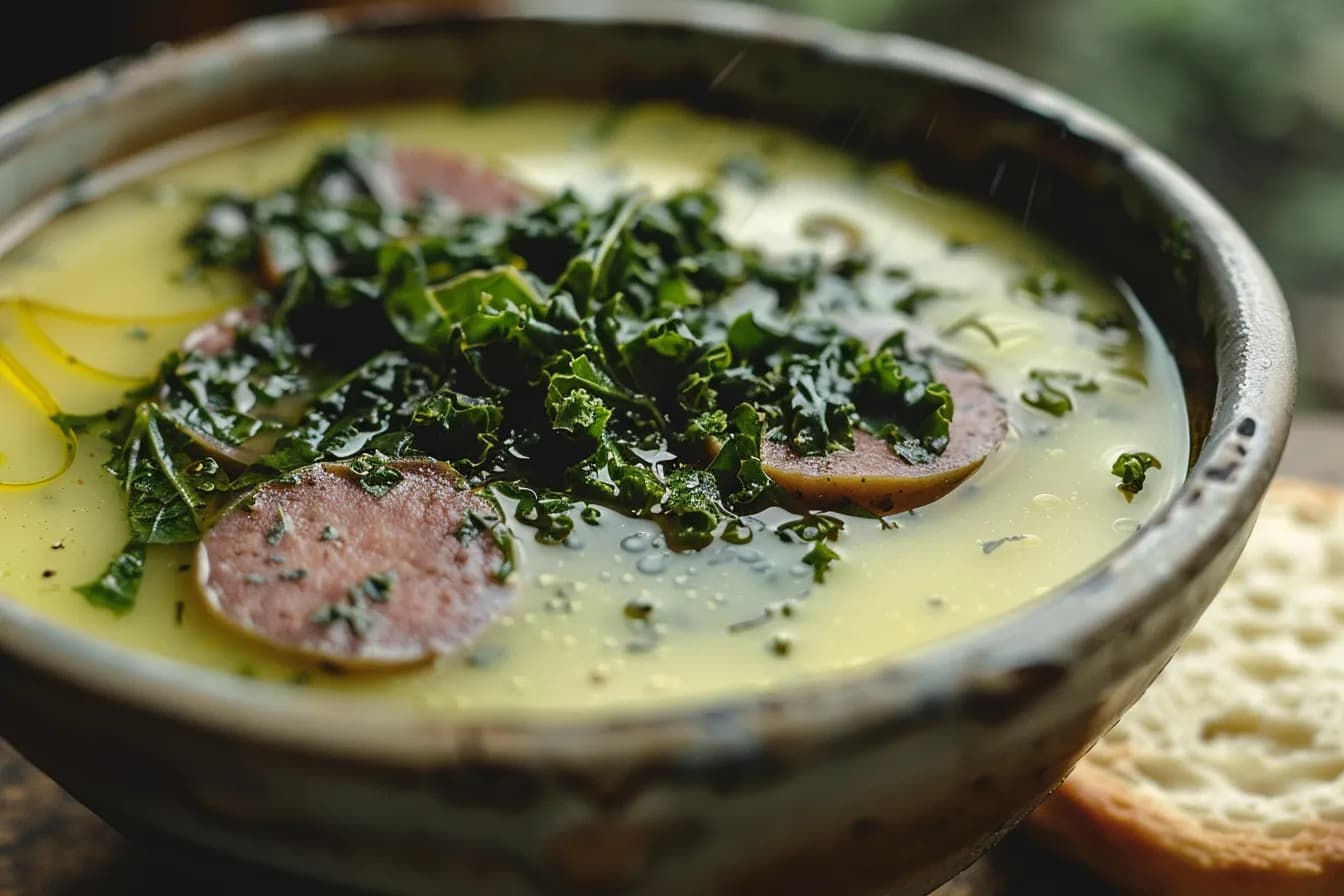 Soups & Stews
Caldo Verde
Portugal's national soup made of potatoes and paper-thin sliced kale, finished with a slice of Chouriço.