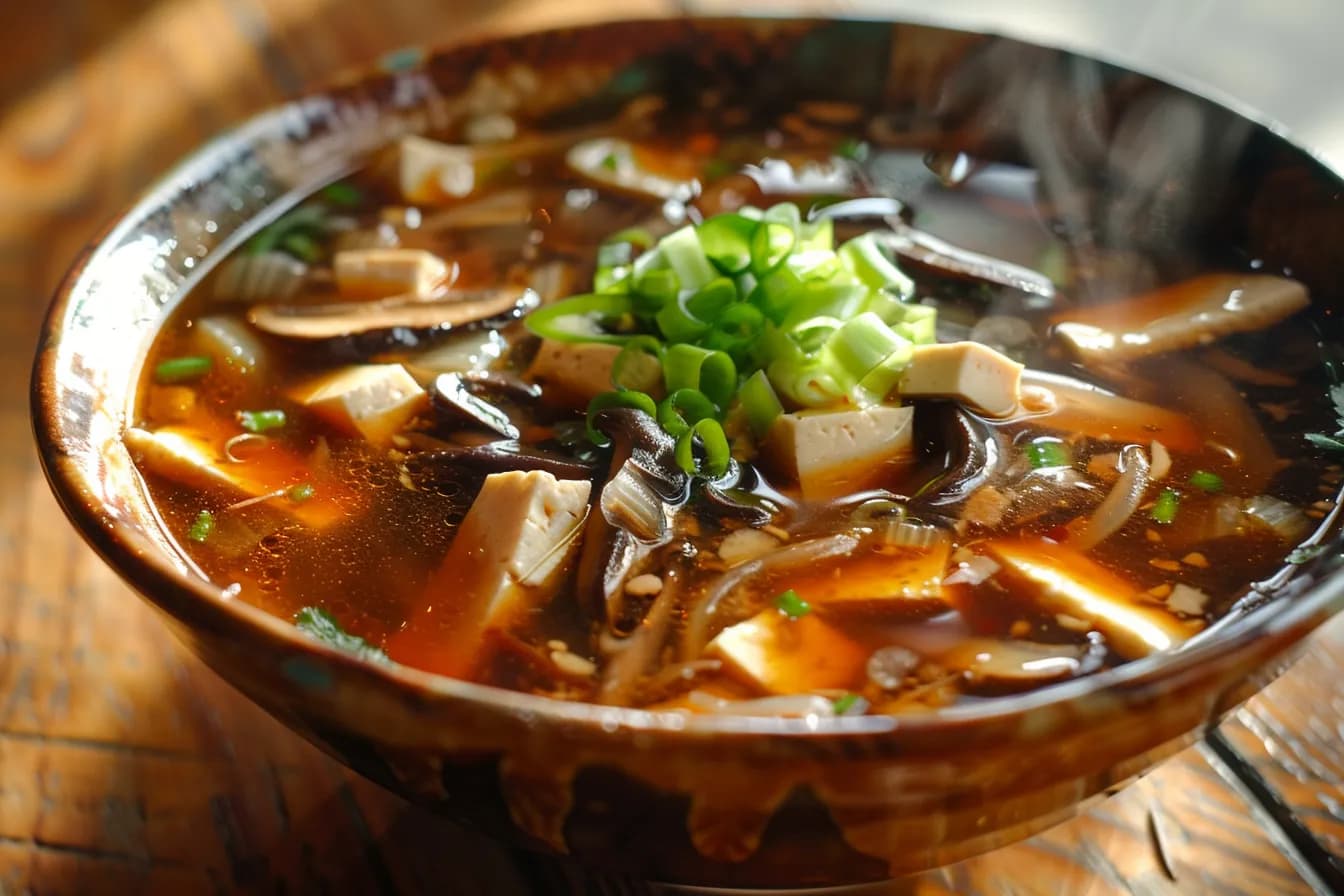
Hot and Sour Soup
Thick soup with mushrooms, tofu, and egg ribbons, intensely spicy from pepper and sour from vinegar.
- Preparation
- 15 min
- Cook/bake time
- 20 min
- Total
- 55 min
- Difficulty
- Easy
- Calories
- 199 kcal
- Servings
- 4
- Prep
- 15 min
- Cooking & baking
- 20 min
- Resting
- 20 min
Only 35 min of that is hands-on – the rest takes care of itself.
Thick soup with mushrooms, tofu, and egg ribbons, intensely spicy from pepper and sour from vinegar. Contrary to what you might think, the heat here does not come from chili but from plenty of white pepper, and the acidity is added right at the end from the vinegar. Exactly this sequence makes the difference between a flat and a truly good version.
Why this works
Acetic acid is volatile and boils away within minutes, which is why the vinegar is added only after turning off the stove, otherwise the soup tastes sourly seasoned but not sour. The heat comes from piperine in white pepper, not from capsaicin. It kicks in later, sits deeper in the throat, and harmonizes with the acidity, whereas chili would overpower it. The egg ribbons form because thinly poured egg coagulates into threads in moving liquid instead of clumping.
Step-by-step instructions
- 1
Prepare the mushrooms
Soak the dried wood ear mushrooms in warm water for twenty minutes until they are soft and significantly larger, and then cut them into fine strips. They provide hardly any flavor of their own but exactly the crunchy, gelatinous texture that defines this soup. You also cut the Shiitake into thin strips.
- 2
Start the soup
Bring the vegetable broth to a boil in a pot and add the Shiitake, wood ear mushrooms, and bamboo shoots. Let everything simmer over medium heat for eight minutes so the mushrooms release their aroma into the broth and the soup gains depth. After that, you add the tofu strips and let them steep for two minutes.
- 3
Season
Stir in the soy sauce, sugar, and white pepper. The pepper seems like a lot in this amount at first, but it is the actual source of heat in this soup and loses a lot of its strength during cooking. Taste it and be brave enough to add a little more.
- 4
Thicken and add egg ribbons
Pour the mixed cornstarch into the simmering soup while stirring constantly and let it thicken for one minute until it is silky and slightly thick. Now draw slow circles in the soup with a fork and pour the beaten egg in a thin stream. This creates the fine, delicate egg ribbons instead of large clumps.
- 5
Vinegar at the end
Remove the pot from the heat and only now stir in the Chinkiang vinegar and sesame oil. Vinegar loses its aroma when cooked and becomes flat, which is why it always comes last. Season to taste and distribute the soup into bowls, sprinkled with scallions.
Our best tips
- White pepper cannot be replaced by black pepper here, it has a completely different, earthy aroma and is the core of the dish.
- Chinkiang vinegar from the Asian market is much rounder than normal rice vinegar. As a substitute, mix balsamic vinegar with a dash of rice vinegar.
- Always add vinegar only after taking it off the stove, otherwise the acidity boils away and the soup tastes dull.
Tasty variations
With pork
Simmer 150 g of pork tenderloin in fine strips with the mushrooms, classic in many regions of China.
Vegan
Omit the eggs and use 100 g of additional tofu instead, the soup remains thick due to the starch.
Nutrition facts
| Calories | 199 kcal |
|---|---|
| Protein | 15 g |
| Carbohydrates | 14 g |
| – of which sugar | 5 g |
| Fat | 8 g |
| Fiber | 4 g |
Where the 199 kcal come from
per serving
Calculated from the ingredients – how we do it
We add up reference values for every ingredient and divide by the number of servings. These assumptions are baked in:
- Reference values per 100 g – for the raw ingredient, exactly as listed.
- Tinned goods count at drained weight, bone-in meat at purchase weight: you eat about 70 per cent of a chicken thigh and leave the rest.
- Water evaporates as you cook. The energy stays in the pot, the weight does not – so the figure is per serving, not per 100 g of finished dish.
- Anything listed without a quantity – “salt and pepper” – is not counted.
A guide value, not a lab measurement: no two onions weigh the same, and fat content varies from pack to pack.
Frequently asked questions
Where does the heat come from?
Almost exclusively from white pepper, not from chili. That is the big difference to many Western versions of this soup.
What are wood ear mushrooms?
Dried tree mushrooms, also called Judas ear. They are flavorless but provide the typical crunchy texture and swell up a lot when soaked.
Can I reheat the soup?
Yes, however the vinegar loses its strength when reheated. Simply add a small dash of fresh vinegar when reheating.
Comments & ratings(0)
Sign in to rate and comment on this recipe.
You might also like
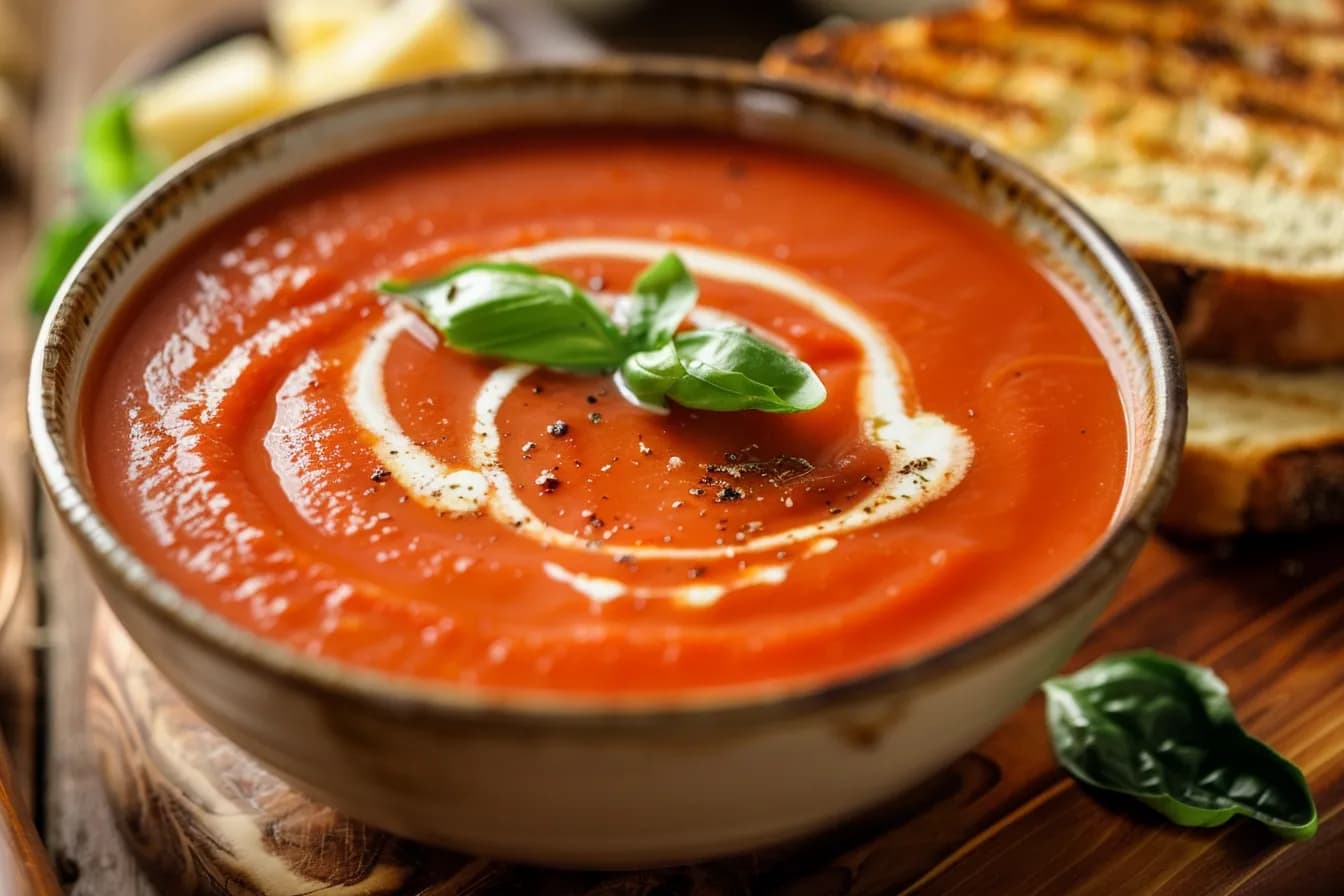 Soups & Stews
Creamy Tomato Soup
Velvety soup made from oven-roasted tomatoes with basil and a splash of cream.
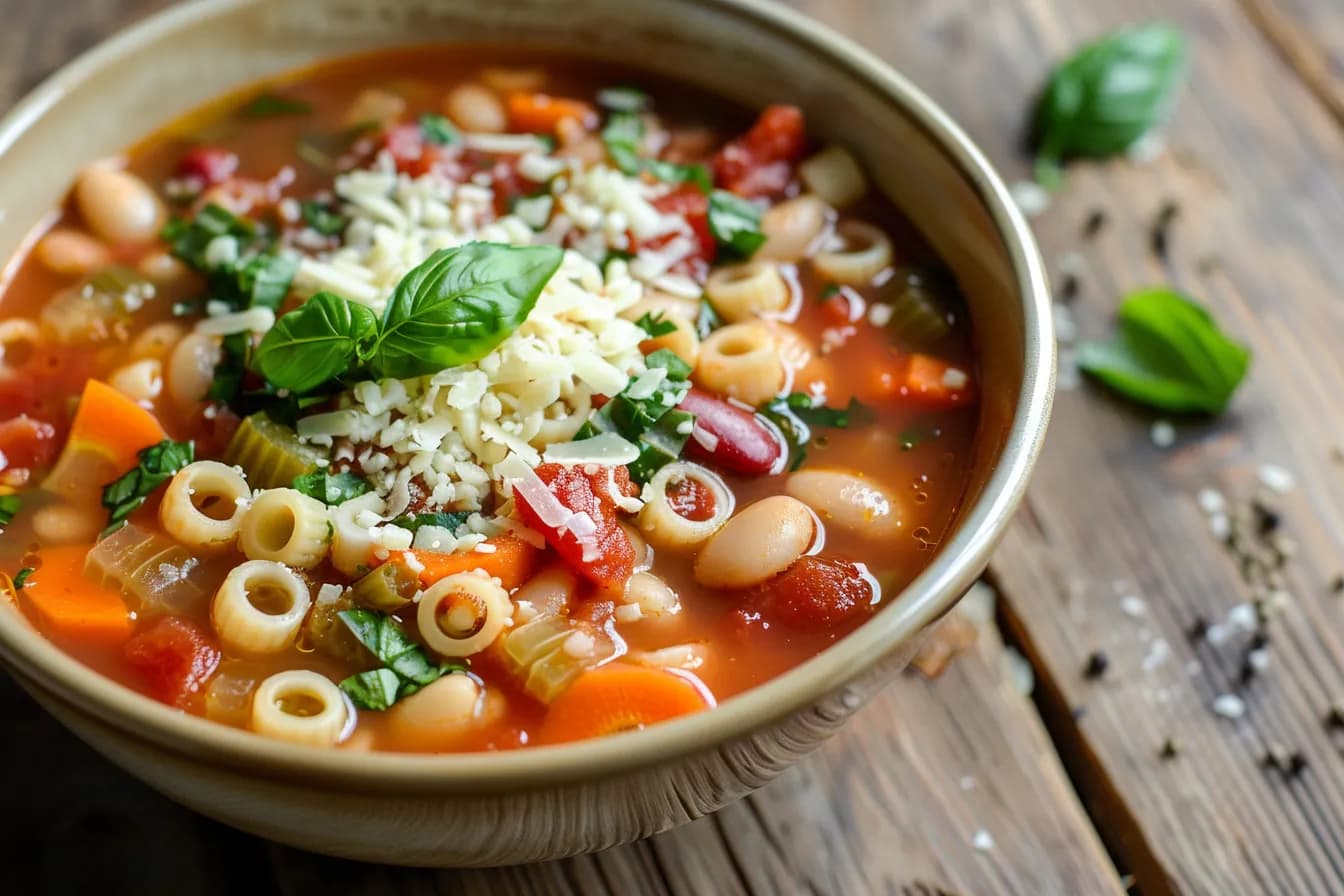 Soups & Stews
Minestrone
Italian vegetable stew with beans and small pasta, simmered with a Parmesan rind.
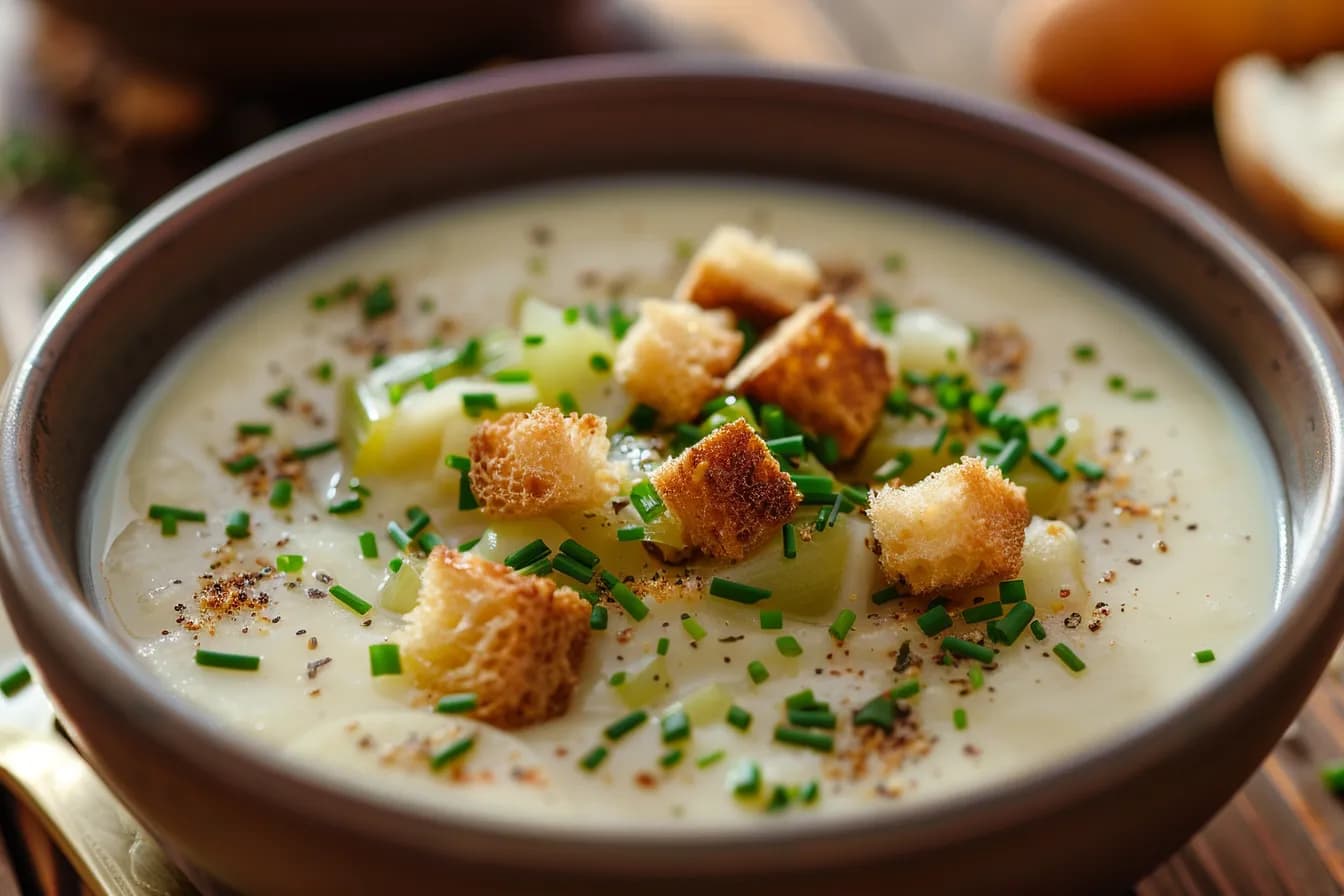 Soups & Stews
Potato Leek Soup
Velvety soup made from just a few ingredients, served with croutons and chives.