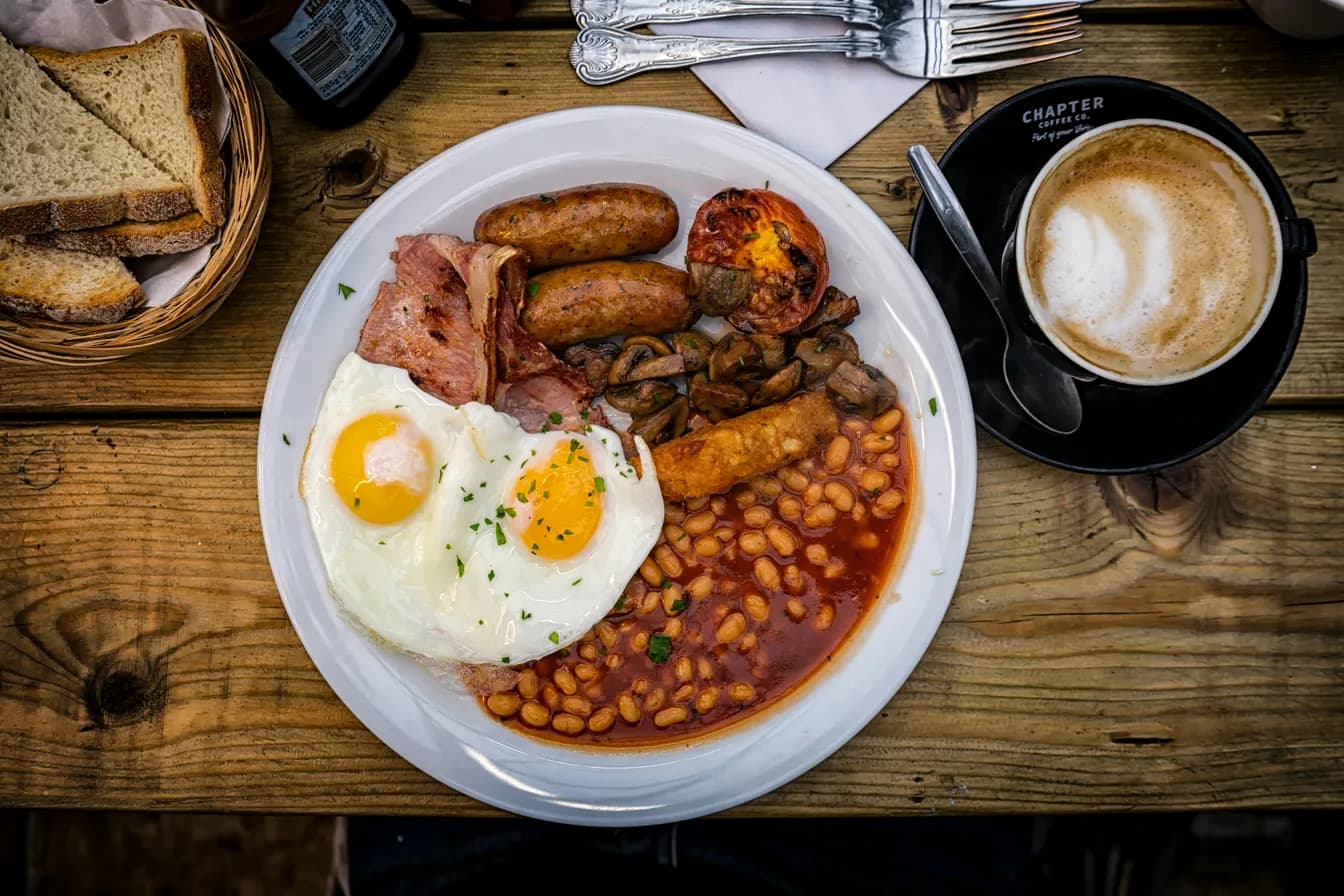
Seven components, one pan, one baking sheet, and a sequence that ensures everything is ready at the same time. The real problem with a Full English is not preparing the individual parts, but the timing: everything should be hot on the same plate. The oven takes over whatever can wait.
Why this works
The Full English is not a recipe, but a scheduling problem, and it is solved by a single realization: everything that releases fat goes into the pan first, and everything else cooks in that fat. Bacon and sausages render their fat; mushrooms and tomatoes then fry in it, absorbing the roasted flavors stuck to the bottom of the pan. The sequence is therefore not convention, but flavor transfer. The second point concerns the tomatoes: they are halved and fried cut side down, because their high water content would otherwise run into the pan and steam everything in it instead of browning it. The cut surface seals when seared. And the egg goes last into an already significantly cooled pan, because egg whites become hard and brown at the edges if the heat is too high, before the yolk is warm.
Step-by-step instructions
- 1
Oven as a warming cabinet
Preheat the oven to 80 degrees and place a baking sheet inside. Everything that is finished goes there and stays hot without cooking further. This is the real trick to the Full English. Without a warming zone, there is no finishing at the same time.
- 2
Sausages and bacon
Fry the sausages over medium heat for ten minutes until brown all over and place them in the warm oven. Then fry the bacon until crispy and set aside as well. The rendered fat stays in the pan, and everything else cooks in it.
- 3
Mushrooms and tomatoes
Sear the mushrooms in the bacon fat until they have color, and place them in the warm oven. Then place the tomatoes in with the **cut side down** and fry for three minutes without moving them. The sealed cut surface prevents their water from running into the pan.
- 4
Beans and toast
Heat the baked beans in a small pot and toast the bread. Both need no attention and run in parallel. The toast is buttered as soon as it comes out of the toaster so the butter soaks in.
- 5
Eggs last
Let the pan cool down briefly and fry the eggs over medium heat as sunny-side up eggs with a runny yolk. If the heat is too high, the egg white will become brown and hard at the edge before the yolk is warm. Serve everything together on two pre-warmed plates.
Our best tips
- The oven at 80 degrees is half the battle. Without a warming zone, a Full English is a race you cannot win.
- Place tomatoes cut side down and do not move them. Otherwise, they release their water into the pan, and everything in it steams instead of frying.
- The eggs go last and into a cooled pan. They are the only component that really has to go fresh onto the plate.
Tasty variations
Full Irish
Add white pudding and soda bread instead of toast. The main difference to the English breakfast, otherwise identical.
Vegetarian
Replace bacon and sausages with vegetarian alternatives and fry the mushrooms in butter instead of bacon fat. Baked beans, tomatoes, egg and toast remain unchanged.
Nutrition facts
| Calories | 1241 kcal |
|---|---|
| Protein | 59 g |
| Carbohydrates | 60 g |
| – of which sugar | 17 g |
| Fat | 82 g |
| Fiber | 11 g |
Where the 1,241 kcal come from
per serving
Calculated from the ingredients – how we do it
We add up reference values for every ingredient and divide by the number of servings. These assumptions are baked in:
- Reference values per 100 g – for the raw ingredient, exactly as listed.
- Tinned goods count at drained weight, bone-in meat at purchase weight: you eat about 70 per cent of a chicken thigh and leave the rest.
- Water evaporates as you cook. The energy stays in the pot, the weight does not – so the figure is per serving, not per 100 g of finished dish.
- Anything listed without a quantity – “salt and pepper” – is not counted.
A guide value, not a lab measurement: no two onions weigh the same, and fat content varies from pack to pack.
Frequently asked questions
How many calories does a Full English Breakfast have?
Around 1,240 kcal per serving. This is a daily meal, not a casual breakfast. In Great Britain, it is traditionally eaten more on the weekend or as a brunch.
In what order do I fry?
Everything that releases fat first: sausages, then bacon. Then mushrooms and tomatoes in the rendered fat, and finally the eggs in the cooled pan. Finished items go into the oven at 80 degrees.
What is absolutely necessary?
This is seriously debated in Great Britain. The consensus is bacon, sausages, egg, baked beans, tomato and toast. Black pudding, mushrooms and fried potatoes are regional and personal.
Can I make baked beans myself?
Yes, boil white beans with tomato paste, molasses, mustard and vinegar for about 40 minutes. In Great Britain, however, practically no one uses anything other than the can. It is considered an independent product there, not a makeshift solution.
Comments & ratings(0)
Sign in to rate and comment on this recipe.
You might also like
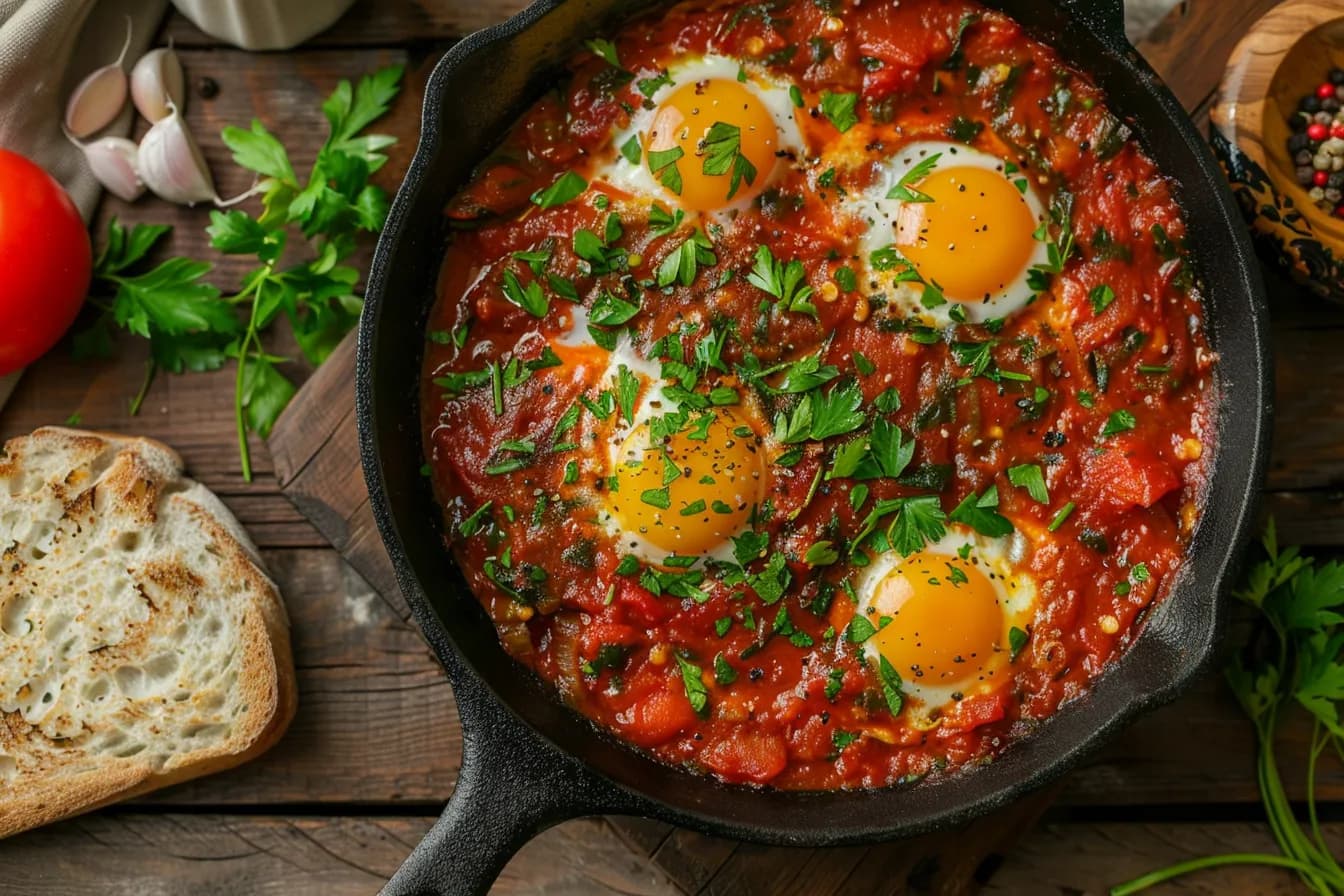 Breakfast
Eggs in Tomato Sauce for One
Half a can of tomatoes, two eggs, a small pan: Shakshuka in a single portion.
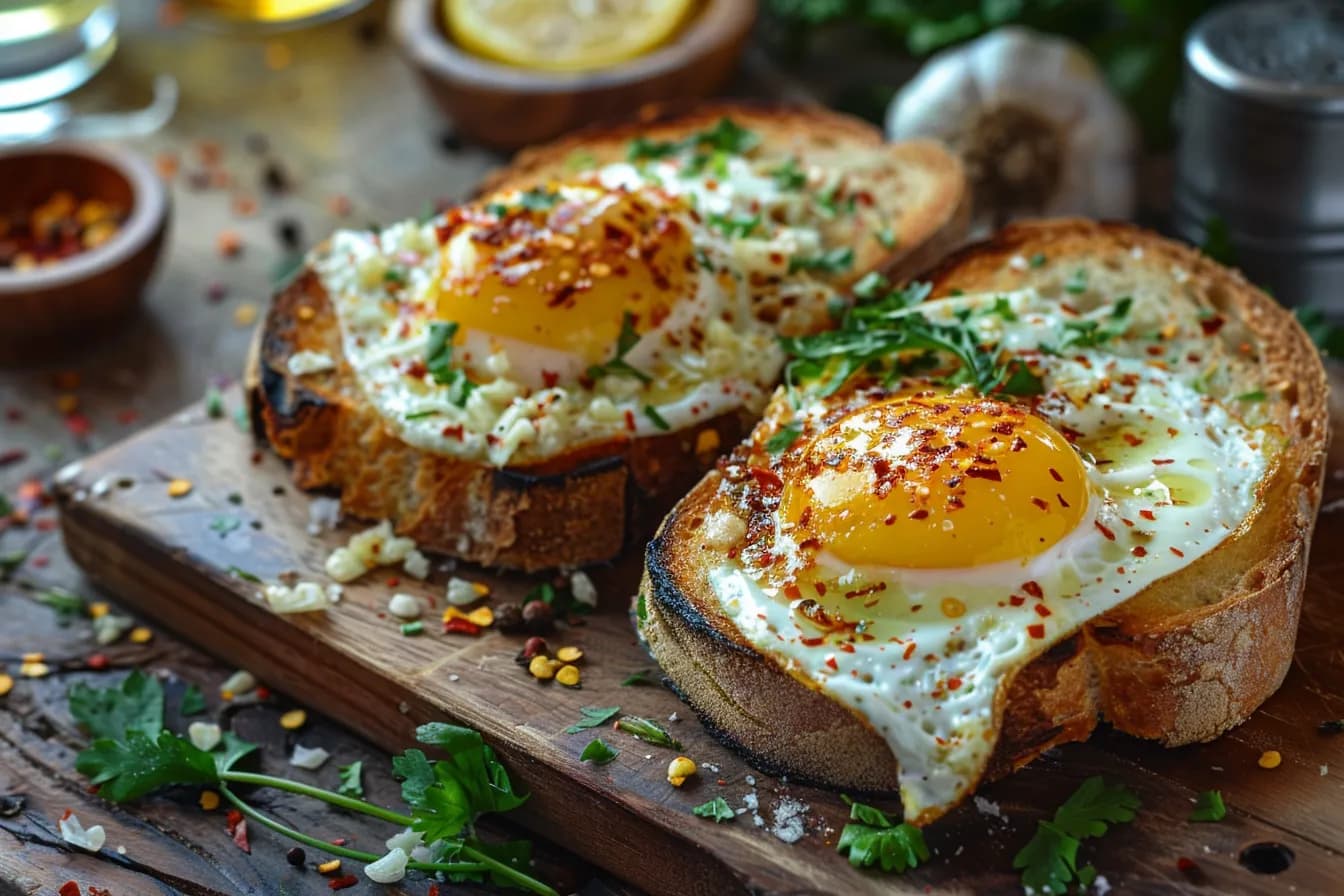 Breakfast
Savory Toast – The Builder
Bread, fat, topping, crown, four decisions, and a slice becomes dinner.
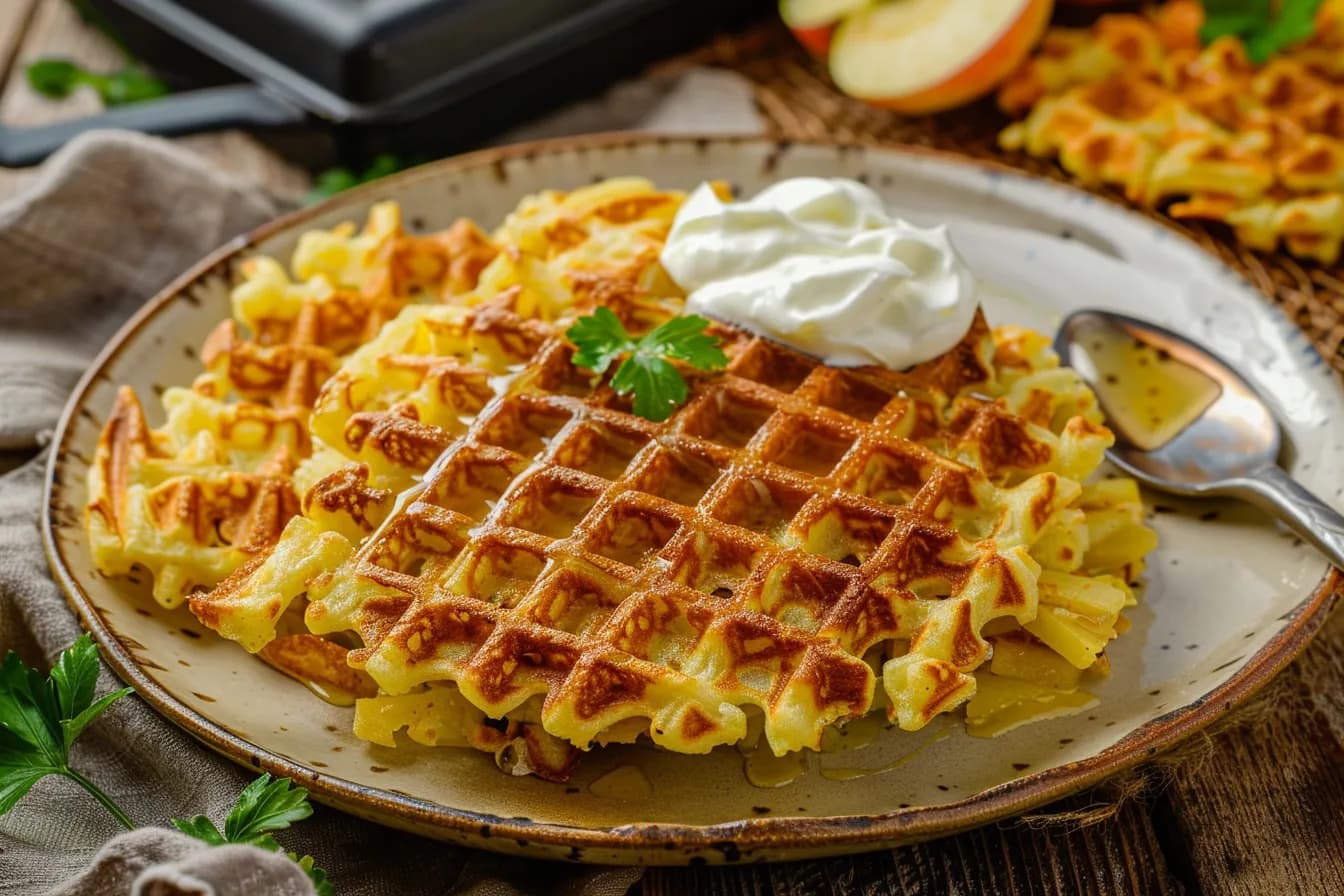 Dinner
Waffle Iron Potato Pancakes
Both sides at the same time, no flipping, no grease splatters, and more crust than in any pan.