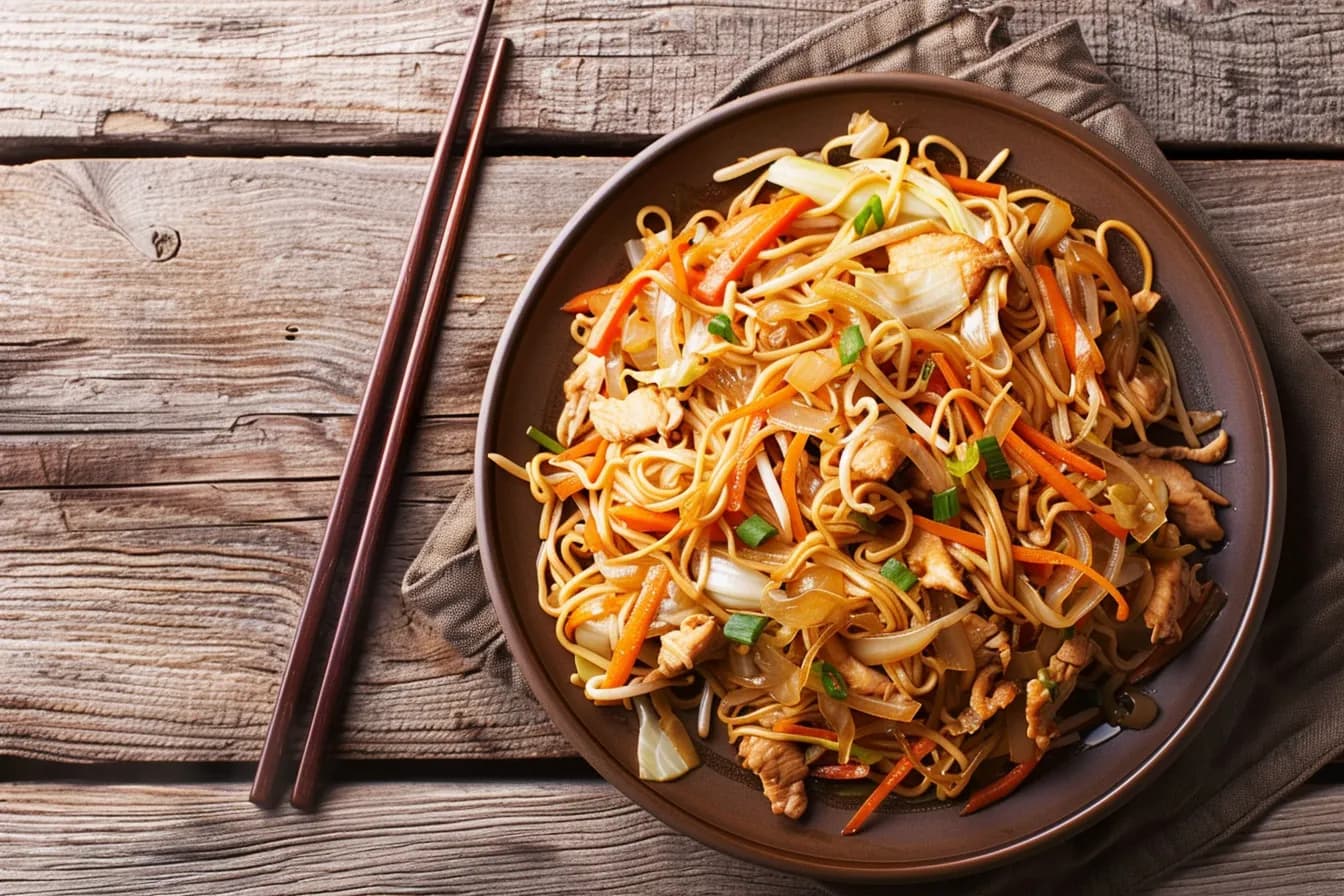
Glossy wok noodles with tender chicken and crisp vegetables, ready in 25 minutes. The chicken is briefly marinated in starch and soy sauce beforehand, a technique called velveting that makes it incredibly tender. Together with the salty-sweet sauce, it creates a dish that tastes like takeout but is significantly fresher.
Why this works
Velveting means the meat gets a thin coating of starch and liquid before frying. The coating cooks first, keeping the heat away from the meat for a moment and sealing it. The meat juices stay inside, even though the wok is well over 200 °C. That is why even lean chicken breast fillet is tender in wok cooking, whereas it dries out in a pan.
Step-by-step instructions
- 1
Marinate the chicken
Thoroughly mix the chicken strips in a bowl with cornstarch, soy sauce, and sesame oil until each piece is coated with a thin film. Let the whole thing sit for at least ten minutes while you cut the vegetables. This starch layer seals in the juices during frying and is the reason why chicken stays so tender in restaurants and often gets dry at home.
- 2
Cook the noodles
Cook the Mie noodles in plenty of water for about one minute less than indicated on the package, because they will continue to cook in the wok. Drain them, rinse them briefly with cold water, and let them drain well. Toss them with a teaspoon of oil so they do not stick together while you continue working.
- 3
Mix the sauce
Whisk all the ingredients for the sauce in a small bowl until the sugar has completely dissolved. Place it within reach next to the stove. Everything happens very quickly in the wok later, and if you are still looking for bottles then, you will already have burnt vegetables in the pan.
- 4
Fry the chicken and vegetables
Heat 2 tablespoons of oil in the wok over high heat and fry the chicken in a single layer for about three minutes until browned on the outside and just cooked through. Remove it. Add the remaining oil and fry the carrots and white cabbage for two to three minutes, stirring constantly, until the cabbage wilts but still has a bite. The garlic and the white parts of the scallions are added at the end and fry for only thirty seconds.
- 5
Combine everything
Return the noodles and chicken to the wok and pour the sauce over them. Gently fold everything from bottom to top with two spatulas or tongs until every noodle is evenly glossy brown. This takes about one minute. Finally, fold in the green scallion pieces and serve immediately, because Chow Mein tastes best hot.
Our best tips
- Cut and prepare everything before the wok gets hot. Wok dishes do not forgive pauses.
- Dark soy sauce is not the same as light. It provides the typical brown color but is less salty, so do not just use more light soy sauce.
- No oyster sauce available? Replace it with 1 tablespoon of hoisin sauce, the dish will be a bit sweeter but works well.
Tasty variations
Vegetarian
Replace the chicken with 250 g of fried shiitake mushrooms and swap the oyster sauce for vegetarian mushroom oyster sauce.
With shrimp
Use 300 g of shrimp instead of chicken, they only need two minutes in the pan.
Nutrition facts
| Calories | 571 kcal |
|---|---|
| Protein | 40 g |
| Carbohydrates | 69 g |
| – of which sugar | 6 g |
| Fat | 14 g |
| Fiber | 5 g |
Where the 571 kcal come from
per serving
Calculated from the ingredients – how we do it
We add up reference values for every ingredient and divide by the number of servings. These assumptions are baked in:
- Reference values per 100 g – for the raw ingredient, exactly as listed.
- Tinned goods count at drained weight, bone-in meat at purchase weight: you eat about 70 per cent of a chicken thigh and leave the rest.
- Water evaporates as you cook. The energy stays in the pot, the weight does not – so the figure is per serving, not per 100 g of finished dish.
- Anything listed without a quantity – “salt and pepper” – is not counted.
A guide value, not a lab measurement: no two onions weigh the same, and fat content varies from pack to pack.
Frequently asked questions
What is the difference between Chow Mein and Lo Mein?
In Chow Mein, the noodles are stir-fried and get slight roasted flavors. In Lo Mein, cooked noodles are only tossed with the sauce and remain softer.
Which noodles should I use?
Chinese egg noodles (Mie) are classic. If necessary, thin spaghetti also works, but the result is less authentic in texture.
Why does my chicken get tough?
Usually, it is fried too long or processed without a starch marinade. Thin strips really only need three minutes, and the starch layer keeps the juices in the meat.
Comments & ratings(0)
Sign in to rate and comment on this recipe.
You might also like
 Dinner
Dan Dan Noodles
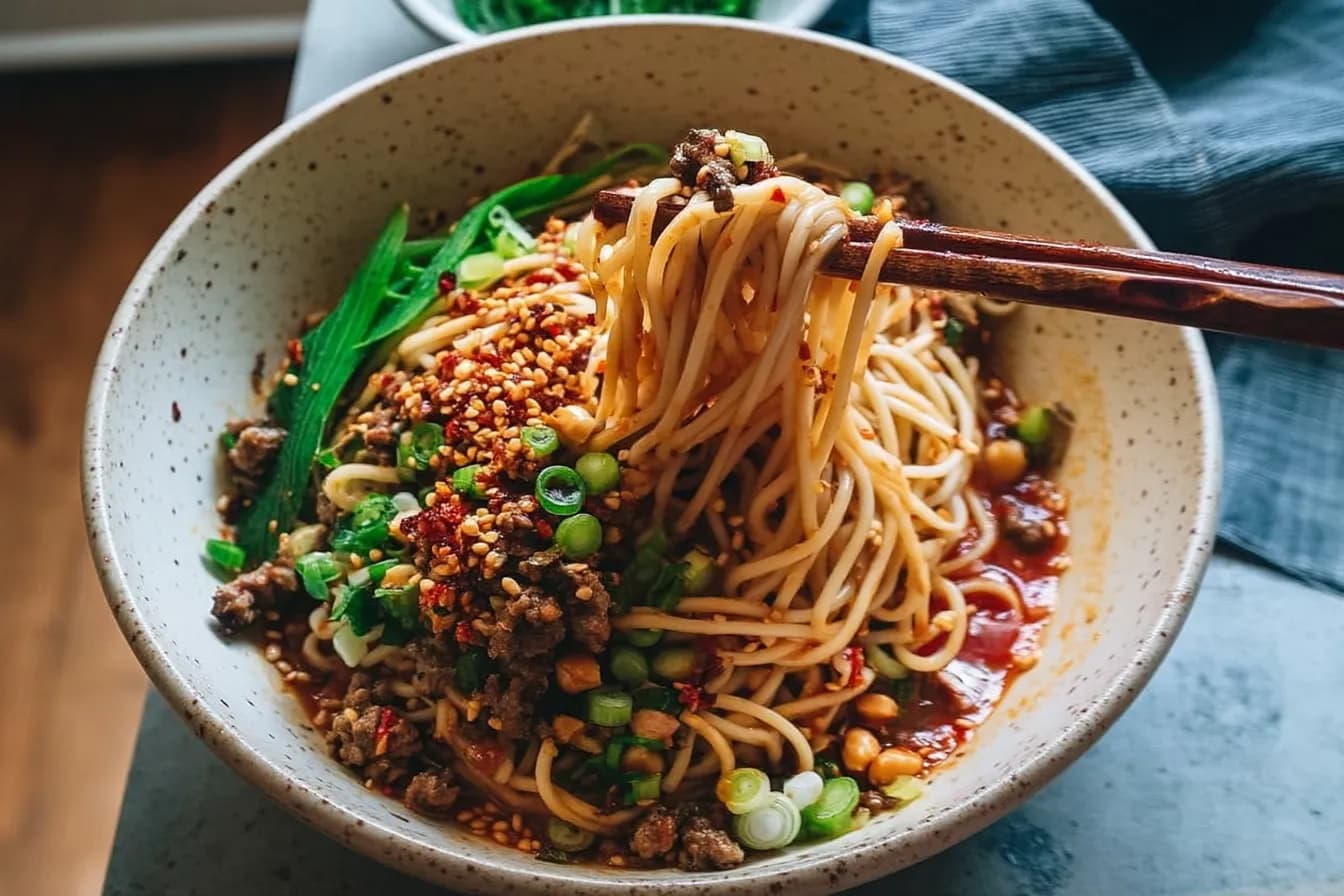
Sichuan noodles with crispy minced pork and a sauce waiting at the bottom of the bowl, not served as a soup.
 Dinner
Jiaozi for the New Year
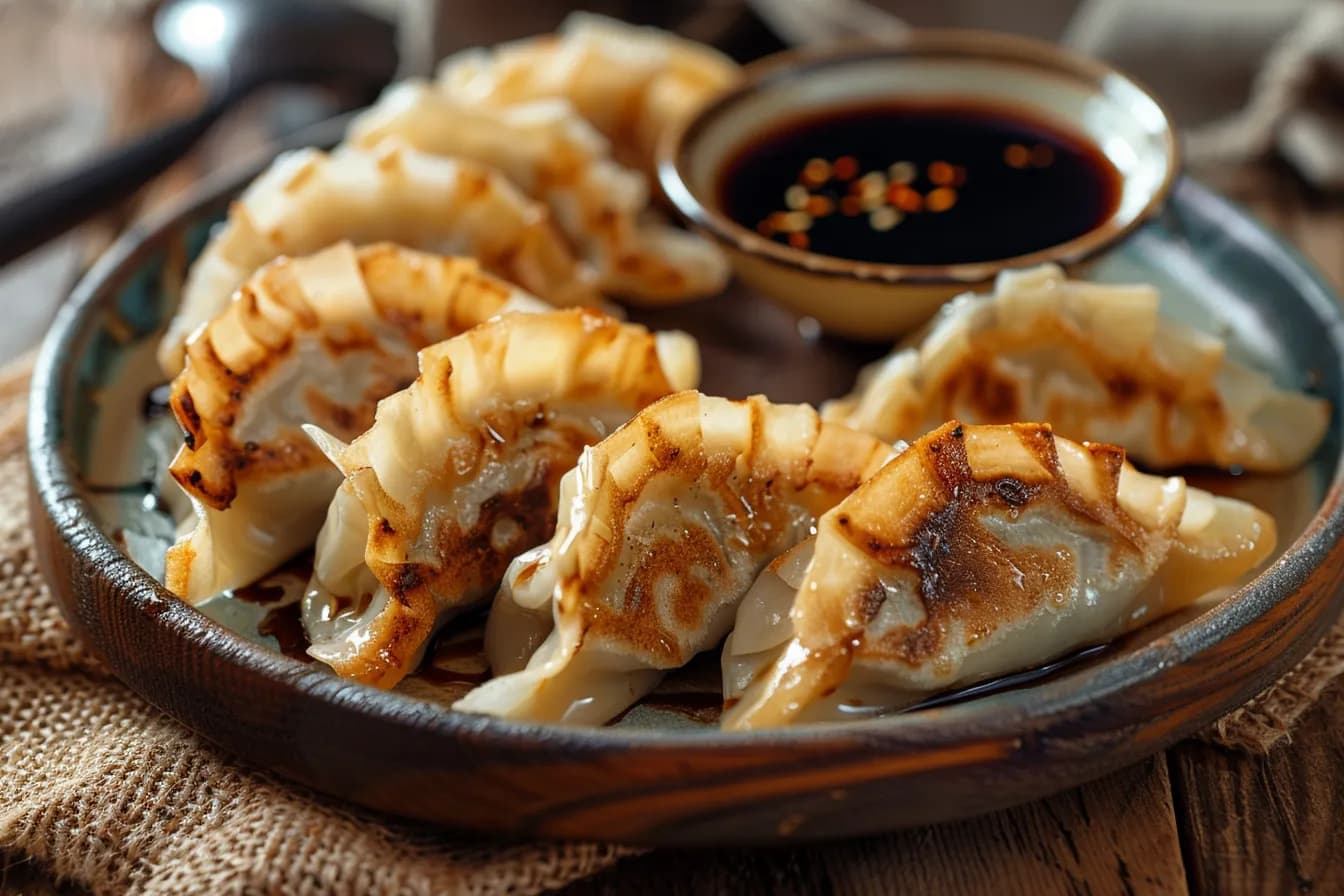
Chinese dumplings with pork and napa cabbage, with a crispy bottom and a black vinegar dip.
 Quick Meals
Longevity Noodles
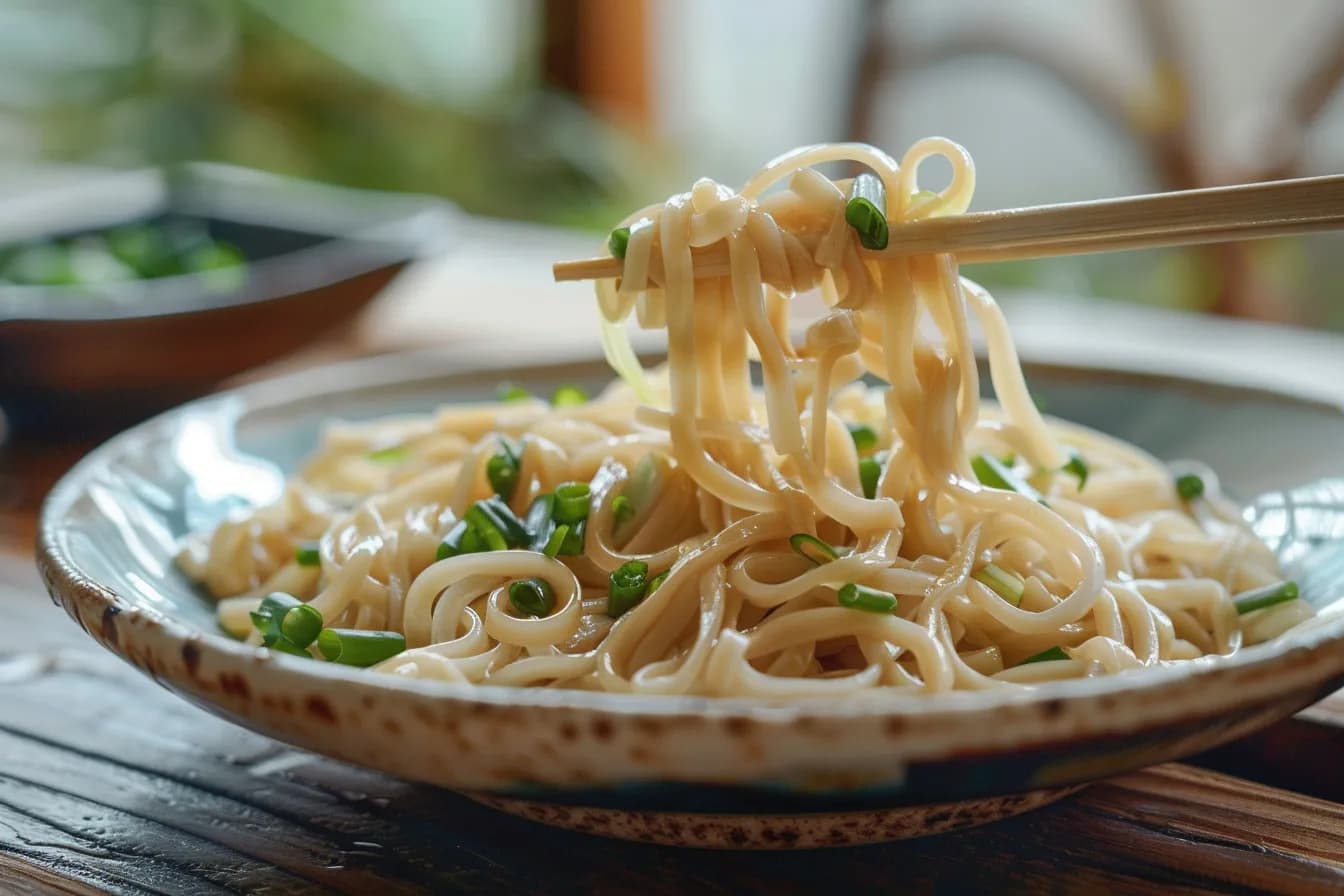
Long, uncut wok noodles with pak choi and shiitake: the classic Chinese birthday dish.